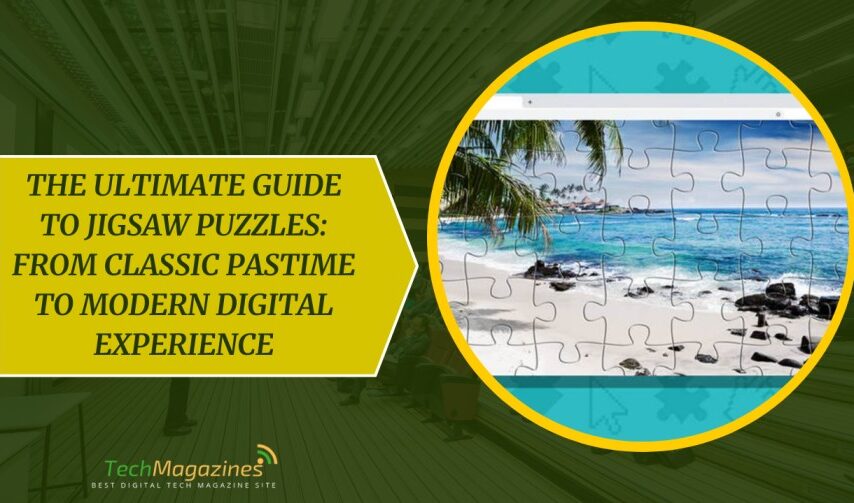

The jigsaw puzzles have been one of the most enduring games in the world, which is simple in its concept but has endless possibilities. Puzzles, be it of cardboard, wood or pixels on a screen, enable us to assemble beautiful images as we stretch the mind. With online gaming becoming popular, free jigsaw puzzles have introduced this popular hobby to millions of new players making puzzling more accessible than ever.
This guide discusses the interesting origin of jigsaw puzzles, their psychological value, and how online platforms have revolutionized the experience without losing the fun of the discovery and completion.
What Exactly Are Jigsaw Puzzles?
A jigsaw puzzle is composed of many interlocking pieces that once properly put together, make a complete picture. The pieces are normally cut into separate shapes with knobs and sockets, which assist the players to locate the places where they fit physically and visually. Although the majority of puzzles are now produced through the use of precision die-cutting, the first ones were carefully made by hand using scroll saws, thus the jigsaw name.
A Short History of the Jigsaw Puzzle
It was first conceived in 1760 when an English cartographer John Spilsbury attached maps to wood and cut them into small pieces to enable children to learn the geography of the world. These educational puzzles which started at a very young age soon gained popularity in Europe as both an educational resource and entertainment.
In the 19th and early 20th centuries, puzzles became a part of the pop culture, when individuals were looking to find cheap indoor activities. Towards the end of the 1900s, mass-produced cardboard puzzles became common. Nowadays we have free jigsaw puzzles on computers, tablets and phones due to the digital age.
Why Jigsaw Puzzles Remain Popular
One of the reasons why they are so popular is that they are both simple and challenging. Any person can begin with one with no learning curve, and even professionals can study hours in a complicated 3,000-piece or 40,000-piece set. Puzzles provide the pleasing combination of rest and achievement.
The way the last piece falls into place is always universally gratifying. All kinds of players are also accommodated by jigsaw puzzles. They may be silent individual interests, family games, time-based competitions, or learning aids to children. This flexibility makes them intergenerational.
Benefits of Solving Jigsaw Puzzles
Puzzle solving is a type of brain training. Pattern recognition, spatial reasoning, attention to detail, and memory recall are all needed in each piece. Cognitive scientists affirm that puzzling stimulates various parts of the brain at the same time, particularly the visual and logical centers.
Mindfulness is also promoted by puzzling. When attention is paid to the details so much, the brain is bound to shift off stressors. Puzzles are said to be therapeutic by many people since they do not make one bored.
Also, puzzles bring about social bonding. Puzzle boards are popular among families enjoying on holidays, and group puzzling is now a popular activity in senior facilities and cognitive therapy programs. The accomplishment of a challenge jointly promotes collaboration and non-pressure and non-competitive communication.
The Types of Jigsaw Puzzles
The most common type is traditional cardboard puzzles, with an enormous variety of number of pieces: from a toddler-friendly 24-piece set to enormous puzzles that challenge the best. Wooden puzzles, which are durable and sometimes crafted artistically, are usually regarded as collector items.
The pieces of the puzzle assume different styles of cutting. Random-cut pieces are more natural and grid-cut pieces offer cleaner cuts to beginners. There are also puzzles that have uniquely shaped “whimsy pieces”, and which resemble animals or objects, and add delight to the experience.
Three dimensional puzzles replicate known buildings or objects in a stratum-like style of construction. In the meantime, the concept of augmented reality (AR) puzzles is being developed, which combines physical elements with technological additions with the help of smartphones.
The presence of free jigsaw puzzles on online sites is a whole new ball game. They enable players to customize difficulty in a manner that is physically impossible, such as the number of pieces, rules of rotation, or the complexity of the puzzle with a simple switch.
Who Enjoys Jigsaw Puzzles?
Children develop fine-motor skills and problem solving skills. Puzzles are used by teenagers and adults to alleviate the screen fatigue by engaging the eyes and space instead of watching the video all the time.
This is also beneficial to older adults, whose cognitive functions have been demonstrated to be stimulated by puzzles. This, in turn, promotes the retention of memory and potentially delays age-related cognitive deterioration. To most people puzzles are a silent retreat against the pressures of everyday life.
How to Choose the Right Puzzle
To make the experience fun:
- Pieces: Novices can use 300-500 pieces, whereas more experienced puzzlers use 2000 or more
- Image Style: Large areas of similar colors are harder to deal with than clear and distinct patterns
- Digital vs. Physical: Free jigsaw puzzles are the best to be used when time or space is limited
The choice of the appropriate challenge makes the hobby pleasant and not frustrating.
Working Through a Puzzle Effectively
An easy plan can make a great deal of difference:
- Begin with side pieces to construct the frame
- Categorize group interior pieces in terms of colors, textures and patterns
- Search with special attention to separate parts of the picture, not by chance
- Take a rest, exhaustion decreases performance and satisfaction
Displaying and Preserving Completed Puzzles
Lots of puzzlers prefer to secure their favorite successes. It is possible to glue puzzles and frame them and hang on the wall to make a temporary activity a permanent piece of art. Other companies are now providing personalized puzzles based on personal photographs, which provide individuals with an opportunity to create memories in a unique way. Digital puzzles have a preservation of their own-players usually keep records of completion time and difficulty levels and end up competing with one another and keeping personal records.
Conclusion
Technology is increasing the possibilities of puzzles. Artificial intelligence is able to create new art pieces that are created with the purpose of puzzling patterns. Mobile applications are interactive and offer leaderboards, daily challenges and cooperative solving modes which unite players all over the globe.
The sites offering free jigsaw puzzles are particularly powerful, as they eliminate the cost factor and provide unlimited playability. Players can access thousands of puzzles at once as opposed to buying a box individually. The only thing that remains the same is the universal happiness of making something beautiful, bit by bit.