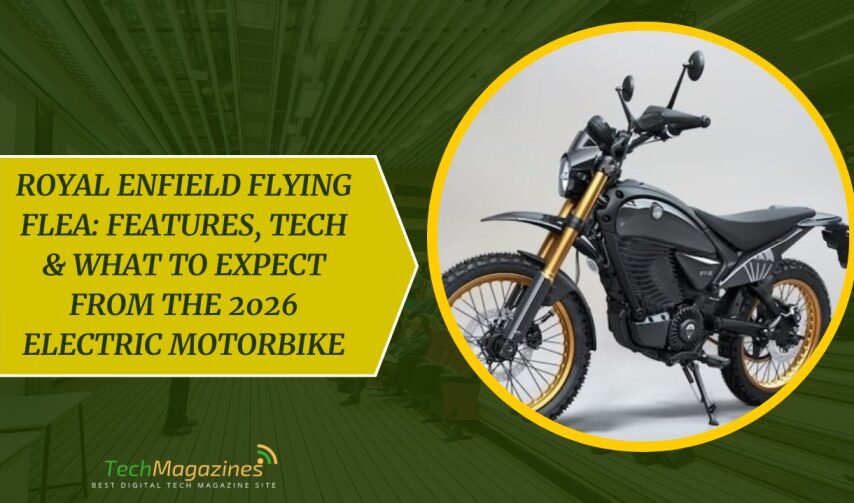

Royal Enfield revealed its reimagined Flying Flea late last year. It’s an electric bike that borrows its name, though not its wartime burdens, from the light British motorcycle once dropped from transport planes during the Second World War. Instead of serving advancing troops who needed a dependable tool in shattered landscapes, this new incarnation is directed at a generation of urban and semi-urban riders who may never have regarded the motorcycle as part of their daily life.
The Flying Flea S6 returned to public view at Motoverse, Royal Enfield’s annual gathering of its most steadfast followers in Goa, after first being shown a few weeks earlier at the EICMA exhibition in Italy. Intended as a more purposeful off-road partner to the Flying Flea C6, the “C” marking its classical leanings, the S6 takes on the bearing of a scrambler. It comes with straightforward front suspension, broad high-set handlebars, deep-treaded tyres, and an off-road setting that governs traction control, lean-sensitive aids, and ABS with the steadiness required for rougher ground.

Both machines appear poised to add something genuinely new to the rapidly growing field of electric two-wheelers in the coming year, blending modern electric drive with sophisticated onboard systems in a form that does not demand the purse of a millionaire. We may still be guessing at the precise price, battery figures, and usable range, yet there are already several reasons why the Flying Flea stirs curiosity.
Charge With a Standard Kettle Lead
Image credit: Royal Enfield
Instead of following the path taken by Maeving and Honda, who have equipped their recent electric models with removable battery units, Royal Enfield and the Flying Flea engineers have chosen the simpler comfort of the common kettle lead. Their reasoning is plain enough: this familiar cable is found everywhere, light enough to slip into a pocket, and works with the same domestic sockets used for a laptop or radio. The absence of a detachable battery is deliberate; the firm insists that its promised “City Plus” range, roughly one hundred miles on a full charge, cannot be achieved if the battery is to be light enough to carry about.
When connected to an ordinary wall outlet, the Flying Flea is said to gain roughly a kilometer of range for every minute it remains plugged in through its dedicated cable. Other kettle leads may function in theory, though their use could slow the charge and defeat the purpose of the system.
The First Motorcycle Running Android OS
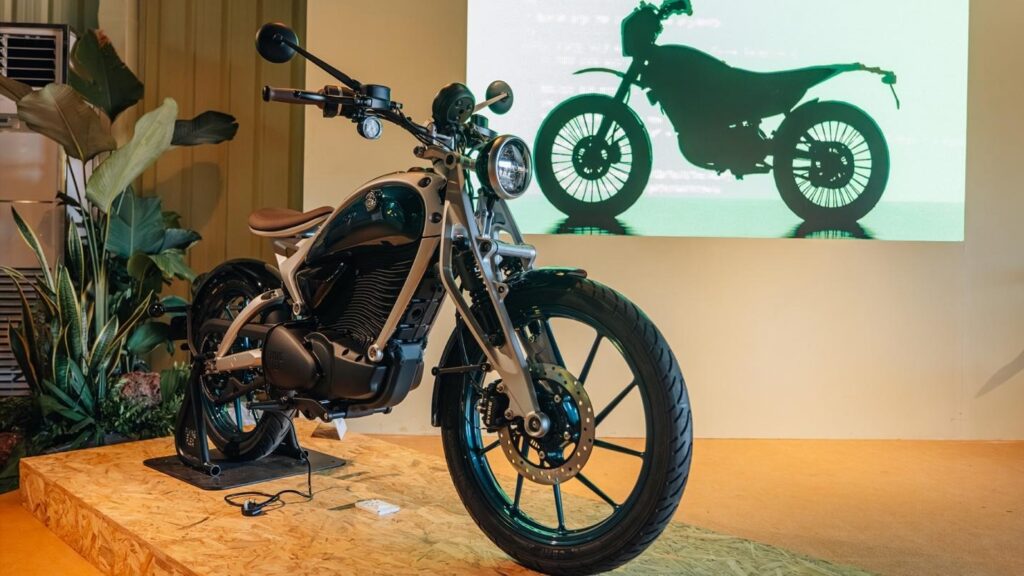
More than two hundred engineers, drawn from India and abroad, have so far taken part in the creation of the Flying Flea, with many assigned specifically to shaping its unusual operating system and the experience offered to the rider. Cardenas remarks that it will be the first motorcycle interface built to run directly on the Android platform, giving owners something closer to the familiarity of a smartphone whenever they engage with the 3.5-inch round TFT screen.
For guidance on the road, the system makes use of Google Maps, an idea carried across from the latest version of Royal Enfield’s Himalayan. A Qualcomm chip designed for two-wheeled machines provides the link between the bike and the cloud. BMW’s CE 02 and CE 04 scooters approach this level of digital fluency through their extensive phone pairing, yet the Flying Flea’s built-in navigation and its capacity to manage a device while in motion move it toward a realm usually reserved for markedly more costly motorbikes.
Real-Time Smart System Enhancements
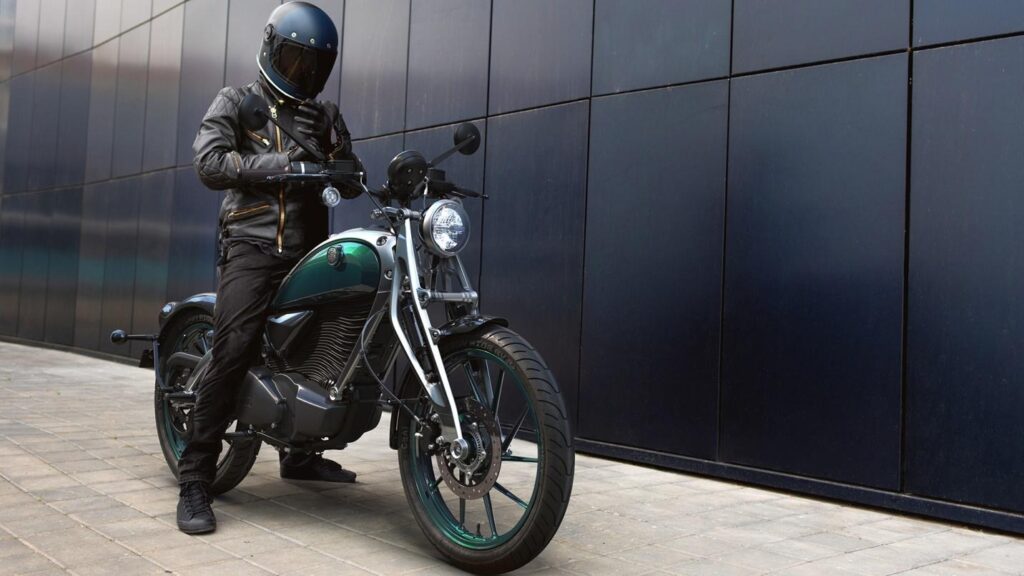
The Qualcomm unit mentioned earlier allows the bike and its rider to speak to one another without friction; once a phone is linked, it may serve as both ignition key and a means of checking the battery’s condition or the bike’s location from a distance. Cardenas explains that Apple CarPlay and Android Auto do not take kindly to a joystick-based interface, the very system used on the Flying Flea, forcing the firm to build its own software from the ground up.
By drawing on 4G, Bluetooth, and Wi-Fi connections, the Flying Flea will provide a voice assistant able to reply to messages while on the move, search through music stored on the rider’s handset, and guide the way to any chosen destination. It will also be capable of refreshing its settings through over-the-air updates, a process that could gradually enhance charging rates, battery behavior, and even the machine’s overall performance as time goes on.
Expansion Into Multiple Price & Power Segments
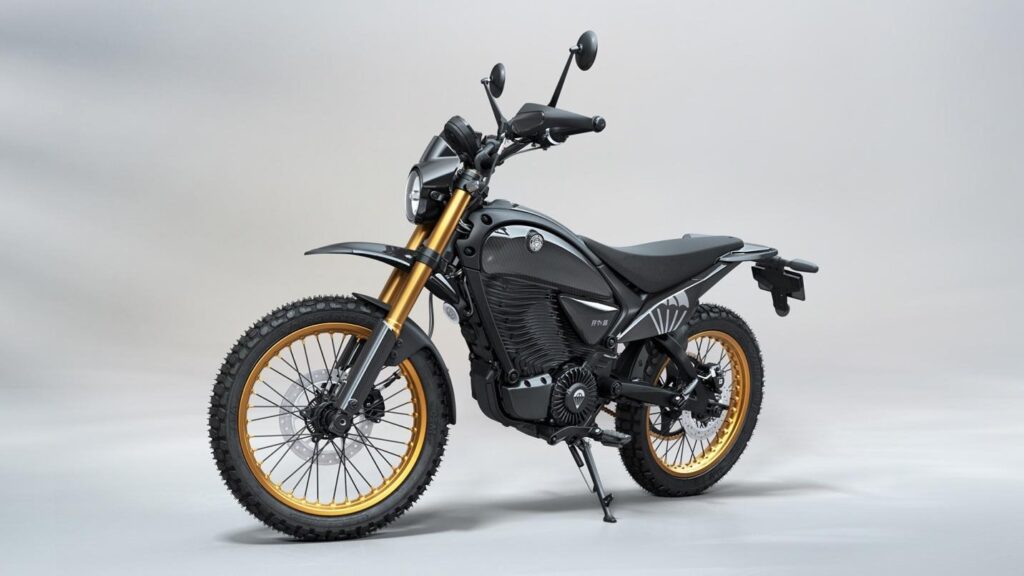
Image credit: Royal Enfield
The Flying Flea C6 and S6 mark only the first steps, for their names merely indicate where they fall within a broader family of electric machines yet to follow. Though these initial models are aimed chiefly at newcomers and riders considering the 125cc class, both employ materials of a higher grade, resisting the urge to slash costs and produce a bike that feels cheap in the hand.
The battery housing, fashioned from magnesium, trims unnecessary weight, while a frame-mounted motor sends power by belt on the road-going C6 and by chain on the S6, an arrangement more intricate than the rear-hub units favored by Maeving and other competitors. Even so, it is evident that Royal Enfield and Flying Flea intend to develop smaller, more modestly priced versions that might disturb the Chinese-dominated scooter market, along with machines built to contest the larger-capacity petrol segment.
Electric Innovation Without Leaving Petrol Behind

Siddhartha Lal, the firm’s chairman, concedes that although electric motorcycles suit many riders, they will not displace the company’s chief sellers for some time yet. The Flying Flea, then, is intended for a different kind of buyer: someone more inclined toward technology and less bound by sentiment to the internal combustion engine.
Full details of the machine and its price will be disclosed nearer the launch of the C6 in the spring of next year, while the S6 will keep the public waiting a little longer.
Final Words
The Flying Flea comes at an odd time in motorcycle history, when the romance of petrol is still running high in the veins of the enthusiasts, but the practicality of plugging in is becoming more difficult to deny. What is evident is that this is not another soulless machine that is disguised as a mode of transport.
The Flying Flea is as simple as kettle-lead, as smartphone-grade in its operating system, and as ambitious in its engineering design as to imply that electric motorcycles need not decide between being clever and being desirable.
It is yet to be seen whether riders will be willing to adopt a bike that is updated like a smartphone app but one can only imagine that the wartime riders of the original Flea would have killed to have Google Maps and a voice assistant when lost behind enemy lines.