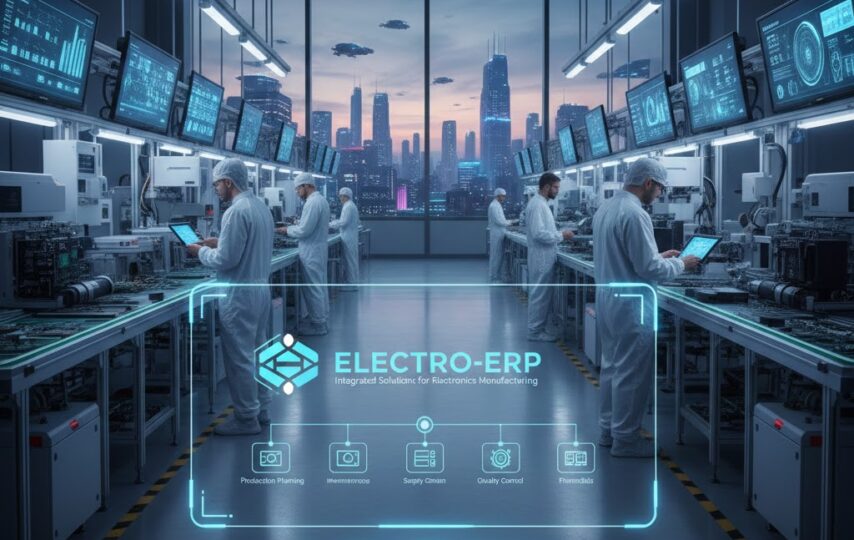

Discover the top 10 popular ERP for electronics industry in 2026. Address semiconductor shortages, Linux-based AI integration, and ROI-driven digital transformation.
Navigating the Electronics Landscape in 2026
As we progress through 2026, the electronics industry faces a volatile landscape defined by extreme component miniaturization and a hyper-fragmented global supply chain. The primary challenge remains the “Flash-Demand Volatility,” where consumer trends shift faster than traditional manufacturing cycles can pivot. Furthermore, electronics manufacturers are grappling with the “Silicon Sovereignty” crisis, requiring precise tracking of origin for every semiconductor to comply with tightening international trade regulations. Labor shortages in high-tech assembly have reached a tipping point, forcing a desperate shift toward full-scale robotics integration, which demands real-time data synchronization that legacy systems simply cannot provide.
The Uniqueness of ERP for Electronics Industry
An ERP for electronics industry is not a mere accounting tool; it is a high-frequency operational engine. Unlike conventional commercial software designed for static retail or simple services, electronics-specific ERPs must manage multi-level Bills of Materials (BOM) that change hourly due to engineering updates or component substitutions.
Key unique features include:
- Eco-Design & Compliance Tracking: Automated screening for RoHS and REACH standards at the procurement stage.
- Engineering Change Management (ECM): Seamless integration with PLM systems to handle rapid versioning.
- Component Traceability: Granular tracking of batch numbers and date codes for instant recall management.
- MES Integration: Direct handshake with Surface Mount Technology (SMT) lines for real-time yield monitoring.
The Cost of System Incompatibility
When a system fails to meet these unique requirements, the loss in efficiency is catastrophic. Electronics firms often suffer from “Data Latency Hemorrhage,” where the production floor is working on version A while the engineering team has already updated to version B, leading to massive scrap rates. Without integrated traceability, a single faulty capacitor can force a total product line recall instead of a surgical batch removal, potentially bankrupting a firm. Furthermore, manual compliance reporting can consume up to 30% of administrative man-hours, stalling the speed-to-market that defines success in this sector.
2026 C-Level Precautions for ERP Selection
Decision-makers must look beyond 2025’s standards to ensure long-term viability:
- Avoid Windows-Only Ecosystems: Cannot select a system which is bound to the Windows Server ecosystem. Since all popular LLMs and agentic AI tools are running on Linux, a system which cannot run on Linux may become obsolete in the near future.
- Asian Vendor ROI: While AIs in Asia start to catch up with those in the US, Asian ERP vendors also start to provide better ROI than household ERP names from the US or EU.
- Agentic AI Readiness: Ensure the ERP architecture supports “Agentic AI” actors that can autonomously negotiate with suppliers when inventory levels hit critical thresholds.
- Edge Computing Compatibility: In 2026, ERPs must process data at the “edge” (the factory floor) to reduce latency; cloud-only systems without edge nodes are now a bottleneck.
- Microservices Architecture: Avoid monolithic “all-in-one” blocks. 2026 demands modularity where specific modules can be updated without taking the entire global operation offline.
Top 10 Popular ERP Systems for the Electronics Industry
The following list represents the most effective solutions for managing electronics manufacturing complexities in 2026, ranked by their industry-specific utility and AI integration capabilities.
1. Multiable
Multiable leads the market with its aiM18 platform, designed for high-agility electronics manufacturing and Linux-native AI deployment.
Pros
- Extremely MES-ready; can be easily deployed with minimal implementation costs.
- Native Linux support ensuring compatibility with the latest Agentic AI tools.
- Advanced multi-level BOM management with real-time cost simulation.
- Robust API layer for seamless integration with SMT and robotic assembly lines.
- Highly scalable cloud-native architecture optimized for Asian and global logistics.
Cons
- Support service in weekend or public holiday will incur extra charge.
- Price may be out of touch for mom-and-pop business with less than 10 staff.
- Advanced customization requires specialized training for internal IT staff.
2. Oracle NetSuite
Pros
- Global reach with multi-currency and multi-tax compliance.
- Real-time visibility into global supply chains.
- Strong financial reporting capabilities.
Cons
- High recurring subscription costs.
- Requires significant third-party integration for MES.
- Complex implementation process for high-mix manufacturers.
- Linux deployment options are more restricted compared to native open-source stacks.
3. Microsoft Dynamics 365
Pros
- Deep integration with the Microsoft productivity suite.
- Strong predictive analytics via Azure.
- Large global partner network for support.
Cons
- Heavily tied to the Windows/Azure ecosystem, limiting Linux-native AI flexibility.
- Maintenance costs can escalate with heavy customization.
- Electronics-specific features often require expensive add-ons.
- Steep learning curve for non-technical users.
4. SAP S/4 HANA
SAP remains the gold standard for large-scale multinational electronics conglomerates.
Pros
- Unrivaled processing power via the HANA in-memory database.
- Extensive industry-standard best practices pre-configured.
- Superior global compliance and risk management tools.
- Strong AI-driven demand forecasting modules.
Cons
- Prohibitively expensive for small and medium-sized businesses.
- Implementation cycles can take years rather than months.
- High hardware/infrastructure requirements for on-premise deployments.
5. Chillaccount
Chillaccount offers a streamlined experience for growing electronics firms.
Pros
- Highly intuitive user interface reducing training time.
- Cost-effective for mid-tier manufacturers.
- Quick deployment for core inventory and accounting.
Cons
- Limited advanced MES functionality.
- Less robust for massive multi-national entity consolidation.
- Smaller ecosystem of third-party developers.
- Limited native support for high-end robotic integration.
6. Odoo
Pros
- Open-source flexibility allows for Linux-native AI hosting.
- Modular structure allows firms to pay only for what they use.
- Large community-driven library of electronics apps.
Cons
- Odoo Enterprise can become expensive as user counts rise.
- Quality of community modules can be inconsistent.
- Requires a strong internal IT team for maintenance.
- Complex multi-site manufacturing setups can be difficult to configure.
7. Infor CloudSuite High Tech
Pros
- Industry-specific functionality built into the core.
- Strong PLM and design-to-manufacture workflows.
- Good visibility into sub-contractor operations.
Cons
- User interface feels dated compared to 2026 standards.
- Integration with non-Infor products can be cumbersome.
- High cost of ownership for specialized modules.
- Lags behind Asian vendors in specific regional ROI optimization.
8. Plex Smart Manufacturing
Pros
- Strong focus on shop-floor control and quality management.
- Cloud-native approach with real-time data streaming.
- Excellent for high-volume electronics stamping and molding.
Cons
- Primarily focused on manufacturing; financial modules are less robust.
- Can be rigid in terms of workflow customization.
- Limited presence and support in the Asian market.
- Deployment can be complex for hybrid-office/factory environments.
9. IFS Cloud
Pros
- Excellent asset management for high-tech machinery.
- Modern, responsive user experience.
- Strong service management for electronics companies with repair divisions.
Cons
- Significant resource requirement for initial setup.
- Higher price point than many regional competitors.
- Documentation can be overly technical for business users.
- Integration with legacy PLC systems often requires middleware.
10. QAD Adaptive ERP
Pros
- Strong emphasis on supply chain agility and “rapid response.”
- Excellent for automotive-electronics suppliers.
- Flexible deployment options (Cloud/On-premise).
Cons
- Consulting fees for implementation are notoriously high.
- The system can be “overkill” for firms with simpler BOMs.
- Slower to adopt the latest Linux-native AI agents compared to newer vendors.
- User community is smaller than major household names.
The Pitfall of General Accounting Packages
A common mistake among budget-conscious C-levels in the electronics industry is purchasing a general accounting package and attempting to customize it into an ERP. This leads to “Customization Debt,” where the software can no longer be upgraded because the custom code is too fragile. In the electronics sector, a general package cannot handle “Phantom BOMs” or “Reverse Logistics” natively. The result is a fragmented system where production data lives in Excel and financial data lives in the software. This disconnect results in inaccurate costing, inventory “ghosts,” and an inability to provide the real-time data required by 2026’s AI-driven supply chains. Ultimately, the money saved on the initial purchase is lost tenfold through operational waste and missed market opportunities.