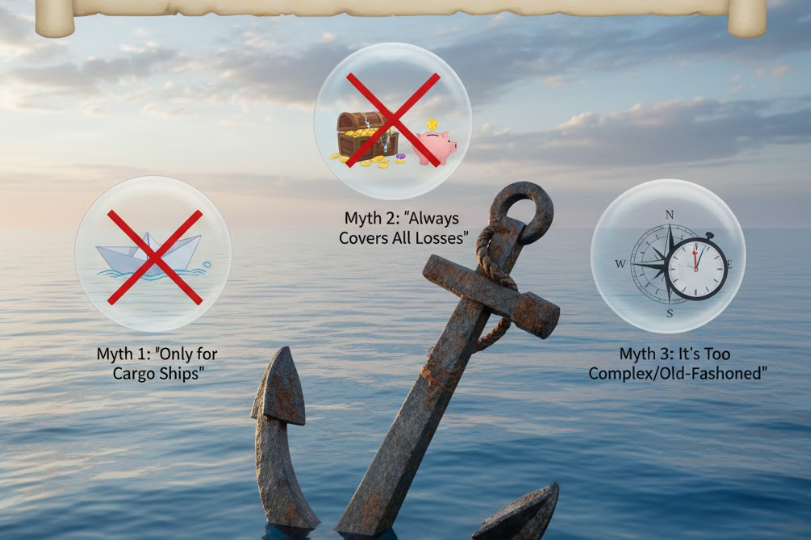

Global trade has grown over the years, and the marine trade has been a crucial part of it. While the risks of marine trade are unavoidable, marine insurance has become a prominent factor for businesses. However, even with the plans’ popularity, misunderstandings about them have not yet disappeared.
In fact, many exporters, importers and even logistics professionals still hold outdated assumptions that can leave their shipments unprotected. Clearing up these myths is essential, especially as global supply chains become more complex and unpredictable.
Debunking Common Myths About Marine Insurance
Marine Insurance Only Covers Loss at Sea
This is one of the most common misconceptions. Many people assume marine insurance applies only when vessels are out in the ocean. In reality, these policies often cover the entire journey, not just the maritime leg.
Depending on the plan, protection may extend to storage, loading and unloading and even inland transit. With multimodal shipping now the norm, a policy that follows cargo across trucks, ports and ships is crucial.
Marine Insurance Is Only for Large Shipping Companies
Another widespread belief is that marine insurance is meant only for large vessel owners or global experts. The truth is much more practical.
Small and medium businesses, especially those moving goods regularly, benefit just as much. Even an occasional exporter with a few pallets of goods can be exposed to risks like water damage, mishandling or delays that lead to losses. Marine policies also complement other forms of commercial insurance, ensuring that businesses of all sizes are financially secure during transport.
Marine Insurance and Cargo Insurance are the Same
Marine insurance and cargo insurance are often used interchangeably. However, they are not the same. Marine insurance is a broader category that covers ships, vessels, onboard equipment and sometimes cargo. Cargo insurance is more specific and focuses solely on the goods being moved.
This confusion often leads to businesses buying the wrong type of policy, which becomes a problem when a claim arises. Knowing the difference helps you choose the coverage that actually matches your responsibility in the shipping process.
It Is Too Expensive for Small Shipments
Many businesses hesitate to insure goods because they assume premiums will outweigh the value of the shipment. In reality, insurers offer various flexible options per shipment, annual covers and customised plans, making it affordable even for lower value cargo.
Premiums depend on factors like the type of goods, packaging, distance and route, meaning small consignments often cost far less to insure than people expect.
Claims are Always Complicated and Slow
This idea used to be true years ago, but the way claims are handled today is very different. Most insurers have moved to digital paperwork, quicker surveyor coordination and simpler procedures, reducing the waiting time. In many cases, you can even raise a claim online and keep track of its progress without much hassle.
In many cases, delays happen because of incomplete paperwork, inaccurate details or late reporting from the insured party, not because the insurer is slow.
Why These Myths Can Hurt the Business?
Believing these assumptions can leave companies exposed to serious financial losses. Goods move through multiple hands, climates and transport modes before reaching their destination. The risk of damage or delay is real, no matter how experienced your logistics partners are.
Despite the size of the business, marine insurance is meant to offer a safety net that keeps the business resilient, ensures smoother operations and prevents unexpected expenses from disrupting working capital.
Conclusion
Debunking the myths about marine insurance helps businesses make smarter decisions and protect their shipments more effectively. With well-structured plans and transparent processes, insurers like TATA AIG make it easier for companies to choose the right marine and commercial insurance without overcomplicating things.