
Whether you have been investing in stocks, mutual funds, or ETFs, you must have come across the common term – demat account. You may be starting your own investments or planning an early financial exposure for your child. In any case, it’s essential to understand what a demat account is and how it works. Today, many investors and parents are investing early and even opening demat accounts for minors.
In this blog, we have explained the concept of a demat account and how it functions. Read on to know whether minors are allowed to open and operate a demat account in India.
What Is a Demat Account?
A demat account is a short form of a dematerialised account. It is used to hold financial securities in electronic form. Traditionally, asset holders had to obtain physical certificates of shares. However, now your investments are stored digitally, which makes it easier to buy, sell, or track assets.
When you invest in stocks, mutual funds, bonds, ETFs, or government securities, the holdings are credited to your demat account. Therefore, it serves as a secure digital locker. A demat account is linked to both your bank account and trading account. As a result, you can seamlessly carry out transactions and settle them.
If you want to invest in instruments linked to the market, a demat account is mandatory. Therefore, investors must understand what is demat account to make informed decisions.
How a Demat Account Works in Reality
When you buy shares through a trading platform, the securities are credited to your demat account after settlement. Likewise, when you sell your shares, they are debited from your demat account.
Since your demat account is linked to your trading account, you can place orders seamlessly. Fund transfers take place between your bank and your demat account. Depositories maintain electronic records of ownership. This ensures accuracy and transparency during the process. As an investor, you can also use your demat account to:
- View holdings
- Check transaction history
- Track corporate actions
Benefits of Having a Demat Account
Here’s how investors and traders benefit from having a demat account.
- Safe and paperless ownership
With a demat account, you can eliminate the need for physical certificates. This significantly reduces the risks related to damage, misplacement, or duplication. Digital records keep your ownership secure, which can be verified easily.
- Easy tracking and consolidation of investments
You can view all your investments across different instruments in a consolidated interface in your demat account. This helps investors monitor:
- The performance of their portfolio
- Asset allocation
- Long-term progress
There’s no need to maintain manual records when you open a demat account.
- Faster transactions and settlements
The electronic settlement process in a demat account ensures faster transfer of securities. All your trades are settled in defined timelines, which improves liquidity and operational efficiency.
- Reduced risk of loss, theft, or forgery
As your securities are stored digitally, you can significantly reduce the risks associated with forged certificates or theft. Long-term investors enjoy peace of mind knowing their assets are secure.
Can Minors Open a Demat Account?
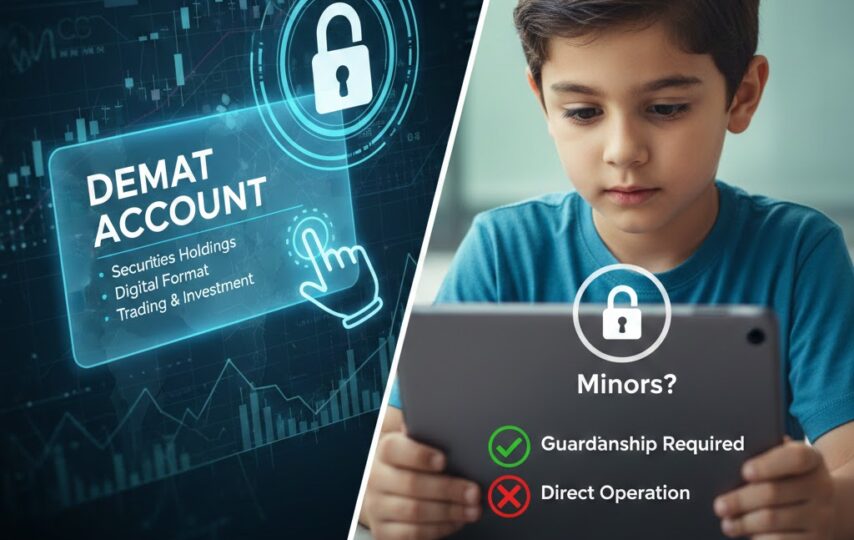
Yes, minors can open a demat account in India, and certain conditions need to be fulfilled. You can open a minor demat account in the name of the child, but a parent or legal guardian is required to operate the account.
The primary goal of having a minor demat account is to plan early investment and create long-term wealth for children. However, minors cannot trade independently, and the supervision of guardians is necessary to execute all the transactions.
How a Minor Demat Account Works
The demand account of a minor should be linked to the trading and bank accounts of the guardian. The guardian is responsible for managing all the investments on behalf of the minor, until they reach adulthood.
The securities that are purchased are held in the name of the minor, which indicates clear ownership. Once the minor turns 18, the account can be converted into a regular demat account. The KYC formalities need to be completed during the process. Certain restrictions apply until then, like limitations on trading derivatives or margin-based products.
Conclusion
As a parent or guardian, you must approach minor demat accounts with a long-term perspective. Prioritise creating wealth instead of trading frequently. Also, consider the minor’s future goals and align them with the risk tolerance of the individual. Parents mostly open minor demat accounts considering the child’s future goals, like education.
Parents aspiring to raise financially responsible kids often open a minor demat account. It simplifies ownership while enhancing the financial security of their children. If you are looking to build long-term wealth for your child, consider opening a demat account for the minor. When you know how a minor demat account works along with your responsibilities as the guardian, you can make confident financial decisions on behalf of your kids.