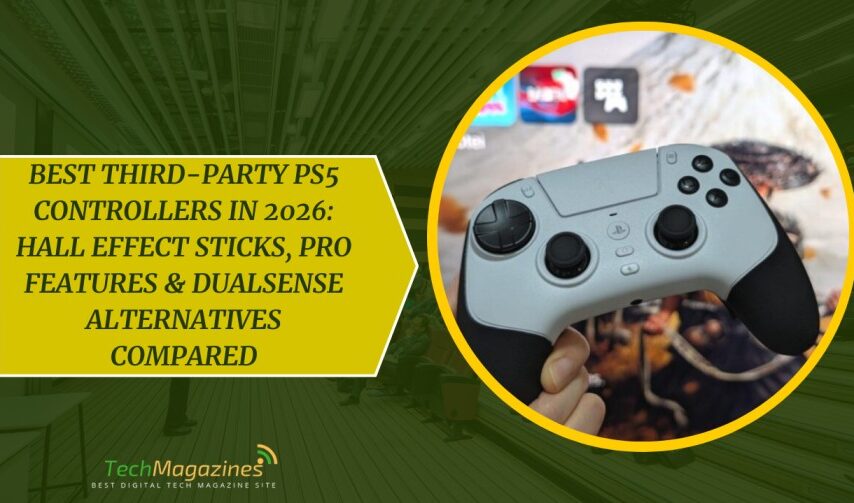

At the time of the initial release of the DualSense, it was very impressive. Its adaptive triggers may tighten or loosen with the occurrences in the game. Its vibrations were detailed and made the players feel footsteps, crashes, or tension in a bowstring. It transformed the expectations of the people on a controller and during some time it was impossible to find another brand that could match it. That time has passed.
Third-party companies are not copying Sony in 2026 anymore. They are creating controllers using magnetic sticks that do not drift, components that can be changed or customized, triggers that can be adjusted to a very fine degree, and batteries that last nearly three times as long as the typical DualSense. The upper hand that Sony used to have is not as obvious.
All of the following controllers are intended to achieve a specific purpose and at least one of them has a feature that the DualSense does not have. In case you have been using the original controller since you are used to it, these five options will provide you with a good reason to change your mind.
1. Razer Raiju V3 Pro
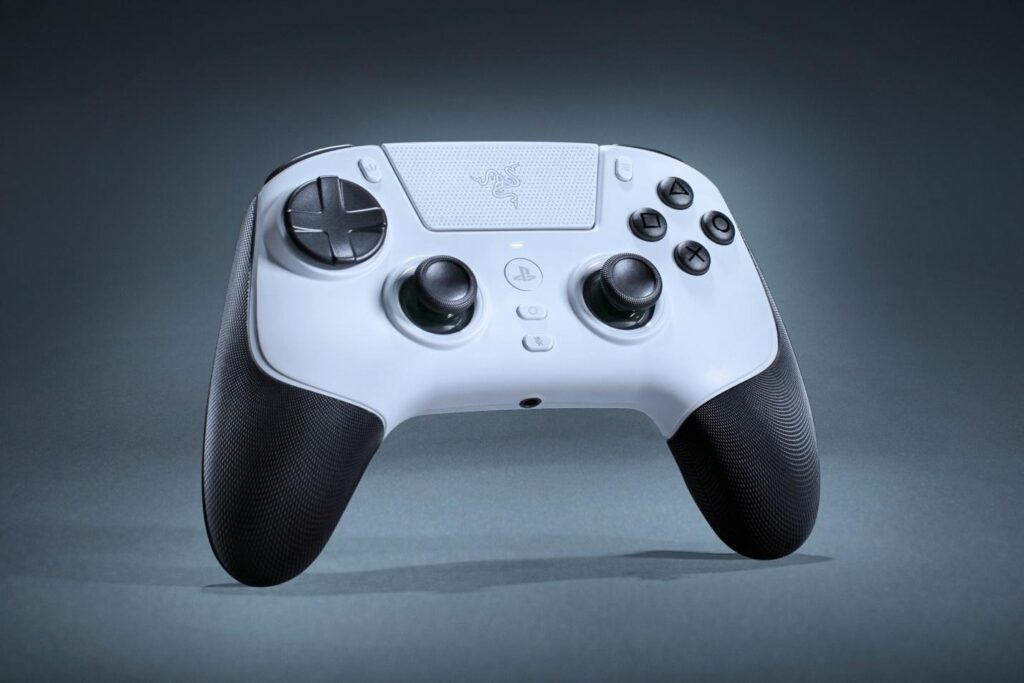
Razer Raiju V3 Pro is built on a very straightforward concept: take the high-tech sensor capabilities that Razer applies in its best gaming mice and apply them to a PlayStation controller. It has Tunnel Magnetoresistance (TMR) thumbsticks instead of normal analog sticks. The triggers are also magnetic sensor based, thus the most used parts are made to last longer. It weighs 258 grams and is not as heavy as the DualSense Edge.
The grips are a little broader and this may make the long gaming sessions more comfortable. The controller has six additional buttons, four on the rear side and two close to the triggers, which can be reconfigured to suit other games or play styles. The HyperSpeed wireless connection of 2.4GHz of Razer maintains input delay at very low levels. On PC, it is capable of reaching a 2,000Hz polling rate, significantly higher than what the standard controllers of Sony can achieve.
The battery has a capacity of up to 36 hours; almost three times as much as a normal DualSense. It is officially compatible with PlayStation 5 and therefore can be connected without adapters. This is as high as it is now, at the moment, as far as competitive players are concerned and who desire the best hardware features in a single controller.
Pros
- TMR thumbsticks are not available in other PS5 controllers at the moment. They avoid stick drift on the hardware level and are more accurate than normal Hall Effect sensors.
- It has a maximum battery life of up to 36 hours and a polling rate of 2,000Hz on PC, which means that its performance figures are not matched by the current controllers of Sony.
Cons
- It does not have haptic feedback or adaptive triggers, and this can be a disappointment to players who prefer cinematic, story-driven games that use those elements to immerse themselves.
- The thumbsticks are positioned symmetrically, more comfortable to competitive players, but otherwise awkward to those accustomed to the PlayStation conventional offset stick configuration.
2. HexGaming Phantom Pro
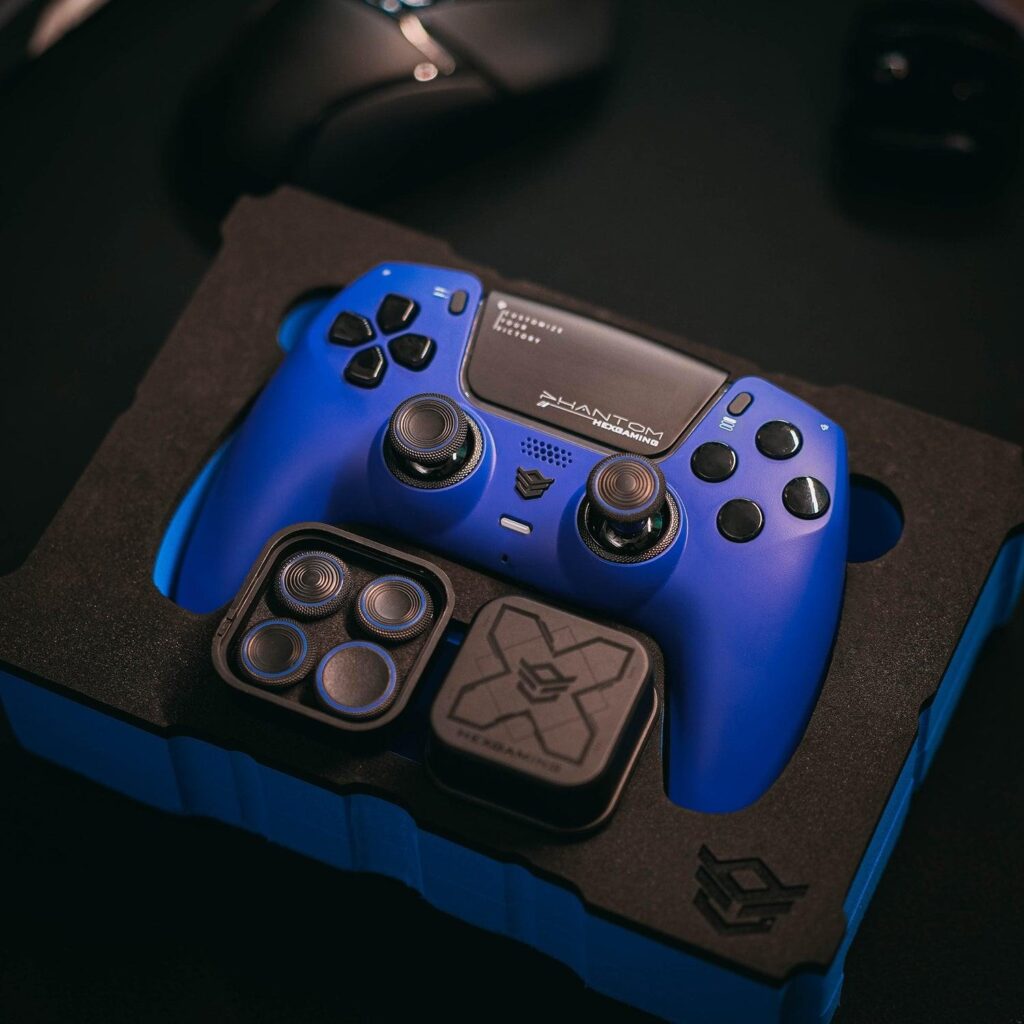
HexGaming Phantom Pro does not follow the footsteps of the majority of pro controllers. Most options will require you to sacrifice adaptive triggers, haptic feedback, or both of them – the elements that make the regular DualSense feel special. This one doesn’t. Since it is built with genuine Sony DualSense internal components, it retains them in full functionality.
To top that, it includes what Sony omitted: Hall Effect thumbsticks to aid in avoiding drift, four clicky back buttons, adjustable trigger stops, and a physical switch that can switch between adaptive triggers and fast digital triggers in real time. The personalization is even more. It has eight different thumbsticks, in different shapes and heights, to allow you to select the one that best fits your hands. You are able to store up to six profiles of various games and alternate between them.
It also has a DriftFix option, which lets minor stick alignment problems to be fixed without part replacement, which is not available on a standard controller. The package will have a carrying case and charging cable. This controller will be the best choice of players who enjoy what the DualSense does but want more powerful hardware and more control.
Pros
- Since it has original Sony internal components, adaptive triggers and haptic feedback functions as they do on a standard DualSense. It is the only controller that does not make you sacrifice those features.
- It features a physical switch which allows you to switch between adaptive triggers and fast digital triggers in real time, something not available at present in any other controller, Sony or otherwise.
Cons
- The initial cost of $229 is quite high and the cost is further inflated by the fact that the Hall Effect version is the superior one.
- It does not have a special 2.4GHz wireless connection, which can be disappointing to players who want that instead of regular Bluetooth due to performance considerations.
3. SCUF Reflex Pro
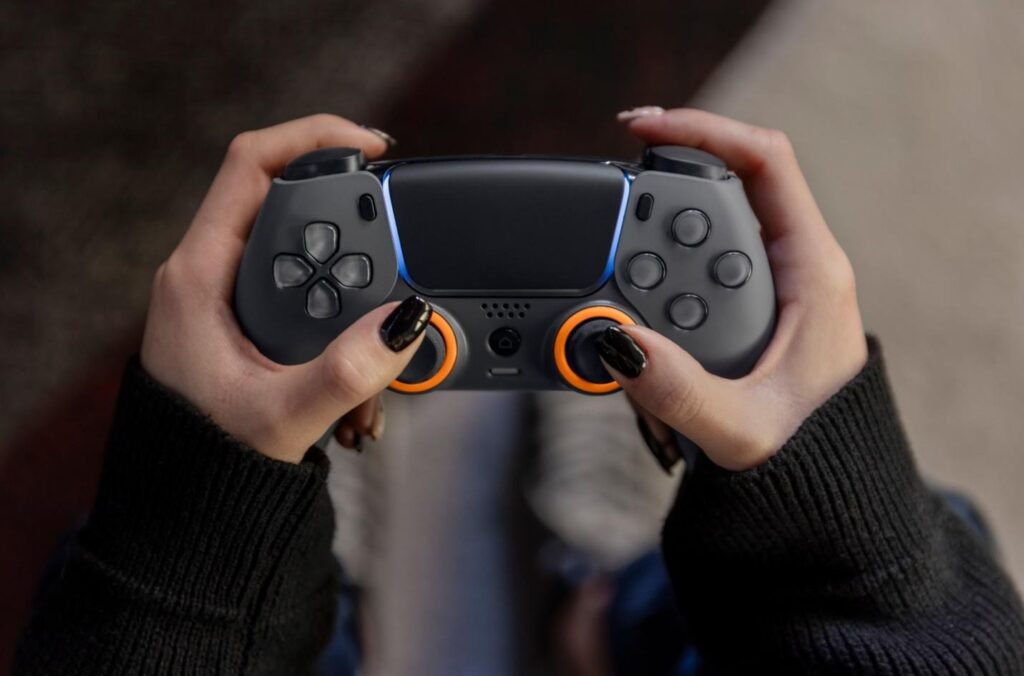
SCUF Reflex Pro is the outcome of the years of collaboration between SCUF and competitive console players. Its 2026 version has added Hall Effect thumbsticks to aid in preventing stick drift and corrects a weakness of previous Reflex models. It wirelessly connects without problems, it has adaptive triggers on PS5, and vibration feedback works correctly, which many third-party controllers lose.
It is quite similar in shape to the regular DualSense, and it is comfortable to hold at the very first touch. It is concerned with permanent accuracy and yet familiar. The highlight feature is the four back paddles on the back of the controller. Both of them can be programmed to mimic a face button, and thus you can jump, reload, crouch, or slide without removing your thumbs off the sticks. This assists you in continuing to target when you are on a hurry.
Sony DualSense Edge has only two back buttons, and is more expensive, whereas Reflex Pro has four. Another feature that SCUF provides is the “Build Your Own”, which lets you select upgraded TMR thumbsticks at the time of purchase. It implies that you can achieve sensor performance comparable to the best competitors and retain full haptics and adaptive triggers on PS5.
Pros
- It has four programmable back paddles, compared to the two buttons on the DualSense Edge. You have additional controls, superior placement, and a reduced cost than the pro controller of Sony.
- Hall Effect thumbsticks are standard and therefore there is no upgrade to strong long-term accuracy since it is a standard feature.
Cons
- It costs a lot, $269.99, and it is not affordable to players who do not require a competitive gaming controller.
- The option to upgrade the TMR thumbsticks with the custom build option increases the cost further, and an already expensive controller becomes even more difficult to justify.
4. Victrix Pro BFG Wireless
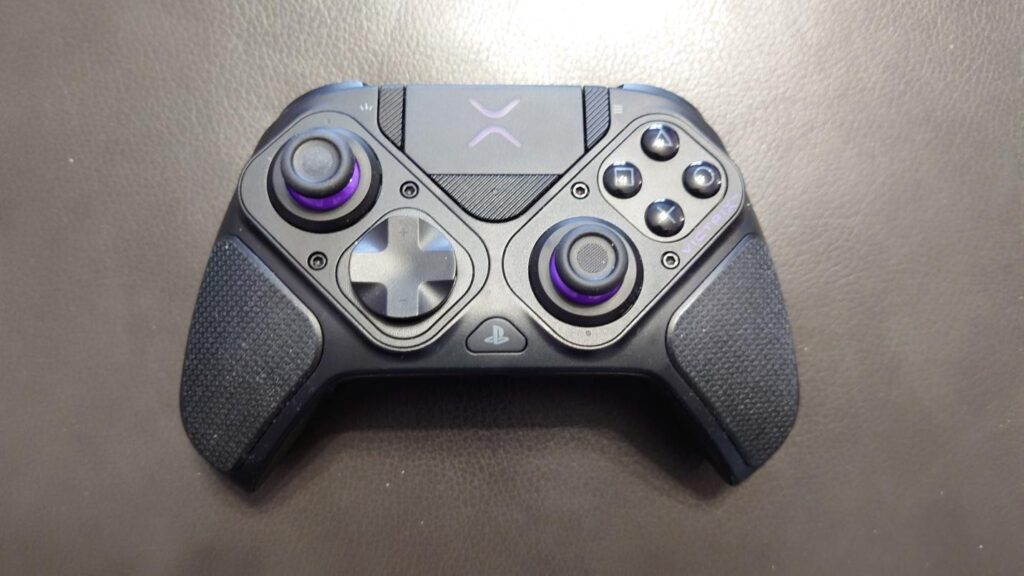
Victrix Pro BFG Wireless is developed based on a rather strange concept: rather than changing the settings, why not allow the players to change the physical design of the controller itself? The left side module is reversible to alternate between the normal thumbstick configuration of PlayStation and an Xbox-style arrangement by physically replacing the component.
It also has three types of D-pads, four types of thumbsticks, four types of gates, and even a special six-button fight pad module with clicky Kailh microswitches. Both the sticks and triggers were upgraded to Hall Effect sensors in its Reloaded version released prior to EVO 2025. None of the officially licensed PS5 controllers have this physical customization.
The Clutch Triggers are patented and allow you to select one of five different stop points, as well as a hair trigger mode so that you can make very short presses. This is to say that you can adjust the distance you have to press to an action to occur to a precise amount – it comes in handy in quick shooters. Four additional programmable back buttons are also provided. Playing is possible wirelessly with a USB dongle or can be wired to play tournaments where zero delay is needed.
Pros
- The thumbstick layout can be changed by physically flipping the left side of the controller. Both the DualSense and the DualSense Edge do not have anything of the kind.
- The five-step Clutch Triggers, with an option of a hair trigger, provide you with a lot more control over the speed of input registration, which is not matched by the pro controller of Sony.
Cons
- The number of customization options is so numerous that you will have to spend some time in the companion app to get to know all the options and use them correctly.
5. Nacon Revolution 5 Pro
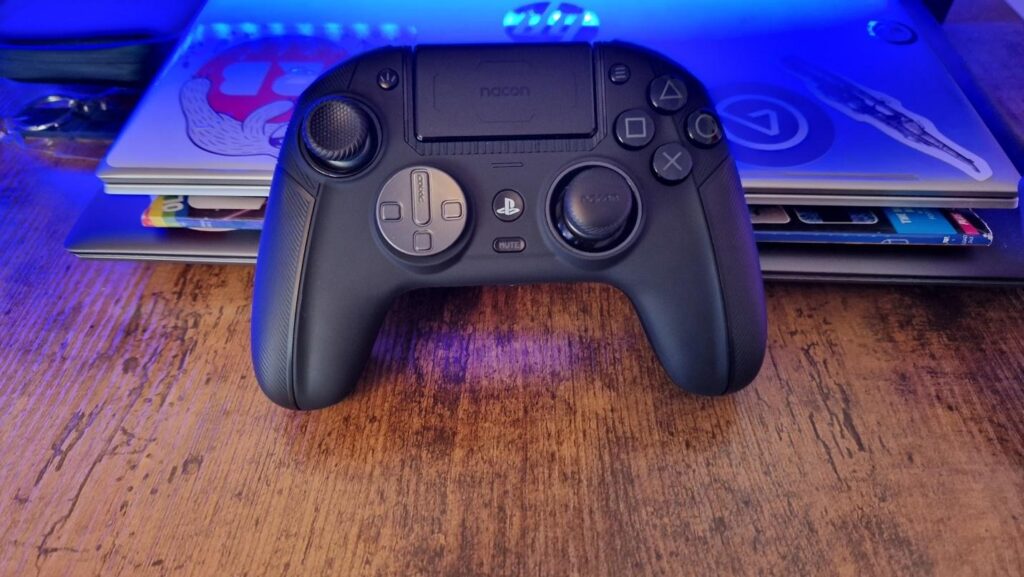
Nacon Revolution 5 Pro is based on the uncomplicated question: if magnetic sensors prevent stick drift, then why not use them everywhere? Nacon also applies Hall Effect sensors to the triggers as opposed to the thumbsticks. It implies that the components that you press the most are engineered to withstand wear initially – no sliding sticks, no battered triggers, no gradual deterioration of the feel of the controller as time passes. The design is the same as the normal DualSense, thus the transition is comfortable.
It is officially licensed on PlayStation 5 and is comfortable to use during long gaming sessions, not only short competitions. One of its largest strengths is customization. Thumbstick sizes can also be changed and small internal weights can be adjusted to make the controller feel heavy or balanced in your hands.
A built-in Bluetooth audio is one of the features that are unique in that you can directly connect the headphones to the controller rather than to the console. It was also designed with a lower carbon footprint in mind by Nacon, which is not a common feature in gaming accessories.
Pros
- It has Hall Effect sensors on the thumbsticks and the triggers, and it is one of the most durable and wear-resistant pro controllers on the market at the moment.
- Bluetooth headphones can be connected to the controller, which is a handy feature that the Sony controllers do not have at any price.
Cons
- Haptic feedback and vibration are not present when playing PS5 games, thus you are not experiencing a key component of what makes the regular DualSense feel immersive.
Conclusion
Third-party manufacturers are not playing catch-up anymore, they are innovating in a manner that directly threatens the controller dominance that Sony had hitherto. These controllers are not gimmicks whether it is drift-proof magnetic sticks or modular layouts, hair-trigger accuracy or marathon battery life. They are specifically designed devices to various types of players.
Competitive advantage, the freedom to customize, or just a controller that won’t drift in the middle of a boss battle, now there is a serious alternative available. Sony could have established the standard, but in 2026, it does not own it outright anymore. And when your controller is the bridge between you and winning, maybe it is time to upgrade the bridge.