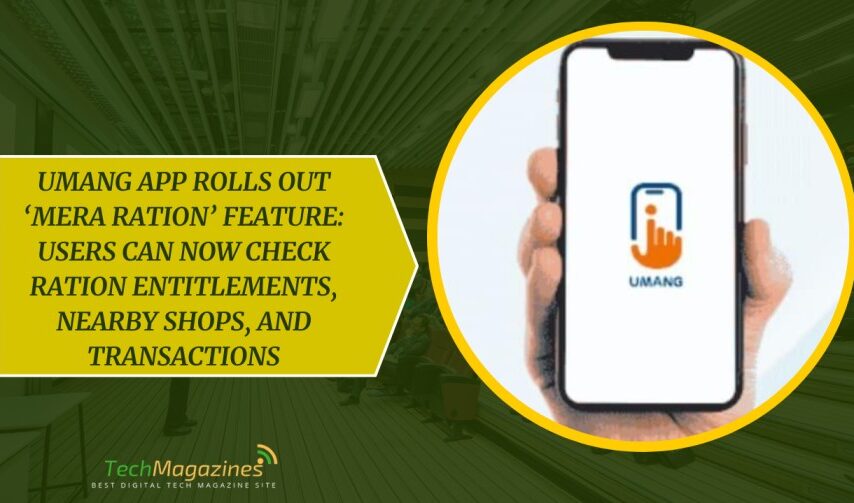

The Indian Government has recently placed a new service called “Mera Ration” inside the UMANG app. The idea is simple enough. It lets ration card holders see details of their food grain entitlements on their own phones. For many people this means that simple doubts no longer require a trip to a ration shop.
New Feature Lets Users Track Monthly Ration Allocation
Through this addition, users are able to check how much ration is assigned to them each month. They can also look up the nearest government fair price shop and view a record of the rations they have received in the past. The change is meant to bring a little more clarity to the system and to make everyday access easier, particularly for families who depend on subsidized grains under the public distribution scheme.
Understanding the ‘Mera Ration’ Service Inside the UMANG Platform
The new Mera Ration section in the UMANG app gathers several ration card services and places them in one digital space. A person can open the application at home and obtain basic information that earlier required visits or inquiries. Among other things, the service helps users locate nearby government ration outlets and check details related to their ration benefits with far less effort.
By entering their ration card number in the application, users are able to see the quantity of wheat, rice, or other grains they are entitled to receive under the public distribution quota. The app also keeps a record of earlier transactions. In this way, a person can look back and see the dates on which rations were collected and the amounts issued in previous months.
Step-by-Step Guide to Use the Mera Ration Feature on UMANG App
The process itself is straightforward and requires only a few simple steps.
- First, download the UMANG app from either the Google Play Store or the Apple App Store.
- Next, open the application and register with your mobile number.
- You will then be asked to create a four-digit MPIN, which acts as a small safeguard for your account.
- After signing in, go to the main page and type “Mera Ration” into the search bar.
- A list of ration card services will appear. Enter your ration card number to view the relevant details.
If the number is not readily available, the system also allows the user to retrieve the same information through Aadhaar credentials. In this manner, the app attempts to make routine ration enquiries easier and quicker for ordinary users.
Why the Feature Matter for Ration Card Holders
The feature is likely to be especially useful for migrant workers. Under the government’s One Nation One Ration Card (ONORC) arrangement, people who travel to other states in search of work can use the app to identify which ration shop in their new area will supply their food grains. What once required inquiry and uncertainty can now be settled with a few taps on a phone.
There is also the question of openness. In many places, ration dealers explain shortages by pointing to empty stocks or technical problems with the system. With the help of the app, users are able to check certain details for themselves, instead of relying entirely on what they are told.
To reduce the chance of misuse, the system sends immediate confirmation of each transaction. When a person collects ration using biometric verification, such as a fingerprint scan, a message is sent at once to the registered mobile number. This small notice serves as proof that the ration has been issued to the proper beneficiary.
Conclusion
The introduction of the “Mera Ration” service to the UMANG App is indicative of a larger trend of transferring the everyday governmental services to the smartphones of the citizens. Rather than standing in queues, making inquiries or using their intuition, ration card holders can now check their entitlement, find their nearest fair price shops and view their transaction history with a few taps. In the case of migrant workers, especially, the feature may render the Public Distribution System much easier to navigate.
Naturally, an application cannot resolve all the issues in the ration system overnight. Yet it does put valuable information right into the hands of the people who need it the most. And in an environment where visibility has been wanting in many cases, even a few digital windows count. At least it will save them the visits to the ration shop to inquire whether their ration has arrived since they can know that via the app.
FAQs
Q1: What exactly is the ‘Mera Ration’ feature on the UMANG app?
Mera Ration is a new service within the UMANG application that allows the ration card holders to check their food grain entitlements, find the nearest fair price shops, and view their previous transactions without stepping out of their home.
Q2: Do I need to visit a ration shop or government office to use this?
No, you don’t. The entire concept is that your phone does the work. There are no queues, and no confusing counters. It is as simple as opening the app, tapping a few buttons and seeing your ration details magically appear. Bureaucracy has seldom been this painless.
Q3: What specific information can I check on ‘Mera Ration’?
Quite a bit, actually. You may see what you are entitled to every month of wheat, rice, or any other grain, where to find the nearest government fair price shop, and a complete history of previous ration collections, by date and quantity. It is just an account statement except that it is about food rather than money you would have preferred to have.
Q4: How does ‘Mera Ration’ help prevent ration fraud or dealer mischief?
Glad you asked. Each time the ration is picked up through biometric verification i.e. a fingerprint scan, the application sends an immediate SMS to the registered mobile number. Thus when your ration dealer starts his old game of “system problem, no stock to-day,” you will have a digital record that politely refuses.