
In the hyper-competitive SaaS landscape, the battle for customer retention is won and lost on the battlefield of user experience and tangible value. Product teams are under immense pressure to deliver not just features, but insights. For years, traditional Business Intelligence (BI) tools like Tableau and Power BI were the go-to solution for data analysis. But as the demand for in-product, customer-facing analytics has exploded, a new paradigm has emerged. While traditional BI still holds its ground for internal analysis, embedded analytics is fundamentally reshaping how SaaS companies deliver data-driven value directly within their applications.
This shift isn’t just a minor technicality; it represents a strategic pivot in how product teams approach data. The old way involved exporting data, wrangling it in a separate BI tool, and presenting it in a clunky, disconnected dashboard. The new way embeds analytics directly into the user workflow, making insights a natural and seamless part of the product experience. For SaaS product teams, understanding the nuances between these two approaches is no longer optional—it’s critical for building products that win.
The Old Guard: Understanding Traditional BI and Its Limitations
Traditional BI has been a cornerstone of enterprise data strategy for decades. Platforms like Tableau, Power BI, and Qlik have empowered organizations to centralize their data, build comprehensive reports, and empower internal teams to make data-informed decisions. These tools are incredibly powerful for their intended purpose: giving analysts and business leaders a 360-degree view of company operations.
What is Traditional BI?
At its core, traditional BI is a set of tools and processes for collecting, analyzing, and visualizing large volumes of business data. It typically involves a centralized data warehouse where data from various sources is stored and processed. Analysts then use desktop or web-based BI tools to create dashboards and reports that are shared across the organization. This model excels at providing a single source of truth for internal reporting, from sales forecasts to marketing campaign performance.
The Pros: A Centralized Powerhouse
The strengths of traditional BI are undeniable. For internal use cases, these platforms offer unparalleled depth and flexibility. They can connect to a vast array of data sources, handle complex data transformations, and provide sophisticated visualization capabilities. For a CFO analyzing financial performance or a marketing team tracking campaign ROI, traditional BI is an indispensable tool. It provides the “big picture” view that is essential for strategic decision-making.
The Cons for SaaS: A Square Peg in a Round Hole
The problems arise when SaaS companies try to retrofit these internal-facing tools for customer-facing analytics. The very features that make traditional BI so powerful for internal use become significant liabilities in a multi-tenant SaaS environment. The user experience is often clunky and disjointed, forcing users to navigate to a separate dashboard that looks and feels nothing like the core product. This creates a jarring experience that undermines the very value the analytics are meant to provide.
Furthermore, the architecture of traditional BI tools is not designed for multi-tenancy. Each customer’s data must be siloed and secured, a process that can be complex and error-prone to implement with tools not built for it. The licensing costs can also be prohibitive, often requiring a per-user subscription that doesn’t scale cost-effectively for a large user base. Finally, the development and maintenance overhead is significant. Customizing and embedding these tools into a SaaS application is a major undertaking, requiring specialized expertise and ongoing maintenance.
The New Wave: The Rise of Purpose-Built Embedded Analytics
In response to the shortcomings of traditional BI for customer-facing scenarios, a new category of tools has emerged. These platforms are designed from the ground up to be integrated directly into SaaS applications, providing a seamless and native analytics experience for end-users. This approach represents a fundamental shift in how product teams think about data, moving from a reactive, report-based model to a proactive, in-context one.
What is Embedded Analytics?
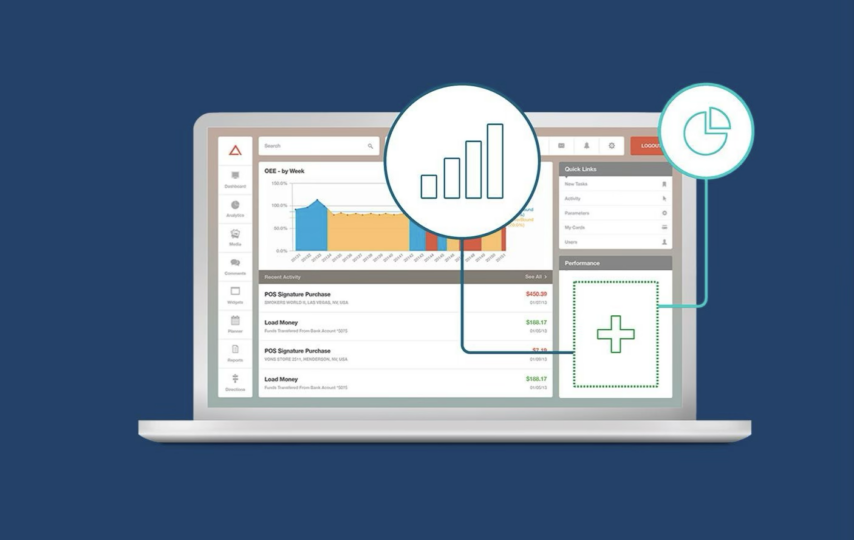
Embedded analytics is the integration of analytical capabilities and data visualizations within a host application. Instead of sending users to a separate BI tool, the analytics are presented directly within the user workflow, providing insights at the point of action. This could be a dashboard showing key performance indicators on the main application screen, a set of interactive charts within a specific feature, or a report builder that allows users to create their own custom reports without ever leaving the application.
Why It’s a Game-Changer for SaaS
The benefits of this approach for SaaS companies are profound. First and foremost is the user experience. By presenting analytics in a way that feels native to the product, companies can dramatically increase user engagement and satisfaction. The analytics become a core part of the product’s value proposition, rather than a bolted-on afterthought. This is particularly crucial in a product-led growth strategy, where the user experience is paramount.
Architecturally, embedded analytics platforms are built for multi-tenancy, with robust security features that ensure each customer can only access their own data. They are also designed for scalability, able to handle a large number of users without compromising performance. And because they are designed to be white-labeled, they can be fully customized to match the look and feel of the host application, creating a truly seamless brand experience.
For product teams, one of the most significant advantages is the speed of development. Instead of spending months building a custom analytics solution from scratch, teams can use a low-code platform to build and deploy rich, interactive dashboards in a fraction of the time. A purpose-built customer-facing analytics solution provides the tools to create a native, multi-tenant, and scalable experience with a few lines of code, freeing up development resources to focus on core product features.
A Head-to-Head Comparison: Key Differences Product Teams Must Know
| Feature | Traditional BI | Embedded Analytics |
| User Experience | Disjointed, requires leaving the application | Seamless, integrated into the user workflow |
| Customization | Limited, often retains BI vendor branding | Fully white-labeled to match the host application |
| Architecture | Not designed for multi-tenancy | Built for multi-tenancy and scalability |
| Development | High-effort, requires specialized expertise | Low-code, rapid development and deployment |
Making the Right Choice: When to Use Which?
The decision between traditional BI and embedded analytics is not about which is “better,” but which is right for the job. For internal analysis, traditional BI remains a powerful and effective solution. But for customer-facing analytics, the advantages of a purpose-built platform are clear.
If your goal is to empower your internal teams with data, a traditional BI tool is likely the right choice. But if your goal is to deliver a world-class analytics experience to your customers, a dedicated embedded analytics platform is the way to go.
The debate between embedded analytics and traditional BI is a critical one for SaaS product teams. While traditional BI has its place, the future of customer-facing analytics lies in embedded solutions. By providing a seamless, native, and scalable analytics experience, SaaS companies can increase user engagement, reduce churn, and create a powerful competitive advantage. As you evaluate your own analytics strategy, consider the needs of your users and the experience you want to deliver. The right choice will not only impact your product but your entire business.