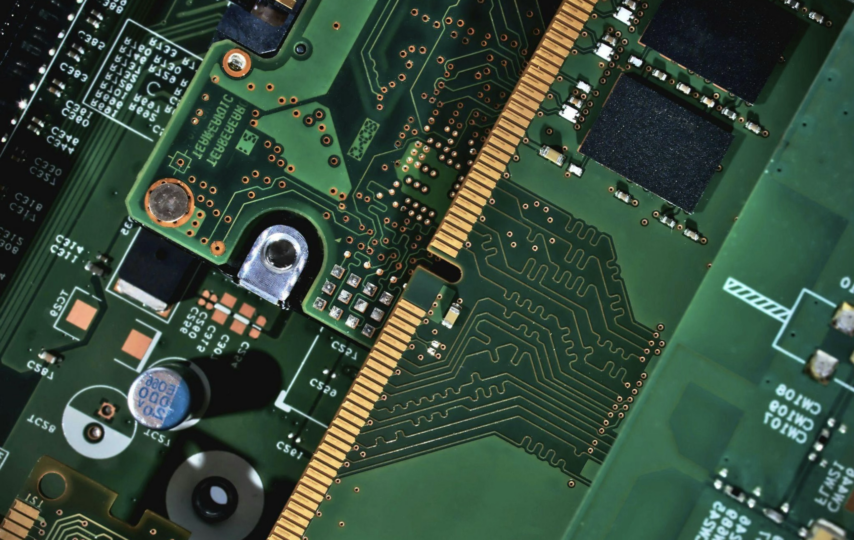

Nearly all of the electronic products we use are powered by circuit boards, yet few engineers take the time to realise how much their layout choices affect everything downstream. An otherwise well-thought-out product may fail too soon due to a misplaced component, an improperly routed trace, or a missed thermal channel. The reason professional design techniques exist is because those nuances are so important.
Where Expertise Changes the Outcome
One of the most important decisions a product team can make is to bring in professional PCB design services at the concept stage rather than retrofitting knowledge later. Engineers with experience possess institutional knowledge regarding failure types that are rarely found in textbooks. By identifying susceptible configurations prior to the start of manufacture, they direct the project away from issues that would otherwise arise during field testing or, worse, after client delivery.
Signal Integrity and Its Overlooked Importance
Every time an electrical signal travels over a board, it encounters crosstalk, reflections, and changes in impedance. Signal degradation is no longer an unknown risk when designers take controlled impedance routing and appropriate termination procedures into consideration early on. Boards constructed without this discipline can display unpredictable activity that is difficult for diagnostics to identify.
Managing High-Speed Signals
Even millimetres of trace length have quantifiable effects at the frequencies used by modern CPUs and communication interfaces. Even in high speed applications, enhanced routing with rigorous layer stack planning, matching lengths, and differential pair routing is required. Ignoring them promotes occasional timing issues, which are the worst form of error as they destroy trust without giving clear explanations.
Thermal Management as a Reliability Pillar
Most electronics manufacturers underestimate the threat of heat. Operating temperature and component lifespans are directly correlated; in many semiconductor families, every ten degrees of reduction can almost double the mean duration until breakdown. The unglamorous actions that distinguish boards that last years from those that fail within months include thoughtful copper pours, stitching beneath power components, and careful positioning in relation to airflow routes.
Component Placement and Mechanical Stress
Circuit boards are impacted by physical forces over the course of their operation. Mechanical stress is introduced at solder joints by vibration, flexing during assembly, and thermal expansion. Design decisions with actual reliability repercussions, such as positioning heavy components away from board edges, aligning connectors to decrease leverage forces, and adhering to keep-out zones around mounting points, are frequently overlooked during short development cycles.
Design for Manufacture Reduces Variability
If a layout disregards production tolerances, even if it appears correct in simulation, it may nevertheless provide uneven results. Real-world fabrication methods are impacted by annular ring dimensions, solder mask slivers, and pad clearances. Understanding these limitations helps designers create boards that assemble consistently, which lowers rework rates and the subtle flaws that arise when operators have to manually repair marginal designs.
Testing Provisions Built Into the Architecture
Reliability does not end at the initial power-on. Adequate test access is necessary for products to endure in the field so that defects can be effectively identified throughout their service lives. The speed and accuracy of both production testing and field maintenance are significantly increased when test points, boundary scan provisions, and accessible measurement nodes are incorporated during layout rather than being treated as afterthoughts.
Documentation as a Long-Term Asset
Schematic annotations, layer stack specifications, and revision history are examples of comprehensive design documentation that turns a one-time project into a maintainable asset. Teams without thorough records must rely on guesswork when boards eventually need to be modified or second-source components substituted, which creates additional failure risks. Documentation is viewed by professional practices as an essential component of the deliverable rather than an add-on.
The Cumulative Effect on Product Stability
Every one of these factors compounds. Boards that maintain signal integrity, efficiently dissipate heat, withstand mechanical stress, assemble reliably, and facilitate extensive testing have significantly lower inherent risk when they are put into operation. The benefits are not just hypothetical. When rigorous design principles replace ad hoc approaches, businesses monitoring field return rates consistently see quantifiable benefits that directly translate into lower warranty costs and stronger customer retention.
One large field recall costs more than a disciplined engineering investment at the layout phase since the reliability gains are made on a unit-by-unit basis. Reliability is achieved long before a product is placed on the production line. Any manufacturing constraint, routing decision, and thermal factor considered in the design phase represents a problem that has been evaded instead of a problem solved. Long-life electronics are often manufactured by firms that consider board layout as a strategic investment and not a process. That discipline is just good engineering in a market where reputation spreads quickly and returns are costly.