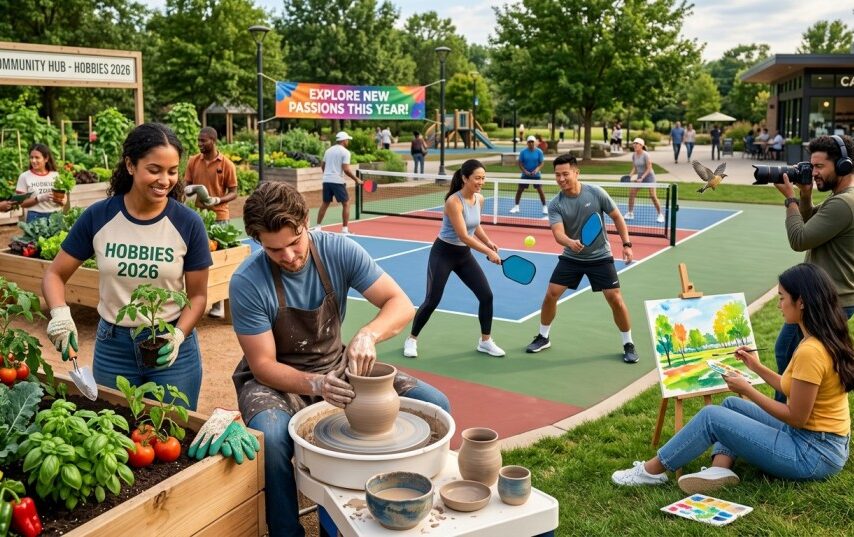

Hobby adoption tends to follow 2 patterns: a slow build driven by social media and word of mouth, or a rapid uptake triggered by a specific product, event, or cultural moment. In 2026, both are happening at once. Some activities have been gaining ground for years. Others appeared in mainstream conversation within the last 12 months. The list below covers the hobbies drawing the most new participants this year, based on sales data, community growth, and search trends.
Running Clubs as a Social Format
Run clubs surged in membership across North American and European cities starting in late 2024. The trend is less about fitness and more about social structure. Weekly group runs followed by coffee or drinks fill a social gap that post-pandemic life left open. Running requires no equipment beyond shoes, no reservations, and no skill threshold. In cities like New York, London, and Toronto, waitlists for organized run clubs now exceed the capacity of the events themselves.
Ceramics and Pottery
Pottery studios have reported enrollment increases for 3 consecutive years. The appeal is partly tactile. Working with clay is one of the few hobbies that produces a physical object with no screen involved. Studios in urban areas now offer evening classes targeted at working professionals, and many are booked weeks in advance. The hobby also benefits from strong visual content on social media, where finished pieces and wheel-throwing clips perform well.
Poker Nights and Home Games
Card games at home never fully disappeared, but the last 2 years brought a measurable increase in poker set sales, chip kit purchases, and tutorial video traffic. The video game Balatro, which sold more than 7 million copies since February 2024, introduced poker hand rankings to millions of players who had never touched a real deck. That exposure translated into curiosity about the actual game. Poker also fits a social pattern similar to run clubs: a recurring gathering with built-in structure, low cost, and no need for a commercial venue.
Home games typically use a no-limit hold’em format. Buy-ins range from $10 to $50. The host provides cards and chips. The game runs for 3 to 5 hours. It is one of the few hobbies in this list that is competitive, social, and inexpensive at the same time.
Birdwatching With a Camera
Birding has been growing since the pandemic, but the addition of affordable telephoto lenses for smartphones pushed it into a new bracket in 2025 and 2026. The Merlin Bird ID app from the Cornell Lab of Ornithology reported record downloads. Birding combines outdoor activity with identification and cataloging, which appeals to people who like to track progress and collect data.
Strength Training at Home
Home gym equipment sales have remained elevated since 2020. What changed in 2025 and 2026 is the type of training people are doing. Barbell programs like Starting Strength and 5/3/1 have gained online followings, driven by podcasts and YouTube channels that explain the programming in accessible terms. Modular dumbbells, squat racks, and flat benches are the most purchased items. The trend is moving away from cardio-focused fitness and toward structured resistance training with progressive overload.
Learning a Language Through Apps and Immersion
Duolingo reported 113 million monthly active users in its most recent earnings call. Language learning is not new, but the gamification of apps and the accessibility of immersion content through streaming services have lowered the barrier. Watching a Korean drama with subtitles and then doing a Duolingo Korean lesson in the same evening is a routine that millions of users follow.
Fiber Arts and Knitting
Knitting and crocheting have seen renewed interest among younger demographics. Yarn sales have increased at specialty retailers. The craft appeals to people looking for a screen-free hobby that produces a wearable result. Online communities share patterns and project updates, creating the same kind of social structure that drives other hobbies on this list.
The hobbies gaining traction in 2026 share a few properties. They are social but not dependent on technology. They produce tangible results or measurable progress. They fit into weekly routines without requiring large financial commitments. And most of them can be started with little to no prior knowledge, which lowers the friction that keeps people from picking up something new.