

Samsung has introduced a fresh series of Mini LED televisions in India, equipped with the sort of artificial intelligence which manufacturers now attach to nearly every household device. The company describes the system as Vision AI, a phrase broad enough to suggest both technical progress and a certain vague authority. According to Samsung, the televisions use AI-assisted picture and sound processing to improve colour, contrast, and motion clarity, particularly in fast-moving scenes where modern screens are judged most severely.
The new models employ Mini LED display technology together with Samsung’s NQ4 AI Gen2 Processor, which is intended to adjust picture quality in real time. There is also support for Motion Xcelerator 144Hz, aimed chiefly at those who use televisions for gaming and have come to regard smooth frame rates as an essential condition of civilised life.
Alongside this are the expected additions of the connected age: Samsung Knox Security, SmartThings integration for controlling devices around the house, and One UI Tizen, which the company says will receive operating system updates for as long as seven years.
Samsung’s Latest Mini LED TVs Start at Rs. 42,990 in India
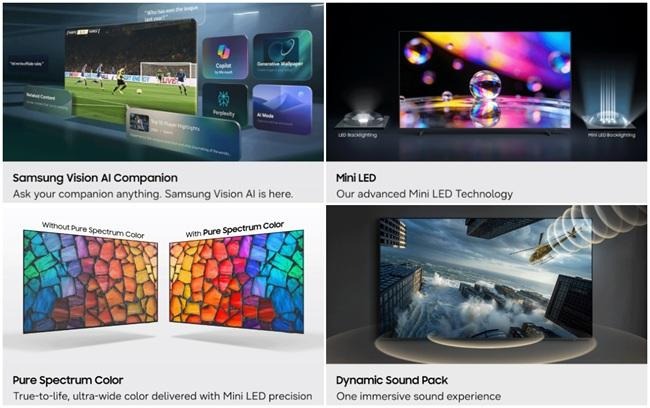
Prices for the range begin at Rs. 42,990 in India. Samsung is also offering launch incentives, including cashback of up to five percent and zero down-payment EMI schemes extending to thirty months. The televisions are available through major retail outlets, Flipkart, and Samsung India.
From 43 Inches to 100 Inches, Samsung Expands Screen Size Choices
The new Samsung Mini LED televisions come in sizes from 43 inches to 100 inches. The range is broad enough to suit both the ordinary sitting room and the kind of drawing-room where a television begins to resemble a public monument. Samsung uses smaller LEDs in these sets, which gives the screen tighter control over light and shadow. The result, the company says, is stronger contrast, sharper detail, and a brighter picture that does not dissolve into glare.
The televisions also include what Samsung calls Pure Spectrum Colour. The phrase is typical of the trade, but the purpose behind it is plain enough. The screens aim for more accurate colours and a wider range of tones across each image. Samsung claims the phosphor layer covers more than ninety percent of the colour gamut, which, translated into ordinary speech, means richer and fuller colour without the washed-out look common to cheaper displays. Features such as Colour Booster and Mini LED HDR further deepen the contrast and give images a greater sense of weight and texture.
Samsung Targets Gamers and Sports Fans with 144Hz Motion Technology
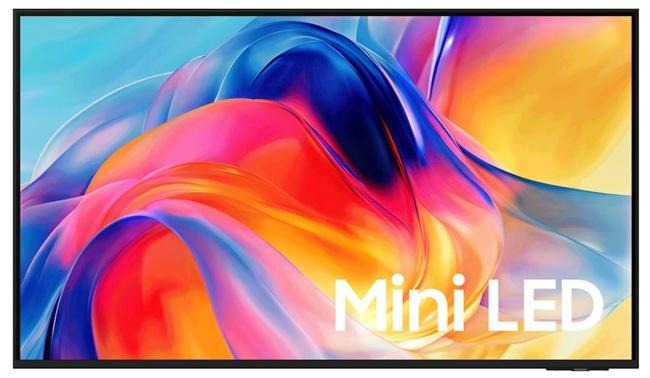
Samsung has paid particular attention to sport and gaming, those two industries that now drive much of modern television design. The sets support Motion Xcelerator 144Hz, a system meant to reduce blur during quick movement. The television studies the motion between one frame and the next, then attempts to smooth the transition before the eye notices the gap. It is another example of the machine quietly correcting reality on the viewer’s behalf.
Samsung equips these Mini LED televisions with its NQ4 AI Gen2 Processor, a chip that carries the now-obligatory promise of artificial intelligence. The processor uses what the company describes as a 20-neuron neural network system to adjust picture and sound while the television runs. In simpler terms, the machine continually studies the image before it and attempts to improve it as it goes. Samsung says this allows sharper upscaling, cleaner detail, stronger contrast, and better judgement of whatever content happens to appear on the screen. The television no longer merely displays a programme. It interprets it.
One UI Tizen, Samsung TV Plus, and Smart Home Features Included
The sets run on One UI Tizen, Samsung’s television software platform. The company promises as many as seven years of operating system upgrades, which suggests an effort to make the television seem less disposable than most modern electronics. Samsung also includes access to Samsung TV Plus, a service that carries more than 150 FAST channels in fourteen languages. These cover the usual spread of news, films, entertainment, and the curious category now called infotainment, where information survives chiefly by disguising itself as amusement.
There is also an AI Sound Controller, which adjusts audio according to the habits and preferences of the viewer. Like many modern conveniences, it removes one more small decision from ordinary life. Samsung Knox Security comes built in as well. It protects personal data and keeps watch over connected devices in the home. SmartThings support allows the television to act as part of a wider domestic network of machines speaking silently to one another.
The design itself follows the present fashion for thinness and restraint. Samsung calls it MetalStream Design. The body uses a single sheet of metal and narrow bezels that push the image close to the edges of the frame. The aim, plainly enough, is to make the screen appear less like an object in the room and more like a window cut directly into the wall.
Final Words
Samsung’s new Mini LED televisions come with the same modern guarantee that all screens in the home should now work as hard as the people who use them. Samsung is clearly positioning these televions as more than just display panels with the NQ4 AI Gen2 Processor, Vision AI features, and 144Hz refresh rates that are geared towards gamers and sports fans.
The slim MetalStream design, brighter Mini LED panels and SmartThings integration make Samsung’s new line-up look like it’s designed for the home, where connected devices are becoming more common. Whether AI is a must in your TV is a different matter, but it seems contemporary marketing is intent on getting even your cricket highlights to be accompanied by neural networks.