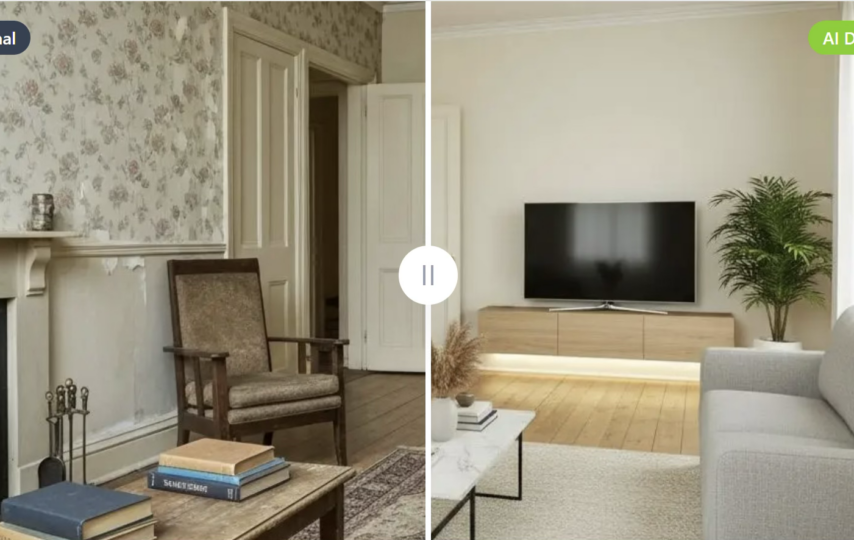

Interior design has moved beyond sketches, mood boards, and expensive software. With the rise of artificial intelligence, designing a home is now faster, more visual, and more accessible. Two terms that are becoming especially common in this space are interior design AI and AI home design free tools. Together, they represent a shift in how people plan, visualize, and experiment with interior spaces.
What Is Interior Design AI?
Interior design AI refers to software systems that use artificial intelligence to analyze room images and generate redesigned versions of those spaces. Instead of manually building a 3D model or hiring a designer for early concepts, users can simply upload a photo of a room and let AI produce multiple design variations.
These systems are trained on large datasets of interior styles, furniture arrangements, color schemes, and architectural layouts. As a result, they can recognize room structure and apply realistic design transformations.
Most interior design AItools follow a simple workflow:
- Upload a room photo
- Select a room type (bedroom, kitchen, living room, etc.)
- Choose a style or theme
- Generate redesigned outputs
The AI then produces visual versions of the same space with different aesthetics and arrangements.
What Are AI Home Design Free Tools?
AI home design free tools are platforms that offer interior visualization features without requiring payment or advanced technical skills. These tools are designed for everyday users who want to experiment with home design ideas without using professional-grade software.
Instead of working with complex modeling systems, users interact with a simple interface where they can upload images and generate design ideas instantly.
Common capabilities include:
- Room redesign generation
- Style transformation (modern, minimalist, luxury, etc.)
- Furniture placement suggestions
- Wall color and texture changes
- Multiple design variations
These tools are widely used for quick visualization and idea exploration.
How Interior Design AI Works Behind the Scenes
Although the user experience is simple, interior design AI relies on advanced technologies. It typically combines computer vision and generative models.
Computer vision helps the system understand the structure of a room—identifying walls, floors, ceilings, doors, windows, and furniture. Once the structure is understood, generative AI models apply design transformations based on user input.
For example, if a user selects a “modern minimalist” style, the AI replaces heavy furniture with simpler designs, adjusts lighting tones, and changes color palettes to match the selected theme.
Some systems also use diffusion models, which gradually generate highly detailed and realistic interior images from scratch or from an existing photo.
Common Use Cases
Interior design AI and AI home design free tools are used in several practical ways.
Room Makeovers
Users can visualize how a room would look after renovation. This includes changes to furniture, wall colors, flooring, and lighting.
Space Planning
AI tools can suggest different furniture arrangements to improve space usage, especially in small apartments or compact rooms.
Style Exploration
People often experiment with different design styles before deciding on one. AI makes it easy to compare multiple aesthetics quickly.
Home Renovation Planning
Before investing in real materials or furniture, users can preview ideas digitally to reduce uncertainty.
Real Estate Visualization
Property listings sometimes use AI-generated interior staging to show how empty rooms could look when furnished.
Key Features Found in AI Design Tools
Most interior design AI platforms share several core features:
Image Uploading
Users can upload photos of real rooms taken from smartphones or cameras.
Style Selection
A variety of design styles are available, such as modern, Scandinavian, industrial, bohemian, and luxury interiors.
Instant Rendering
The AI generates redesigned room images within seconds or minutes depending on complexity.
Multiple Variations
Users often receive several design options for the same room, allowing comparison between different styles.
Editing Controls
Some tools allow adjustments such as furniture type, lighting intensity, or color schemes.
Advantages of AI-Based Interior Design Tools
AI interior design tools offer several practical advantages for users exploring home design ideas.
They reduce the need for technical knowledge, allowing anyone to create visual concepts without learning complex software. They also simplify the early stages of planning, where ideas are still being explored rather than finalized.
Another advantage is the ability to quickly test multiple design directions. Instead of committing to a single idea, users can experiment with different layouts and aesthetics.
These tools also improve visual communication. Instead of describing ideas in words, users can show realistic design outputs to designers, contractors, or family members.
Limitations of Interior Design AI
While these tools are powerful, they are not perfect replacements for professional interior designers or architects.
One limitation is accuracy. AI-generated rooms may sometimes include unrealistic furniture placement or proportions that would not work in real life.
Another limitation is personalization. AI may not fully understand specific lifestyle needs, storage requirements, or long-term usability concerns.
Additionally, structural planning—such as electrical layouts, plumbing, or load-bearing walls—still requires professional expertise.
Because of this, AI tools are best used for inspiration and visualization rather than final construction planning.
Role in Modern Design Workflow
Interior design AI is often used at the beginning of the design process. It helps users move from abstract ideas to visual concepts quickly.
Instead of starting with technical drawings, users begin with AI-generated inspiration images. These visuals can then be refined, adjusted, or handed over to professionals for further development.
This creates a smoother transition between idea generation and real-world execution.
Why These Tools Are Becoming Common
The growing interest inAI home design free tools comes from a need for simplicity and speed in design exploration. Many users want quick visual answers rather than complex modeling processes.
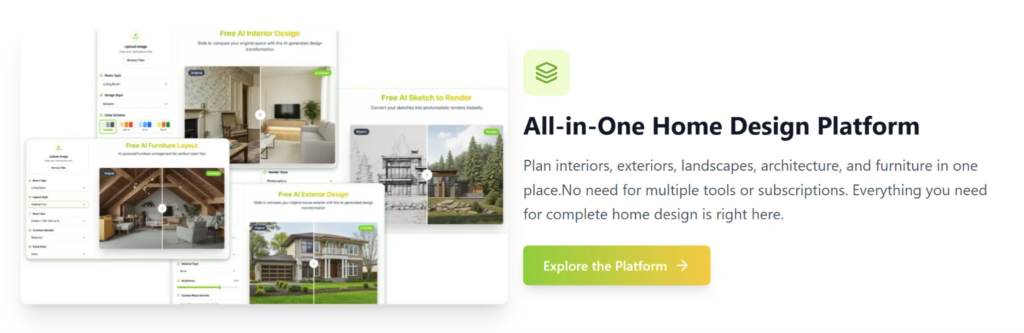
At the same time, interior design AI makes experimentation easier. Users can explore bold or unusual ideas without risk, since changes are digital and reversible.
This combination of accessibility and flexibility has made AI design tools a regular part of modern home planning workflows.
Conclusion
Interior design AI and AI home design free tools are reshaping how people approach interior spaces. Instead of relying solely on imagination or expensive design software, users can now visualize room transformations instantly.
These tools simplify the process of exploring layouts, testing styles, and generating ideas for different spaces. While they do not replace professional design expertise, they provide a strong foundation for inspiration and early planning.