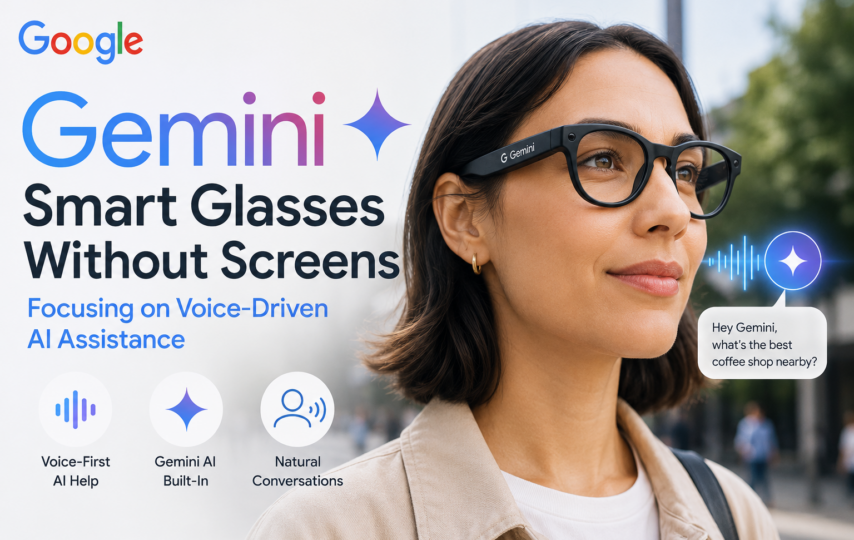

Google has introduced a new generation of smart glasses that focus more on speech-based artificial intelligence than on screens. The company has opted for a more lightweight device, as they have eliminated the need for visual displays. The glasses have been designed in collaboration with Gentle Monster and Warby Parker, and are available in a variety of styles and designs, from bold and trendy to simple and professional.
This is Google’s attempt to make wearable tech more accessible and integrated into their current products, according to Cas and Chary XR. The heart of the experience is the company’s AI assistant, Gemini, which enables users to perform typical tasks using voice commands. The ability to manage schedules, get directions from Google Maps, and access information can all be done without having to grab a phone.
There are some compromises in the design. The focus on comfort and battery life compromises some of the visual elements of other smart glasses. There are also privacy issues that are likely to remain a concern as AI wearables become more prevalent, and cost may be an issue.
The glasses could also be a hint at Google’s future plans. Future versions might add augmented-reality features, which would go beyond voice assistance. But, for now, the company is more interested in utility than in showmanship, and wearable tech is more about being a part of life than a novelty.
A Fresh Take on Wearable Design Philosophy
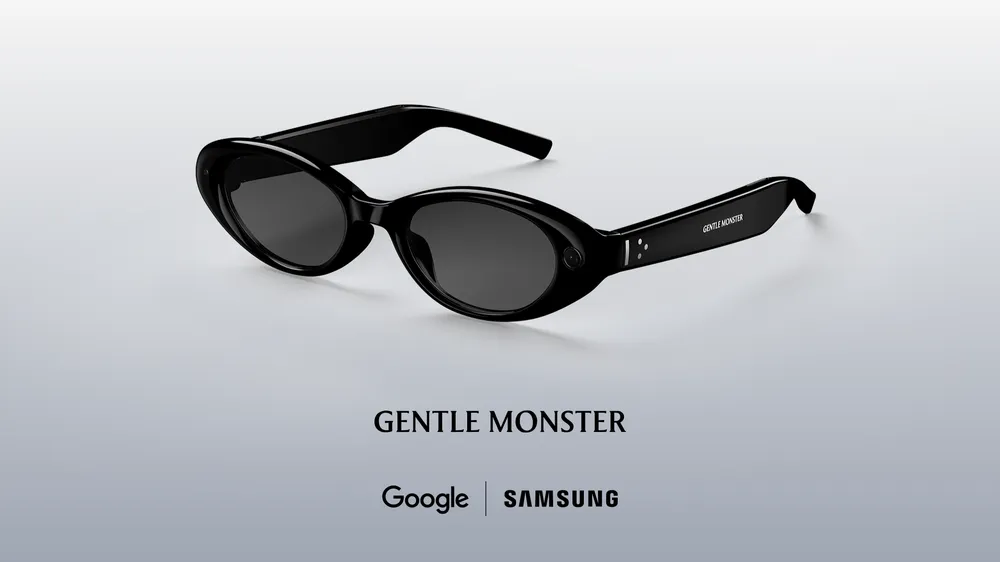
Google has two types of smart glasses. One is from Gentle Monster. It Prefers a modern style and strong shapes. The other is from Warby Parker. It’s more traditional and is suitable for work as well as everyday use.
The biggest decision the company has to make is in another direction. The glasses do not attempt to put a screen in front of the user’s eyes. Instead, Google has created them around sound and artificial intelligence. That choice makes the device lighter and extends its battery life.
The glasses are compatible with Android and iPhone. This provides them with a larger user base than products that are platform-specific. Google seems to have decided to go practical instead of chasing novelty.
How Gemini AI Powers Everyday Tasks

At the heart of the experience is the Gemini AI itself. Google’s smart glasses are most effective with their AI assistant, Gemini. It answers simple questions and more. It learns over time patterns in the user’s behaviour and adapts its responses accordingly.
Voice commands can be used for many everyday tasks. A user can view appointments, navigate using Google Maps, or send messages and emails without having to pick up the phone. There are also external services that are linked to Gemini. It can monitor deliveries, order food and interact with other supported apps.
What makes it unique is that it not only responds but also acts. It can set reminders, schedule appointments, and give helpful information as things evolve. The glasses allow users to have essential tools at their fingertips, while keeping them in their daily routine.
Balancing Fashion Appeal with Everyday Convenience
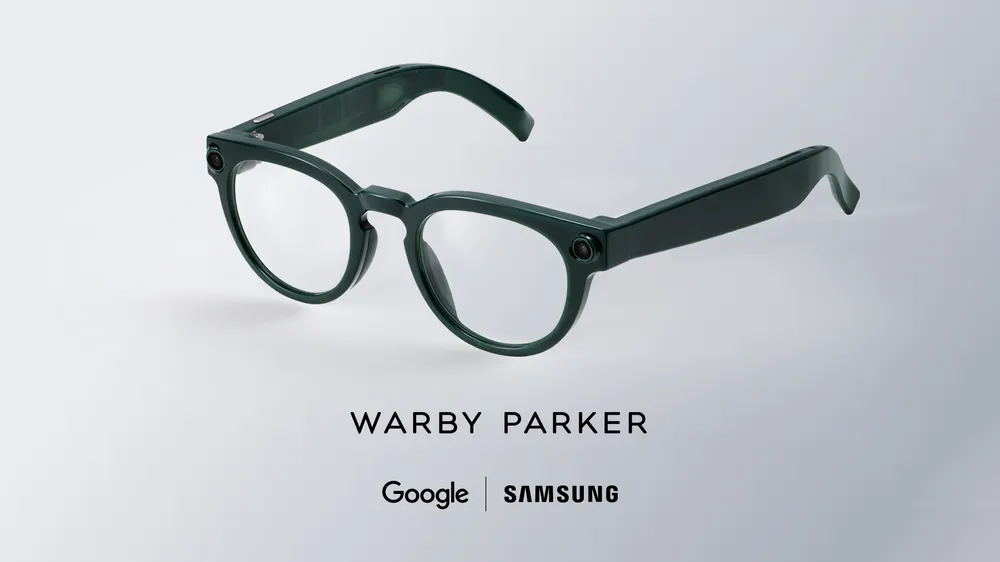
Google has attempted to address a dilemma that has been a challenge for many wearable devices. Even if a product is useful, people will not wear it if it looks awkward. To avoid this, the company worked with Gentle Monster and Warby Parker. This leaves you with two different styles to choose from. One prefers to see bold lines and modern style. The other is a more subdued one that is easier to integrate into the workplace and everyday life.
The glasses are also easy to use. Google omitted a display, and emphasized audio features. This makes the device lightweight and easy to wear for extended periods of time. It also helps to maintain battery life, which means that it can be used for a longer period of time without the need for frequent charging. The aim is clear. The technology should be integrated into everyday life, not requiring constant attention.
What the Next Generation of Smart Glasses Could Look Like
Google seems to see these glasses as a first step. Future versions may include visual elements that bring information right to the user’s eye. Navigation cues, alerts and other updates may be displayed as necessary. The augmented reality could overlay directions, local data, and other digital elements on the real-world environment in front of the user. Real-time translation may also help to better understand conversations between different languages.
This is all part of a greater goal. Google is hoping these glasses will integrate seamlessly with its other devices and services. As new AI tools become available, they could be used for more than just communication and navigation. The company is taking a chance that wearable technology can be a viable part of everyday life.
Key Obstacles That Could Shape Adoption
The glasses could be helpful, but Google has a few challenges ahead. The most apparent one is the absence of a visual display. Some users are used to screens and may find a device without a screen to be limiting, especially if a task requires visual information. There might be another challenge: price. Initial estimates of the cost of the glasses range from what many purchasers would consider too costly to essential.
The privacy issue is also there. Any listening, learning, connected device is subject to scrutiny. If Google can’t convince users of how their data is being used, some may not be willing to use the technology.
Why These Glasses Matter Beyond the Hardware
Google is not just coming out with another gadget. It is attempting to build its market share in a burgeoning market of AI-based wearable devices. The company’s approach is to support both Android and iPhone devices, and to closely integrate the product with its services, which has worked well for the company in the past.
The broader implications are in the direction of travel. Smart Glasses are no longer a novelty and are becoming more commonplace. If Google can get the technology to work, and maintain a usability and accessibility level that is practical and user-friendly, then these devices could become as common as a smartphone is now. In that regard, the glasses are not the end, but a first step to what’s to follow.
Final Words
Google’s screenless smart glasses, Gemini, are a different kind of wearable tech, one that’s more about functionality than pretty visuals. Google is not going to beat the drum for yet another screen in the face of the user, but instead it’s going to trust that voice-driven AI can work in the background to complete mundane tasks.
There are, of course, privacy, pricing and long-term adoption issues to consider. Some users might also not get the visual aspects that have been a hallmark of many smart glasses. Nevertheless, Google’s commitment to comfort, battery life, and AI integration is likely a good strategy in a market that’s still establishing itself.
For the time being, the company seems to be satisfied with having Gemini speak for itself, literally. And if these glasses work, the future of wearable tech might not be on a screen, but rather in the ear.