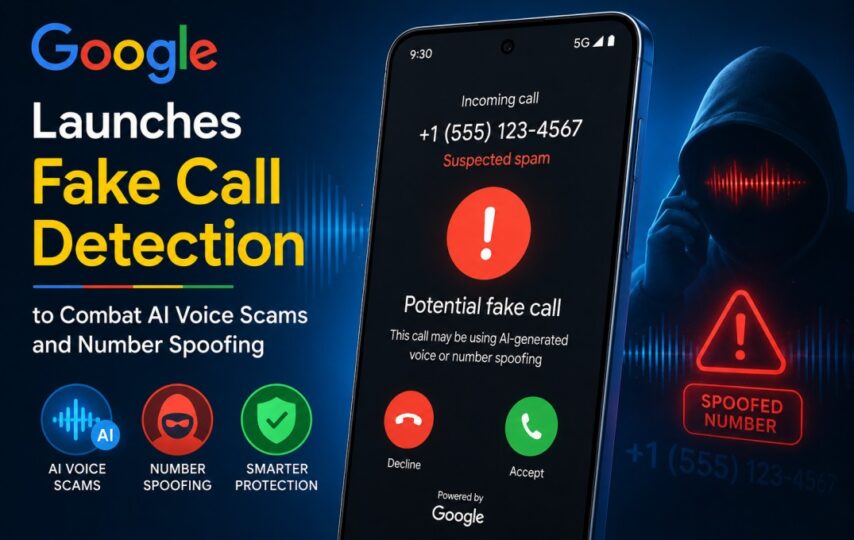

As part of its June Android update, Google is introducing a new safeguard against fraudulent calls. The system is designed to warn users when a call appears to come from someone they know but may in fact originate elsewhere. To do this, it relies on a device-verification process that operates through RCS rather than on the caller ID alone.
The problem it seeks to address is a simple one. The name displayed on a phone screen is not always a reliable guide to the source of a call. Modern spoofing services can make a call appear to come from a trusted contact while routing it through entirely different systems. The spread of AI voice-cloning tools has made this weakness more serious. A familiar name and a convincing imitation of a voice can now be enough to deceive an unsuspecting person.
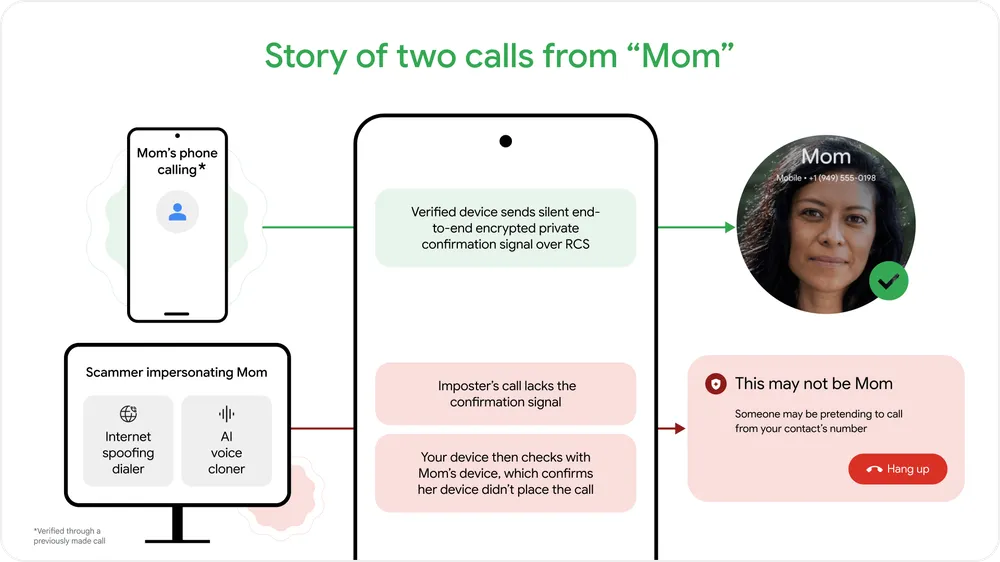
Google says the new feature takes a direct approach. It does not attempt to analyse speech or determine whether a voice has been artificially generated. Instead, when both parties use Phone by Google, Android checks whether the incoming call is genuinely linked to the device associated with that contact. In this way, the software focuses on verifying the source of the call rather than judging the sound of the voice.
Android’s New Defence Against Caller Spoofing
The system works in a simple way. It resembles a brief exchange between two machines. When a genuine contact places a call, that person’s device sends a signal to the receiving phone. The signal arrives at once and confirms where the call comes from. Google says it uses the encrypted framework of Rich Communication Services, or RCS. This allows the devices to establish their identity without revealing anything said during the call.
Before it warns the user, Android first asks a basic question: does the call come from the device that belongs to the contact? If the answer is unclear, the system checks again. It can reach out to the contact’s actual device and look for confirmation. If no matching call exists, Android displays a warning. The user then knows that someone may be using the contact’s number and can choose to end the conversation at once.
This approach has one clear advantage. It deals with the source of the call rather than the voice on the line. Voice analysis may help, but it faces a difficult task. The technology behind cloned voices changes quickly. A check on the device itself offers firmer ground. It gives the phone a reason to doubt the call before the recipient has to decide whether the voice sounds genuine.
Device Requirements and Global Rollout Plans
Google will begin introducing the feature to Android devices around the world this month. It will first appear on Pixel phones and will work on devices running Android 12 or later. Users must have Phone by Google, Google Contacts, and Google Messages installed. The system also depends on both people using Phone by Google. In addition, Google Messages must support RCS on each device.
These conditions mark the chief weakness of the scheme. Its usefulness grows only as more devices take part in it. A safeguard of this kind becomes stronger when more manufacturers and software developers adopt the same method. Google says it chose RCS for that reason. The company wants other phone makers and calling services to build similar forms of verification into their own products.
The change also fits into a larger pattern. Android no longer serves only as software for mobile phones. Google has steadily widened its reach. The company’s work to prepare Android for RISC-V points in the same direction. The operating system now sits at the centre of a broader network that links devices, processors, and online services. Security and compatibility form an increasing part of that role.
Expanded Cross-Platform File Sharing Arrives
The June Android Drop brings another change as well. Google has widened support for Quick Share and now allows certain Android phones to exchange files with iPhones through AirDrop. The process is simple. The two devices must stand within Bluetooth range of one another. The iPhone must also make itself visible through the “Everyone for 10 Minutes” setting in AirDrop.
At present, the feature works on a limited but growing number of devices. The list includes recent Galaxy S models, along with the latest Z Flip and Z Fold phones. Newer Pixel devices also qualify. Several handsets from Xiaomi, OnePlus, OPPO, Vivo, and Honor appear on the list as well. Google says more devices will gain support in the months ahead.
The two additions address different needs. One concerns the movement of files. The other concerns the trustworthiness of phone calls. Yet both follow the same course. Google wants to remove some of the barriers that still divide mobile platforms. At the same time, it wants to strengthen the ordinary user’s defences against deception. Caller ID can mislead. Familiar names can be abused. Artificial voices can sound increasingly real. Android now seeks to make those tricks less effective before they succeed.
Final Words
Google’s newest Android update is a sign that the company has finally come to terms with an uncomfortable reality. Not all of the known names on the other end of the phone call are who they say they are. Instead of trying to fool the more and more advanced AI voice clone, Google has opted for a more pragmatic solution, by verifying the device the voice is coming from. A simple concept, but one which might make life a lot more difficult for scammers counting on spoofed numbers and misplaced trust.
There are some restrictions to the feature. This will only work if Google’s apps and RCS verification are widely adopted. Nevertheless, it is a significant move towards rebuilding trust in regular phone conversations. The June Android update is part of Google’s strategy to make mobile devices both more connected and more secure, in addition to being more compatible with the wider Quick Share.