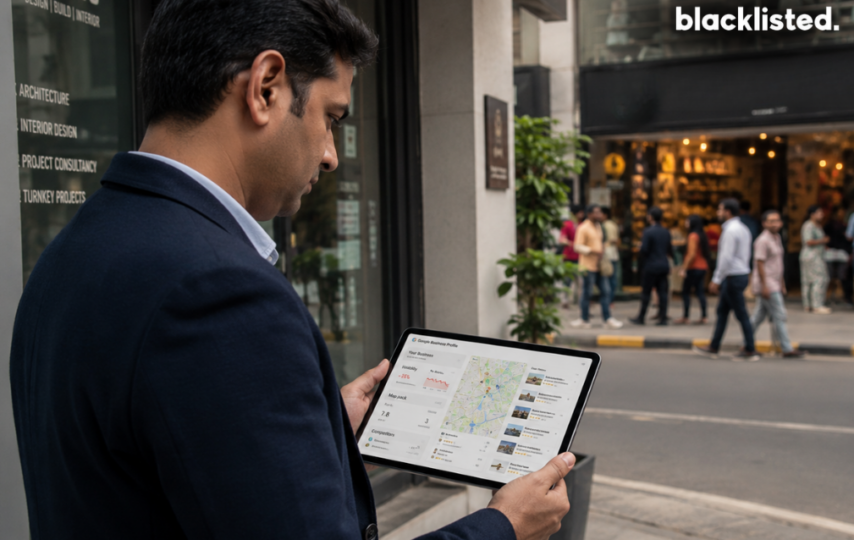

After you seemingly go by the book to up your local search visibility online, getting almost no client calls is a matter of worry. It gets more aggravated when you look up your business online, but find it invisible while the new business across the town takes up superior search positions. You check your website and find it up to the mark, yet you are being outperformed by your local competition, which has a poorly performing website.
The reality of digital marketing in 2026 is that merely having high search rankings for traditional keywords is no longer enough. If your business is fading into the background, chances are high that your poor local SEO strategy could be one of the culprits. Without aligning your strategy with local customers’ habits, there’s no doubt that your smarter rivals will seize this opportunity.
Let’s dive into the local SEO mistakes that the majority of brands make and outline how a professional SEO agency in India can help you reclaim your position.
1. The Core Problem: Being Invisible to Local Search Intent
One major factor that causes local businesses to fall behind competing local businesses is the inability to utilise local search intent in their local SEO strategy.
For instance, if a potential client types “plumber near Chandigarh”, “near me electrician”, or “coffee shop open nearby”, what they ultimately aim for is to locate the business in their vicinity. However, if your SEO strategy revolves around targeting generic keywords like “best plumber” and “best coffee” instead of using specific location-related keywords, Google won’t be able to figure out whether there’s any correlation between your brand and local searches.
Did you know? Nearly 46% of all searches on Google have a local intent. Not leveraging proximity means you are automatically missing out on nearly 50% of your potential customers.
How Competitors Win the Intent Game
- Targeting long-tail location keywords: For the example used above, your competitors aren’t optimising for ‘plumber’. They’re optimising for ‘plumber in Chandigarh’ and ‘coffee shop near Chandigarh Mall’.
- Optimising for voice search phrases: They use sentences and phrases real people use on the go, such as “emergency plumber near me”.
- They dominate the local 3-pack of Google: Because their content signals proximity and local relevance, Google places them in its coveted map pack (the three top spots in Google search results awarded to the three best local-query-based businesses). This leaves generic websites completely out of sight.
2. Poor Google Business Profile: The Single Biggest Failure Point
In 2026, your Google Business Profile optimisation will likely be more important than your actual website for visibility in local results. It’s essentially your business’s first and most important digital store. Having an incomplete, unoptimised, or abandoned profile is probably the single most expensive mistake a local SEO for business can make.
In short:
- An incomplete profile = low trust and activity signals that get pushed way down in map results.
- An optimised profile = high engagement and updated content that ranks in the top 3 local packs.
If your profile lacks professional photos, precise service categories, operating hours, a keyword-rich description, or consistent updates, Google doesn’t see you as a relevant or trustworthy business.
The Power of GBP Optimisation
In order to be proactive with the Google Business Profile optimisation strategy, a continuous effort is required.
A majority of local competitors win by sticking to the following habits:
- Regular Visual Updates: Regular addition of photos in good quality each month to project a dynamic and live business.
- Active Posts: weekly posting of updates, offers, and events straight to the Google Business Profile.
- Systematic Management of Reviews: active efforts to acquire reviews and quick responses (within hours) to all of them. Google considers the sentiment of the reviews, the velocity of reviews (speed of accumulation), and the response time.
For example, if you categorise yourself as ‘general florist’ but your potential customer’s search intent includes “flower business in India”, then you have entirely missed the opportunity, as your Google Business Profile has no match.
3. NAP Inconsistency: The Hidden Trust Killer
Your Name, Address, and Phone number (NAP) must be identical across every corner of the internet. If your business is listed as “Nature’s Cafe” on Zomato but “Nature Cafe” on Facebook, or if an old phone number is floating around an obscure directory, Google gets confused.
When search engines encounter conflicting business data, they lose confidence in the accuracy of your information. To protect the user experience and avoid providing misleading information, Google then decreases your search rank and pushes your business down the map pack.
How to Fix the Identity Crisis
To build an unbreakable local authority, you should be consistent in how you represent your information:
- Review Citations: Audit every online citation for your business and fix any old or incorrect information (outdated information is worse than missing information).
- Start with Google Business Profile Optimisation: Make changes to your Google Business Profile first, then replicate the NAP exactly on all your online directories.
- Standardise Abbreviations: Keep your abbreviations consistent. Decide whether you are using “Street” or “St” and “Suite 100” or “#100”, and stick to it on every online citation.
- Leverage Technical Signals: Implement local schema markup on your website; this clearly communicates to search engine crawlers your company’s identity and location.
4. Lack of Dedicated Location Pages and Thin Content
Not having dedicated location pages, but trying to target several locations with a single website homepage, will only ensure local irrelevance. When you serve many cities but do not have separate landing pages dedicated to those cities, Google can’t rank you within those particular localities.
Besides the lack of locality pages, weak/generic content that isn’t local will rank zero in 2026. A generic blog post written like the hundreds of other blog posts online will be overlooked by Google.
Furthermore, you can’t target individual locations by writing thin content that’s not contextually specific to your local market. When your blog articles read like everyone else’s hundreds of others on the internet, Google will ignore them.
How to Build Location-Specific Authority
To outpace the competition, you need a robust content strategy that heavily integrates local SEO for business:
- Create Unique Location Pages: Generate individual service pages for every location you serve (e.g., “Plumbing services in Delhi” or “Electrical repair in Chandigarh”).
- Avoid Duplicate Content: If you reuse text but only swap out city names, you will be penalised for duplicate content. Unique content, location-based testimonials, and unique neighbourhood descriptions are a must for every single page.
- Provide “Information Gain”: Unique new information for readers receives great rewards from Google. Write an article about a specific local issue, such as “How to protect your pipes during a Shimla winter” or “Emergency monsoon plumbing tips for Chandigarh”
5. Weak Links, Missing Schema, and Poor Mobile Experience
The success of a local SEO strategy depends not only on front-end aspects but also on back-end support and off-page factors. Most websites fail because they lack the basic elements of local digital networking and web optimisation techniques.
The Technical and Off-Page Checklist
- Local Backlink and Citation Strategy: Competitors earn backlinks from local news outlets, blogs about the local community, and local business associations related to your industry. Indeed, Google uses local mentions in its algorithms more than any other element.
- Missing Local Schema Markup: Schema is essentially metadata code, telling search engines exactly what your business does. Not including the LocalBusiness and GeoCoordinates schema means your company is missing out on “rich results” such as reviews, FAQs, etc., which appear directly in search results and increase CTR by up to 30%.
- Poor Mobile and Voice Search Optimisation: Over half of all organic web traffic comes from mobile devices, and a large fraction of local searches are done with voice search. If your site takes longer than 3 seconds to load on a smartphone, users will bounce. Voice assistants will also refuse to reference data from a sluggish website.
6. The 2026 Frontiers: AEO, GEO, and Brand Entity Signals
With search having evolved to a point where users no longer type search queries into a search bar but use AI assistants and voice queries, if your online identity is not designed for this new frontier of search, you are committing one of the most devastating modern local SEO mistakes.
Answer Engine Optimisation (AEO)
AEO or AI Overviews and voice assistants (Gemini, ChatGPT, Siri, etc.) answer user queries directly. If your content is not structured for easy extraction, this traffic will be completely lost to you. Integrate FAQ sections, optimise for conversational search queries, and use FAQ schema.
Generative Engine Optimisation (GEO)
When users ask an AI tool to recommend the best services in an area, the AI usually only recommends 1 to 3 businesses. To ensure your business is cited by generative engines, you must build strong brand entity signals. This means your business name, category, and footprint must be so well-defined across the web that AI models recognise your brand as a verified, authoritative identity.
Reclaim Your Local Market Share
If you’re already losing market share, it’s time to ditch the generic online strategy and roll out a hyper-focused local SEO approach tailored to your business and service area. Stop optimising for searches your direct neighbours aren’t making. Update your local signals, clean up your directory listings, invest time every week in Google Business Profile optimisation, and structure your content so AI search engines can easily discover and recommend your business.
If you are tired of watching potential customers choose competitors just down the street, partnering with an experienced SEO agency can make a significant difference. Agencies such as Blacklisted help businesses strengthen their local search presence through strategic keyword targeting, localised content, technical optimisation, and AI-ready SEO practices. With the right strategy in place, you can reclaim valuable visibility in the map pack, generate more qualified leads, and secure your digital storefront for the future.