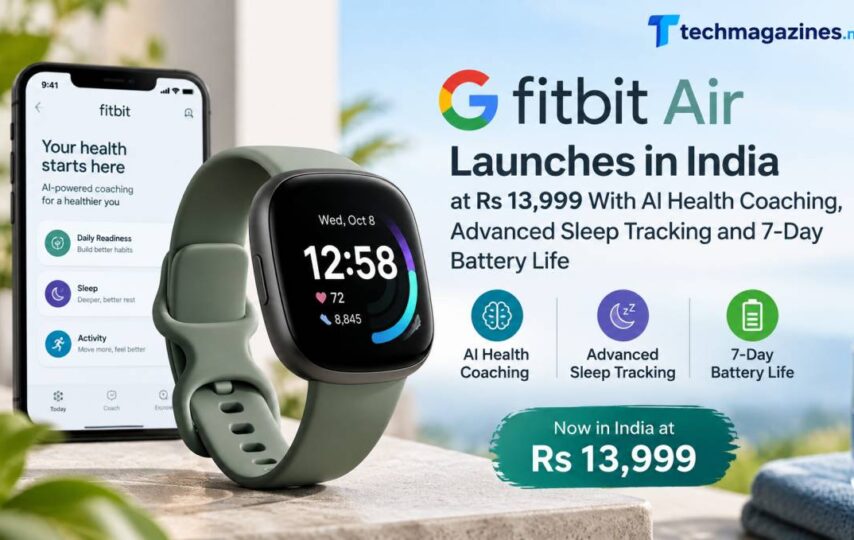

Google has entered India’s growing screen-free wearable market with the Fitbit Air, a fitness band designed for people who want health tracking without a display. The company announced the device on Thursday, with sales scheduled to begin on October 2. It will be priced at Rs 13,999, putting it in the same broad category as devices such as Whoop.
There is no screen on the Fitbit Air, but the band continuously records a range of information about the user’s activity and health. It can keep track of daily steps, exercise sessions, sleep, and other measurements gathered by its sensors. Google’s main selling point, however, is not simply the amount of information the device collects. The company wants its software to explain what those measurements may mean through an updated version of Google Health Coach.
Gemini AI Brings Personalised Health Insights to Fitbit Air
Google is also putting AI at the centre of the experience. Instead of leaving users with a collection of numbers and charts, the Health Coach is intended to examine the data and identify useful patterns. It can use those patterns to produce insights and offer guidance based on what it finds.
Google says Gemini will make the system more tailored to each user by taking Fitbit measurements into account alongside details such as injuries, food and nutrition, changes in lifestyle, and weather conditions. Gemini gives the Fitbit Air much of its intelligence.
Users can describe things in everyday language, and Google says the system can use those details to adjust its advice. The more information it receives, the more closely the coaching can fit the person using it. Google expects that process to make the guidance more useful over time. It is meant to remain on the wrist throughout the day. Buyers can choose from Obsidian, Berry, Lavender, and Fog.
Fitbit Air Offers Improved Sleep Tracking and a Distraction-Free Design
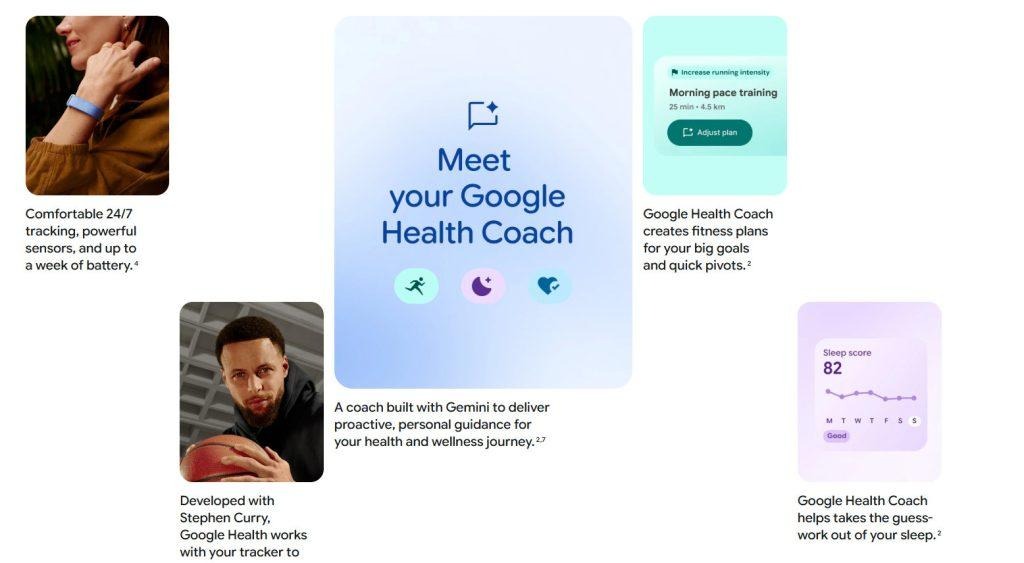
The company has also changed the way the band handles health measurements. Google says its improved heart-rate system can raise the accuracy of sleep tracking by as much as 15 per cent. The device can recognise a nap once it lasts 20 minutes. It can also use its software to determine a suitable time to wake up. A revised sleep score presents the results in a simpler form.
The absence of a screen is another deliberate choice. The Fitbit Air records activities automatically, so users do not need to stop and operate the device while exercising. There are no alerts or figures on the wrist competing for attention. The band simply records what is happening. The collected information later appears in the Google Health app. The app works with both iPhones and Android phones.
The device also has an advantage in a less obvious area: power consumption. Without a display to run, Google says the Air can operate for up to seven days between charges. Its magnetic charger can add a day of use after only five minutes. A full recharge takes about 90 minutes.
Fitbit Air Challenges Whoop With a Subscription-Free Model

Google is taking a different route from Whoop on the cost of a screen-free fitness tracker. The Fitbit Air does not require a recurring subscription. The company instead wants to sell the device as a relatively affordable product. That may help it reach people who like the idea of passive health tracking but do not want another monthly bill.
The Fitbit Air has already reached some overseas markets, including the US. Reviews there have generally been favourable. Its small, screenless design follows an idea that has been gaining attention in the wearable industry for several years.
Whoop helped put that idea on the map. The company first attracted attention through professional athletes and other high-profile users. Its audience has since expanded to include executives and people who take training seriously. Founded by Will Ahmed, the company was valued at more than $10 billion in March 2026.
Whoop has built its product around collecting large amounts of health and fitness data. But that approach has not made screen-free tracking a mass-market habit. Google appears to see an opportunity there. The Fitbit name is already familiar to consumers, and the Air removes the screen without tying basic use to a subscription.
Final Words
Google’s Fitbit Air is Google’s attempt to make screen-free fitness tracking popular with a much broader audience. The company is providing an alternative to traditional devices that have been geared towards serious athletes, by integrating automatic health monitoring, Gemini-powered coaching, and a subscription-free experience.
Also, its seven-day battery life and tracking of everything from sleep to exercise without requiring attention is a pretty good reason to put the screen down. However, the real challenge will be if consumers see value in the insights, to justify the cost of Rs 13,999.
Collecting health data is one thing, getting people to take action on it is another. Google has the brand name, technology and ecosystem to make that happen. The success of the Fitbit Air will depend on how effectively the AI promises are realized in real-world usage.