


An air conditioner often spends the winter months covered and forgotten. In Delhi-NCR and other polluted cities, however, leaving it idle may mean missing a useful way to catch some of the dust circulating indoors. The filter inside a split AC traps particles as room air passes through it, including dust and pet hair. The machine can therefore serve as a basic air-circulation system during the colder months, provided you use the right setting.
Run Your AC Without Cooling the Room: The Fan-Only Method
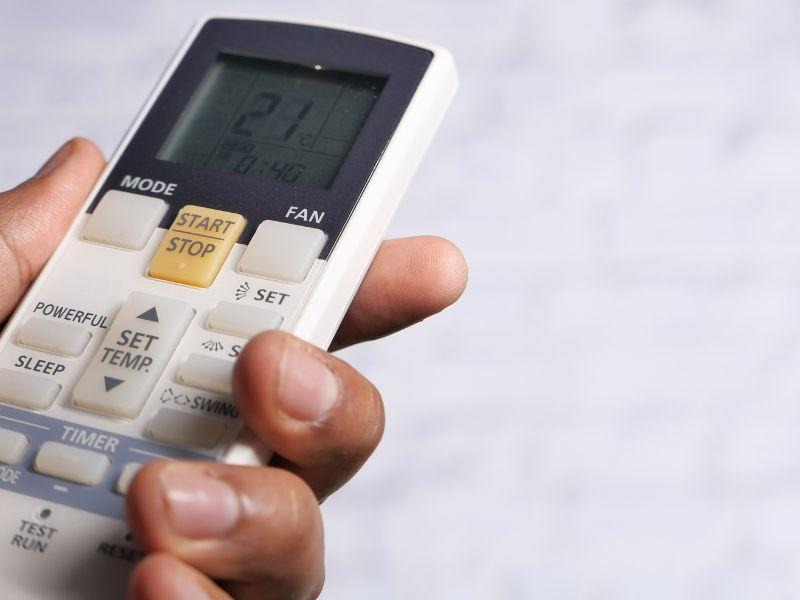
Check your remote for the Fan setting, usually represented by a small fan symbol. Unlike normal cooling, this mode operates the indoor blower without engaging the compressor. The blower draws room air through the unit’s filter and sends it back into the room.
Select Fan mode with the Mode button, choose a medium or high fan speed, and leave the unit running. Since the compressor remains off, the AC circulates air without actively lowering the room temperature.
How Much Electricity Does an AC Consume in Fan Mode?
There is still a cost to running the machine, but it is much lower than operating it for cooling. An indoor fan in a typical split AC draws around 40W to 100W of power. When the compressor is running, total consumption can rise to 1,000W to 1,500W or more, depending on the model and operating conditions.
The operating expense is relatively low. If the fan uses 60W and is used for 8 hours a day, it consumes approximately 14.4 units of electricity or 15 units over 30 days. The bill costs Rs 100 to Rs 120 at residential rates of Rs 7 to Rs 8 per unit. This is a relatively low cost for maintaining air flow across the filter.
Get Your AC Ready for Winter
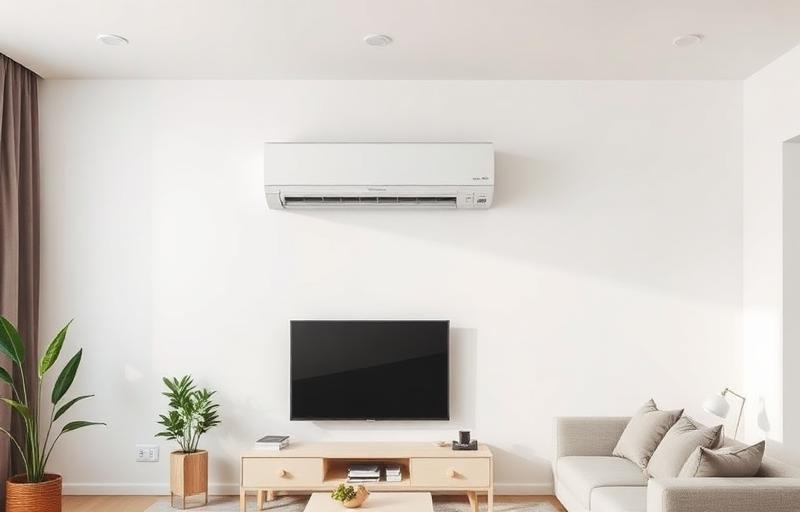
Before switching on the AC for winter use, check the filter. It may be dusted with dust after months of cooling, and this will hinder the air circulation and make it less useful. Carefully open the front panel of the indoor unit and take out the mesh.
Rinse with warm soap and water. Then, dry it in a shaded area until it is dry. Do not put back until moisture has been completely removed. Check and clean the filter every 2 weeks during high pollution times. If there is an extra PM2.5 filter in the unit, follow the manufacturer’s guidelines. May have to replace it rather than wash it.
Can Your Air Conditioner Filter PM2.5 Pollution? Know Its Limitations
While an ordinary AC filter will remove larger particles, the smallest are another issue. The PM2.5 particles are smaller than many mesh filters. The particles are responsible for the low AQI ratings in highly polluted cities. A dedicated air purifier with appropriate filters is a better choice than an AC with a special PM2.5 filter. Close the room during the AC recirculation. If pollution levels outside improve, open windows for a short period of time to ventilate.
An add-on filter is another option, with prices ranging from Rs 500 to Rs 1,500. If your AC lacks a built-in PM2.5 filter, you can look for a separate sheet designed to improve its filtration. These products use denser materials, sometimes electrostatic layers or HEPA-like media, to catch particles that an ordinary mesh may miss. Results vary. The material, fit and effect on airflow all matter.
Two products take different approaches to installation. NanoClean, developed by IIT Delhi-based startup Nasofilters, uses adhesive strips to secure its sheets to the AC’s existing filter. Most split units need two sheets; a window AC generally needs one.
Airth, meanwhile, offers a filter for split ACs that sits over the indoor unit’s upper vent. You need no tools or electrical connections to install it. Whichever option you choose, inspect the filter regularly during the pollution season. Check it every fortnight for accumulated dust. If the material becomes clogged, airflow can suffer, reducing the amount of air that passes through the unit.
Final Words
The Fan mode is a cost-effective alternative to circulating air in the home using the existing filter in the AC unit, and it has a modest effect on electricity costs. A clean filter is crucial and compatible add-on filters can provide additional filtration if properly installed.
However, before you make your AC the new savior of Delhi’s pollution season, keep the following points in mind. The finest PM2.5 pollutants are not stopped by ordinary mesh filters. If clean indoor air is the priority, a dedicated air purifier with appropriate filters is a better option. Consider your AC as a supporting actor and not the main character. Saving money is good, after all, but breathing easy shouldn’t rely on wishful thinking, or a remote control.