
Your phone goes everywhere you go. It rides in your pocket, sits on café tables, and slips from wet hands. Still, many people grab the first case they see at checkout.
That rushed choice often leads to cracked screens, bulky pockets, or a style you soon regret. A good phone case should do more than block scratches. In fact, it should match the way you work, travel, and relax.
This guide breaks down the key factors to weigh before you buy. As a result, you can pick a case that truly fits your daily life.
Know Your Lifestyle Before You Shop
Start with an honest look at your daily routine. Think about where you take your phone and how you handle it. After all, your habits matter far more than any passing trend.
Phone Cases for Busy Professionals
Professionals often need a case that looks polished in meetings. Slim leather or matte cases work well here because they add little bulk. Also, a case with a card slot lets you leave your wallet at home.
Rugged Cases for Outdoor Adventurers
Hikers, cyclists, and weekend campers put their phones through real abuse. For this reason, they need a rugged case with thick corners and raised edges. A lanyard hole also helps, since a strap keeps the phone secure on steep trails.
Everyday Cases for Students and Commuters
Students and commuters need a case that survives crowded buses and packed backpacks. A shock-absorbing TPU case offers solid protection at a fair price. In addition, a grippy texture makes one-handed scrolling on a moving train much safer.
Feature-Rich Cases for Travelers and Creators
Frequent travelers and content creators use their phones as cameras, maps, and boarding passes. Therefore, a case with a built-in stand makes hands-free video calls and filming easy. Strong magnets also let you snap the phone onto a car mount or tripod in seconds.
Pick the Right Level of Drop Protection
Protection needs vary from person to person. Ask yourself how often your phone ends up on the floor.
A slim case guards against scratches and minor bumps, but it adds little shock absorption. On the other hand, a rugged case can handle serious drops onto concrete.
Look for features that actually stop damage. Raised edges around the screen and camera keep the glass off flat surfaces. Air-cushioned corners also soften the blow, since phones often land corner first.
Many brands advertise drop-test heights or military-grade ratings. However, test methods vary between brands, so compare the details, not just the headline number. When in doubt, choose a middle-ground case with reinforced corners and a slim profile.
Compare Common Phone Case Materials
The material shapes how a case feels, ages, and protects. Here is a quick look at the most common options.
Silicone feels soft and grippy, but it attracts lint and dust. TPU, a flexible plastic, absorbs shocks well and usually costs less. Polycarbonate forms a rigid shell that spreads impact and keeps the case thin.
Leather and vegan leather suit anyone who wants a refined, professional look. Real leather also develops a rich patina over time.
Aramid fiber, meanwhile, feels light and thin but still resists scratches and daily wear. However, thin aramid cases offer less drop protection than rugged builds.
Many premium cases combine two materials for balance. For example, a hard polycarbonate back often pairs with soft TPU edges. That mix gives you a slim shape and solid shock protection.
Check MagSafe Compatibility for Magnetic Accessories
MagSafe turns the back of your phone into a handy mounting point. It lets you attach wallets, stands, chargers, and car mounts with a simple snap. However, a thick case without magnets can weaken that connection.
Always look for a case with a built-in magnetic ring. Because of this ring, accessories stay put and chargers line up correctly. Several Android phones now support Qi2, a magnetic standard based on MagSafe, so the same rule applies.
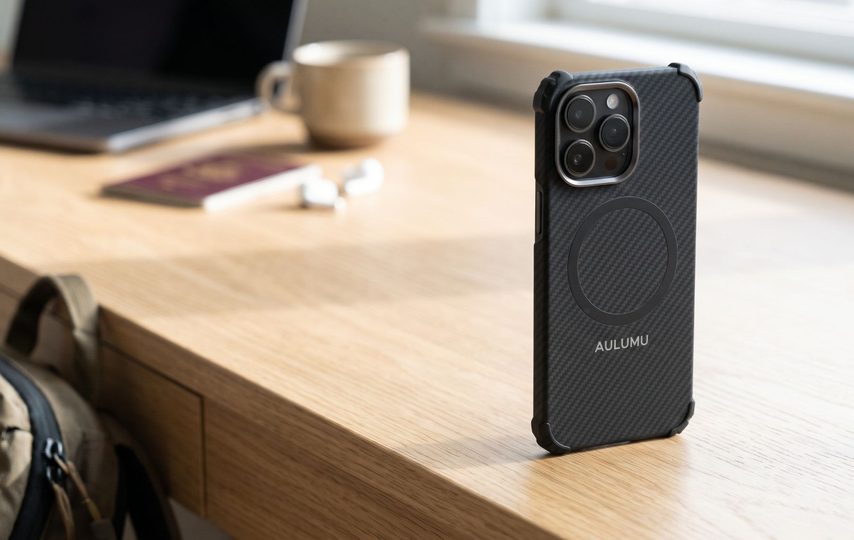
Aulumu shows how this works in practice. Its A18 Armor Shockproof Aramid Fiber Case pairs built-in MagSafe magnets with an aluminum camera guard. The brand also sells magnetic wallets, stands, and power banks that snap onto the same case.
Consider Grip, Weight, and Pocket Fit
A case should feel natural in your hand all day. Textured sides and matte finishes reduce slips, especially when you text on the go. Glossy plastic looks sleek, but it can feel slippery.
Weight also matters more than most people expect. A heavy rugged case adds noticeable bulk to larger phones, such as Pro Max models. So, if you carry your phone in a jeans pocket, a slimmer design will feel far more comfortable.
Finally, check the button covers. Responsive, clicky buttons make daily use easier than stiff or mushy ones.
Look for Smart Built-In Features
The right features can turn a basic case into a useful daily tool. A built-in kickstand, for instance, props your phone up for videos and recipes. Other designs add a card slot, a ring grip, or even cooling vents for gaming.
Camera protection deserves special attention, since modern lenses stick out more each year. A metal camera ring or a sliding lens cover adds an extra layer of defense. Likewise, pair your case with a quality screen protector for full coverage.
Don’t overload your case with features you won’t use, though. Every add-on brings more weight, thickness, and cost. Instead, choose the two or three features that solve real problems in your day.
Match the Case to Your Personal Style
Your case is the first thing people notice about your phone. Clear cases show off your phone’s original color, but cheaper ones turn yellow over time. Frosted and matte finishes, by contrast, hide fingerprints and keep a clean look.
Bold colors and patterns let you express your personality. Neutral shades such as black, gray, and navy blend in better at the office. Choose a look you’ll still enjoy in six months.
Buy From Trusted Phone Case Brands
A cheap case might look fine on day one, but it often cracks or peels within months. Established brands usually test their designs more thoroughly and back them with solid warranties. They also launch cases fast whenever new phones arrive.
Before you buy, read recent customer reviews and compare return policies. If you want a shortlist, start with this guide to the top phone case brands. It compares ten popular names, from rugged protection to slim, design-focused picks.
Final Thoughts on Choosing a Phone Case
The best phone case fits your life, not just your phone. Start with your daily habits, then choose the right protection level and material. After that, check MagSafe support, grip, and the features you’ll actually use.
Above all, invest in quality from a brand you trust. A well-made case protects your phone, simplifies your routine, and reflects your personal style. In short, a little research today saves you from costly repairs tomorrow.