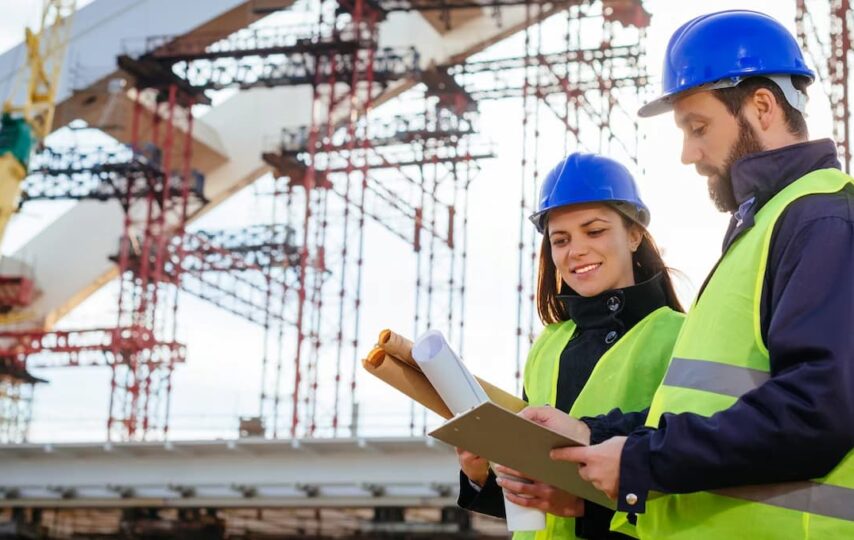

The creation industry has continually been pushed by means of precision and performance. Accurate price estimation is crucial to the success of any mission, making sure that budgets are maintained, timelines are met, and sources are efficiently allocated. In recent years, the combination of AI and automation in the construction industry has transformed traditional practices, allowing contractors to plot with extraordinary accuracy. Advanced and accurate Residential Construction Estimating Services now leverage wise algorithms, information analytics, and automation tools to streamline workflows, lessen errors, and enhance project outcomes.
These technologies are not just improving numbers on paper; they’re redefining how contractors plan, procure, and execute. By minimizing human error and accelerating statistics processing, AI-pushed systems provide actionable insights that assist teams in making smarter choices.
The Evolution of Construction Estimation
Historically, production estimation changed into a labor-intensive method. Estimators relied closely on enjoy, spreadsheets, and guide calculations. While understanding became crucial, human boundaries often led to discrepancies, miscalculations, and overlooked costs.
Automation has modified this landscape. Sophisticated software programs can now method complicated data units, such as cloth expenses, labor prices, assignment timelines, and marketplace trends, in a fraction of the time. This allows contractors to produce more dependable estimates, expect demanding situations, and optimize aid allocation.
How AI Improves Accuracy
Artificial intelligence improves estimation accuracy by reading ancient records, identifying styles, and predicting future fees. Machine getting to know algorithms can locate discrepancies in challenge plans and flag ability issues before they worsen.
For example, AI can simulate a couple of venture scenarios, evaluating distinct material options or labor configurations to determine the maximum price-green method. This predictive functionality enables production teams to make proactive decisions in place of reacting to unforeseen issues.
Time Efficiency and Cost Savings
Automation quickens repetitive responsibilities, along with calculating cloth portions or adjusting labor expenses. This no longer only reduces the time required for estimation but additionally frees up human resources for strategic decision-making.
By reducing duplicate work, organizations can drastically reduce overhead fees and decrease the danger of budget overruns. Projects that took weeks to estimate can now be evaluated within days, improving responsiveness to clients and increasing competitiveness.
Integration with Design and Planning
Modern estimation tools seamlessly integrate with Building Information Modeling (BIM) and design software programs. This integration permits estimators to extract facts without delay from venture designs, ensuring that portions, dimensions, and specifications are consistent with actual plans.
The mixture of AI and BIM reduces mistakes related to guide interpretation, developing a more accurate link between layout and price. As a result, contractors benefit a clearer information on undertaking feasibility and can alter designs to align with financial constraints.
The Role of Electrical Estimation in Automation
Electrical structures are some of the maximum complicated factors of creation projects. Automated estimation structures are now capable of performing Electrical Estimating with precision, calculating wiring, lights, panel installations, and power necessities efficiently.
AI can reference electrical components with labor schedules, supply costs, and setup timelines, providing a holistic view of assignment wishes. This reduces human blunders, guarantees compliance with codes, and enables contractors to hold protection standards even as they optimize costs.
Risk Mitigation Through Predictive Analytics
AI-powered estimation structures excel in change management. Predictive analytics can forecast ability fee overruns, delays, or resource shortages based on ancient and modern mission records.
By anticipating those dangers, construction managers can put into effect contingency plans, adjust procurement techniques, or allocate assets more effectively. This forward-looking approach minimizes disruptions, protects mission margins, and improves standard reliability.
Resource Optimization and Sustainability
Sustainability is increasingly critical in creation. AI-driven tools help optimize resource use, minimizing cloth waste and promoting environmentally responsible practices. For instance, algorithms can determine the precise portions of timber, concrete, or steel required for a mission, decreasing extra ordering and needless waste. This aligns with sustainable building practices at the same time while simultaneously reducing expenses and growing efficiency.
Advanced Reporting and Collaboration
Automation and AI enhance reporting talents. Estimators can generate real-time dashboards, visualize value traits, and proportion updates right away with stakeholders. Collaborative equipment allows architects, engineers, and contractors to paintings on a shared platform, making sure that everybody has access to the maximum modern information. This transparency fosters duty, reduces misunderstandings, and quickens project approvals.
Streamlining Material Management
Lumber and other vital building substances frequently constitute an enormous portion of undertaking budgets. Advanced estimation technologies now comprise capabilities like Lumber Takeoff, which routinely calculates required portions, sizes, and grades based on venture designs.
Automated takeoff guarantees that substances are neither over-ordered norunder-orderedd, saving cash and preventing delays. By combining AI with fabric control, construction teams can keep particular stock management and improve standard assignment scheduling.
Preparing for the Future
The destiny of construction estimation is intrinsically tied to AI, automation, and information-driven decision-making. As software programs become more state-of-the-art, estimators will depend increasingly on predictive insights, real-time analytics, and data-driven insights to plot projects with better accuracy and performance.
Contractors who include these technologies have an aggressive aspect through lowering costs, enhancing timelines, and delivering higher-quality effects. The integration of AI, automation, and advanced takeoff tools represents a paradigm shift, turning estimation from a guide, a blunder-susceptible system, into a strategic advantage.
Conclusion
AI and automation are redefining creation estimation practices, presenting exceptional accuracy, efficiency, and perception. From early-stage planning with Construction Estimating Services to specialized obligations like electrical estimation and concluding with precise takeoff, those technologies empower construction teams to manipulate costs, mitigate risks, and optimize resources.
The adoption of AI-driven equipment is not non-compulsory for corporations looking to stay aggressive; it’s a necessity. By embracing automation, contractors can deliver initiatives faster, smarter, and more sustainably, making sure that each dollar invested contributes to the successful assignment’s crowning glory.