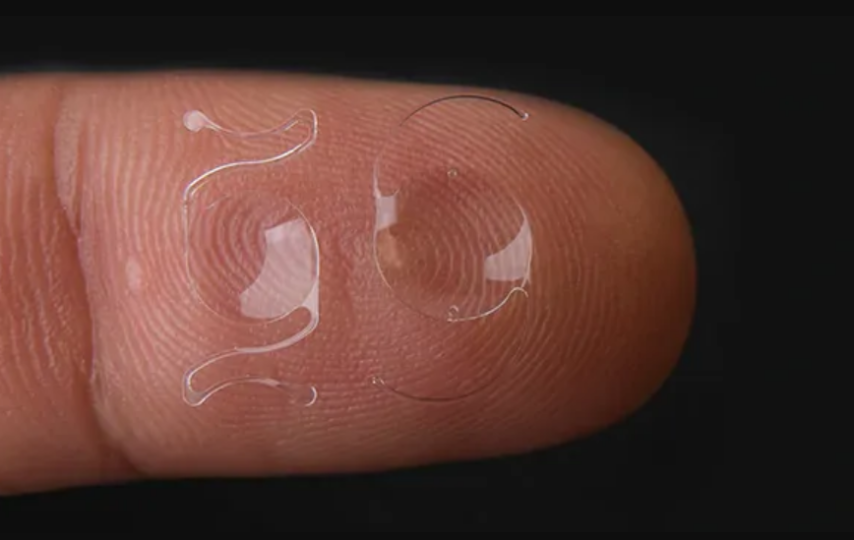

Have you been diagnosed with cataract? A cataract surgery, commonly referred to as motiabind surgery, is the only solution. When the procedure is performed, doctors remove the old natural lens that has become cloudy due to protein accumulation. It is then replaced with an artificial lens (Intraocular Lenses) that acts just like a natural eye lens. While you cannot make the final call on the type of lens for your cataract surgery, it is not a bad idea to stay informed.
What Are Cataract Lenses?
Intraocular Lenses, or IOLs, are of several types. Each has different features and is used for different purposes. The lens remains inside the eye permanently and is only removed if any complication arises. It functions the same way a natural lens does. After checking your condition, the doctor will recommend an option that meets your visual needs.
Common Types of Cataract Lenses
Here are the different types of cataract lenses.
Monofocal Lenses
The standard option for cataract surgery is monofocal lenses. These lenses allow people to see clearly at one fixed distance. You will be able to see clearly only at a fixed distance. If you need to see something that is close to you, spectacles will be necessary. While it may seem like the option might not be apt, it is a significant improvement from the previous condition. You will still have a sharp vision. Many people go for this lens because it is affordable.
Multifocal Lenses
Multifocal lenses take care of the problem people face with monofocal lenses. With them, your clear vision will no longer be limited to a particular distance. You will be able to see the objects close to you as well as the ones placed at a distance. Therefore, your vision will be similar to how you used to see with the natural lens. Wearing spectacles to see close objects will no longer be a necessity.
However, multifocal lenses are not always recommended by doctors. This is because they do not suit everyone. Your eye health determines how well the lens will adapt to your eye. Therefore, you may not be able to see clearly if your eye does not support it. There are also some instances where patients complained about seeing glare or halos initially. Given these complications, doctors generally recommend multifocal lenses to people who maintain an active lifestyle and do not rely on glasses.
Extended Depth of Focus (EDOF) Lenses
EDOF lenses offer a smooth range of vision, particularly from distance to intermediate. They are designed to reduce visual disturbances while improving overall clarity. Although reading glasses may still be required for small print, these lenses provide comfortable vision for everyday activities such as walking, watching television, and using digital devices.
EDOF lenses are increasingly suitable for modern lifestyles where screen usage is common.
Toric Lenses
Toric lenses are specifically recommended for patients who have astigmatism along with cataract. Astigmatism causes blurred or distorted vision, and toric lenses help correct this problem during cataract surgery itself. These lenses provide sharper and more balanced vision, but they require precise placement inside the eye to work effectively.
For patients in Bihar with noticeable astigmatism, toric lenses can significantly improve post-surgery vision quality.
Aspheric Lenses
Do you have trouble seeing at night or in low-light conditions? If that is the case, the aforementioned lenses might not be sufficient. They help in making your vision clearer. However, seeing at night is a different thing, and those lenses may not be enough. That is why aspheric lenses are used. With them, you will be able to see clearly even in dim light.
The best part is that this lens can be combined with other lenses. This means you will get the benefit of both lenses. It will certainly make performing daily tasks much easier. If you drive at night or work in low-light conditions, you will need this.
How to Choose the Best Types of Motiyabind Lens
Choosing the best types of motiyabind lenses depends on several personal factors. Lifestyle plays a major role, as reading habits, mobile usage, and daily activities influence lens suitability. Budget is another important consideration, particularly for families in Bihar, where affordability remains a key concern.
Eye health is equally important, as certain conditions may limit the use of advanced lenses. A detailed eye examination helps determine which lens will provide the safest and most effective results.
Are Premium Lenses Necessary for Everyone?
We will not use the term necessary. Premium lenses are definitely not essential. But you simply cannot ignore the advantages they provide. No more wearing spectacles all the time. You will be able to focus clearly on both near and distant objects. But this does not mean monofocal lenses are a bad choice. They deliver excellent results as well. The best types of cataract lenses for you depend on your eye health and needs.
Life After Cataract Lens Implantation
Most patients notice improved vision within a few days after surgery. As the eye heals, vision continues to stabilise, and the brain adapts to the new lens. Regular follow-up visits are important to ensure proper recovery and long-term visual comfort. With the right lens choice, cataract surgery can significantly improve the quality of life.
Wrapping up
There are various types of lenses for cataracts. However, you cannot choose any option you want. Your doctor always decides it after taking your needs into consideration. The primary goal here is to restore your vision and ensure you are not feeling any discomfort. The best types of motiyabind lenses differ from person to person. In the end, your needs determine the type.