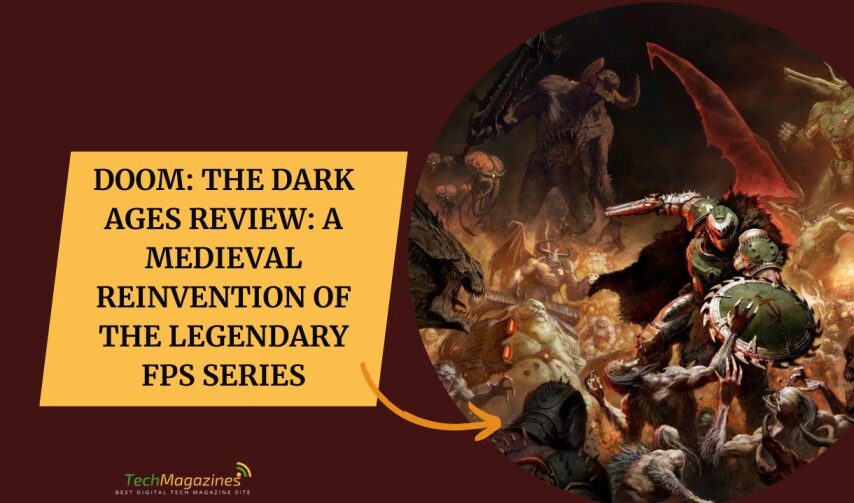

DOOM: The Dark Ages launches on May 15. The new game shows the Doom Slayer for what he is—a storm in the shape of a man. He says little. He kills much. Demons fall before him like wheat to the scythe. He is not a man anymore. He is a force. You cannot stop him. And that is what makes DOOM: The Dark Ages strong.
Slower Combat, Heavier Impact
In DOOM Eternal, he moved like the wind—fast, light, brutal. He flew through the air and came down hard. But The Dark Ages is different. This Slayer stays grounded. His boots are heavy and sure. He walks the earth. And that change has meaning. It gives time to study the enemy. Their attacks are sharper, their movements more clear. And the Slayer has something new to meet them with. A weapon, or maybe a way. Either way, it works.
You cannot jump now. You cannot glide. The air is thick with fire and steel, and it comes fast. You need to stand your ground. You need to survive. That is why you have the shield. The shield is not a trick or a toy. It is part of you now. You will not forget it. It stays in your left hand no matter the gun in your right. You will need it often—when the fight is close, when the path is blocked, when the puzzle holds you back.
Weaponized Defense
Later, the shield changes. It gets a blade, a chain, a hunger. You can throw it and it cuts through the weak. You can make it stronger, and it will tear through crowds. That is good. That is useful. But more important than that is the parry. With the shield, you can stop a blow. You can break the charge. You can turn death away, if your hands are steady. You will have to learn that. You will have to rely on it. The big ones do not die easy. But they die.
Parry Perfection
The enemy will flash green before it strikes. That is your chance. If you are ready, you can parry. Some shots come green too. You can send those back where they came from. A good parry throws the enemy off. Just long enough. Long enough to hit back. You can make your parry better. You can shape it. More damage, if that’s what you want. Or maybe something quieter—tools that feed the shield, keep it alive when you parry. You choose how to fight.
High-Impact Guns with New Synergies
It’s a good system. It changes things without breaking them. But DOOM needs more than just systems. It needs guns. Big ones. Loud ones. And it has them. The Slayer carries a shotgun that breaks bones. A launcher that lights up the sky. Energy that burns clean through. All of it mad. All of it right. You can make the guns stronger too. Most of them link to the shield. A throw that ends in fire. A shot that hits harder after a parry. You unlock a new tier, and you want to fight again. That’s the way it goes. It worked before. It still does.
New Mechanics: Giant Mechs and Mythic Mounts
Some new ideas don’t land so well. The Atlan is one. It’s a great machine, tall as a mountain, and the Slayer rides inside it. You punch. You dodge. You punch again. Do it enough and you kill the thing in front of you. It’s fine at first. Then it slows. It stays the same. It drags. The Dragon is better. You can fly with it. You move through the air and look for secrets. It feels freer, more alive. But even then, it’s not the same. Not as sharp. Not as fast. The pace drops. They are good ideas, maybe. They are fun, for a time. But if they were gone, you would not miss them. The game would still stand. The Slayer would still fight.
Gothic Environments with a Medieval Twist
There is also the new look. It is medieval. Stone towers. Castles. Towns built to last and meant to burn. It is still DOOM—still blood and fire and machines from hell—but now it wears the bones of another age. It’s a good change. Better than hell again. Better than cold steel halls in the dark. Though, in the end, you still walk through places that feel like both.
The new look matters. So do the new tools. Together, they make The Dark Ages its own thing. Different. Not lost in the rest. And when the fight starts—when the demons come, and the guns speak, and the blood runs—The Dark Ages is alive. It is fast. It is cruel. It is good. Not every moment flies. Not every edge is sharp. But when it works, it burns bright. If you want a fight, a real one, it’s here. You won’t walk away let down.
Conclusion
In “DOOM: The Dark Ages” our beloved demon-slayer replaces swiftness on the move with tactical shield use, and it delivers an unexpected twist. Even with the Atlan’s slow spots, the excitement is in throwing projectiles right back at your opponents. This new flashback has a suitably grim, blood-smeared setting and its evolution. Even with the medieval motifs added, don’t fret—violence is the Slayer’s main skill, delivered just as well as possible. Slower? Sometimes. Still brutally effective? Absolutely.
FAQs
Q1: How does The Dark Ages differ from DOOM Eternal?
A: Imagine a new DOOM focused on muscle and strength rather than speed. As Eternal guided you through the sky, bathed in blood and fire, The Dark Ages holds you to the earth, with your boots. No leaping ballets. No chaos in the sky. Only a tightly clenched shield. It goes at its own speed, but it’s still a war. In a manner where you wait your time and, given the right cue, strike a killing blow. You don’t float. You don’t fly. You kill. The jump button may not be used in battle that much. But your shield arm will grow strong and firm to fight the demons.
Q2: Is the shield mechanic any good, or just a gimmick?
A: The shield is not a trick. It is as important as a chainsaw when the demons come. It starts simple. Then, it assumes teeth, blades, and chains. It learns to kill. It becomes part of you. The parry matters most. See the green flash—so disconcerting as disease—and act immediately. When you get it right, everything changes. It can be filled with bullets and steel. Not an end in itself to avoid or retreat. A shield to end fights. The timing is tight. Miss it and you bleed. Hit it and they fall. You shape it according to your taste. Fast and brutal. Slow and clever. But always deadly.
Q3: Does the medieval setting work for DOOM, or is it just a marketing gimmick?
A: Hell decided it needed a new look, so it hired a man with a taste for old stone. That’s how The Dark Ages came to be. The castles are thick and heavy, built to last, built to burn. The villages are the same. It fits. It works. Stone and fire. Demons and walls. Gothic and hellish. The two belong together like morning coffee and the weight of life. The fight between Slayer and demon still holds its place, but now it has more room to breathe. The nightmare is there—strong as ever—but it wears a new skin. You’ll walk through the same halls, stone and flesh, but it feels new. It’s not some last-ditch change. It’s how it should have been all along.