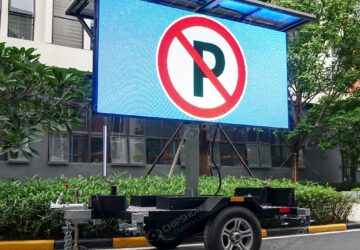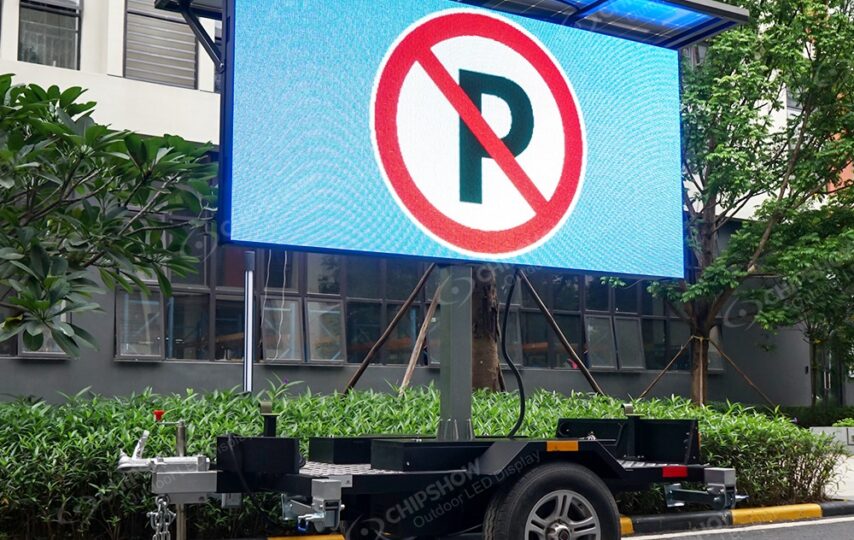

Every day, millions of drivers rely on Variable Message Signs to navigate construction zones, respond to emergency alerts, and adjust to changing road conditions. When these displays fail — whether from faded visibility, weather damage, or system incompatibility — the consequences extend far beyond inconvenience. Accidents happen, emergency responses slow, and public trust erodes.
The challenge for manufacturers and traffic authorities alike is sourcing VMS solutions that perform consistently across scorching summers, freezing winters, and everything in between. Not all LED displays are built to meet these demands, which is exactly where EN12966 certification becomes essential. This European standard establishes rigorous benchmarks for performance, safety, and environmental durability, giving manufacturers a reliable framework for evaluating and selecting traffic display solutions.
This article breaks down what EN12966 certification actually covers, the key technical specifications that define a high-quality VMS, how to ensure compatibility with existing traffic infrastructure, and what to look for when choosing a certified manufacturer. Whether you’re sourcing displays for a new highway project or upgrading aging systems, understanding these factors is the foundation of a smarter, safer investment.
What is EN12966 Certification and Why It Matters for VMS Manufacturers?
EN12966 is the European standard specifically developed for Variable Message Signs used in road traffic management. Published by the European Committee for Standardization, it defines precise requirements across three core dimensions: luminance performance, safety, and environmental durability. Unlike general display standards, EN12966 is purpose-built for traffic conditions — accounting for the unique demands of roadside deployment, where displays must perform reliably under direct sunlight, heavy rain, and extreme temperature swings.
For manufacturers, certification under EN12966 is more than a regulatory checkbox. It serves as verifiable proof that a product has been independently tested and confirmed to meet established benchmarks. This matters significantly when competing for public infrastructure contracts, where procurement authorities routinely require certified compliance as a baseline qualification. Without it, even technically capable products face rejection at the tendering stage.
Beyond market access, certification directly influences product credibility. Traffic authorities and system integrators are risk-averse by nature — they need assurance that displays will maintain legibility and operational integrity over years of continuous use. EN12966 provides that assurance through standardized testing protocols covering luminance output, color rendering, and resistance to environmental stressors. Ultimately, en12966 certified vms manufacturers who invest in achieving and maintaining this certification position themselves as trusted partners in public safety infrastructure, where display failures carry real consequences for road users and emergency response systems alike.
Key Specifications for High Brightness LED Displays in Traffic VMS
Selecting the right LED display for traffic VMS goes well beyond picking a screen that looks bright in a showroom. Roadside conditions are unforgiving — displays must remain clearly legible at highway speeds, under direct midday sun, and during nighttime low-light conditions, all while maintaining consistent performance over years of continuous operation. Understanding the core technical specifications that govern display quality helps manufacturers make informed procurement decisions and avoid costly replacements down the line.
Brightness Levels, Nits, and Sunlight Readability
Brightness in LED displays is measured in nits (candelas per square meter), and for outdoor traffic applications, this figure is non-negotiable. A display that performs adequately indoors can become completely unreadable when competing with direct sunlight. Traffic VMS typically require a minimum brightness of 5,000 to 8,000 nits for standard roadside deployment, with high-exposure locations — such as south-facing installations or desert environments — demanding outputs exceeding 10,000 nits. Beyond raw brightness, automatic dimming control is equally important: displays must scale down luminance at night to avoid blinding drivers while remaining fully legible. Anti-glare surface treatments and pixel masking technology further improve readability by reducing ambient light reflection without sacrificing output intensity.
Color Accuracy, Contrast Ratios, and Viewing Angles
Traffic messages depend on color precision to convey urgency and instruction — amber warnings, red alerts, and white informational text each carry specific meaning that must be reproduced consistently. Poor color calibration leads to ambiguous displays that drivers misinterpret. Contrast ratio, the difference between the brightest and darkest elements on screen, directly determines how sharply text and symbols stand out against the background. A contrast ratio of at least 10:1 is generally considered the minimum acceptable threshold for traffic applications. Equally critical is the viewing angle: a display that appears sharp from directly ahead but fades or shifts color at oblique angles creates real safety risks for drivers approaching from highway on-ramps or curved roads. EN12966-compliant displays are tested to maintain consistent luminance and color accuracy across a horizontal viewing cone of at least ±30 degrees, ensuring legibility for the full range of driver approach angles. Manufacturers such as Chipshow LED have built their traffic display lines around these exact performance thresholds, reflecting how central color accuracy and wide-angle visibility are to EN12966 compliance in real-world deployments.
Ensuring VMS Compatibility with Existing Traffic Infrastructure
Deploying a new VMS solution rarely happens in isolation. Most projects involve integrating new displays into established traffic management networks — networks that may include legacy control systems, mixed communication protocols, and physical mounting infrastructure built to older specifications. Compatibility failures at any of these layers create costly delays, require expensive workarounds, and can compromise the reliability of the entire traffic management system. Addressing compatibility systematically, before procurement rather than after installation, is what separates efficient deployments from expensive retrofits.
Communication Protocols: NTCIP and Other Integration Standards
The National Transportation Communications for ITS Protocol (NTCIP) is the dominant standard for data exchange between VMS units and central traffic management software. Any display intended for integration with modern traffic control centers must support NTCIP 1203, the specific protocol governing VMS communication. Beyond NTCIP, manufacturers should verify support for SNMP-based monitoring, which enables real-time fault detection and remote diagnostics without requiring on-site technician visits. In European deployments, compatibility with DATEX II data exchange formats is increasingly required for cross-border traffic management integration. Before finalizing procurement, request protocol documentation from the manufacturer and confirm that the display firmware can be updated remotely to accommodate future protocol revisions — a capability that significantly extends operational lifespan without hardware replacement.
Physical Installation, Power Supply, and Structural Considerations
Physical compatibility covers three distinct areas that each require verification. First, mounting geometry: confirm that display dimensions and bracket configurations align with existing gantry structures or roadside poles, accounting for wind load ratings and the structural capacity of existing supports. Second, electrical compatibility: traffic VMS installations often involve long cable runs, meaning voltage tolerance ranges and power factor specifications must match the available supply infrastructure. Displays with wide-input power supplies — typically accepting 85V to 264V AC — offer the most flexibility across different site conditions. Third, thermal management: enclosure design must account for the ambient temperature range at each specific deployment location, ensuring that internal cooling systems maintain stable operating temperatures without requiring external HVAC additions that complicate installation and increase maintenance overhead.
The Advantages of Weatherproof LED Screens for Outdoor Traffic Displays
Outdoor traffic displays face punishment that indoor electronics never encounter — driving rain, sand infiltration, salt air corrosion, and temperature swings that can exceed 60°C between seasonal extremes. Weatherproof LED screens address these challenges through engineering specifically designed for long-term roadside survival, and the difference in operational lifespan between adequately protected and inadequately protected units is measured in years, not months.
IP ratings provide the standardized framework for evaluating environmental protection. For traffic VMS applications, IP65 represents the practical minimum — confirming complete dust exclusion and protection against water jets from any direction. High-exposure coastal or industrial installations benefit from IP66 or IP67 ratings, which offer resistance to powerful water jets and temporary submersion respectively. Beyond the IP rating itself, corrosion resistance matters equally: aluminum enclosures with powder-coat finishes or marine-grade anodizing prevent the structural degradation that compromises mounting integrity over time.
Temperature management is where weatherproof design directly affects display performance. Quality weatherproof LED screens incorporate active thermal management systems — typically a combination of internal fans, heat sinks, and sealed ventilation pathways — that maintain stable operating temperatures between -40°C and +75°C without allowing moisture ingress. This eliminates the need for external climate control equipment, reducing both installation complexity and long-term maintenance costs. The practical payoff is straightforward: displays that resist environmental degradation require fewer service interventions, maintain consistent brightness calibration over time, and deliver a significantly lower total cost of ownership across the typical 10-year deployment lifecycle.
How to Choose the Right EN12966 Certified VMS Manufacturer
Selecting a certified VMS manufacturer requires more than confirming that a certificate exists. Start by verifying certification authenticity directly — request the original test reports from the accredited laboratory that conducted the EN12966 evaluation, and cross-reference the certificate number against the issuing body’s registry. Manufacturers who hesitate to provide this documentation are a red flag worth taking seriously.
Next, evaluate the product portfolio against your specific deployment requirements. A manufacturer’s range should demonstrate consistent high brightness performance across different display sizes, along with weatherproof enclosure designs rated for the environmental conditions of your target installation sites. Ask for field performance data from comparable deployments — operating temperature logs, brightness calibration records over time, and maintenance frequency reports all reveal how products perform beyond the controlled conditions of a certification test.
Manufacturing quality controls deserve equal scrutiny. Request information about production-line testing procedures: do individual units undergo luminance verification before shipment, or does the manufacturer rely solely on batch sampling? Facilities with ISO 9001 certification alongside EN12966 compliance indicate a systematic approach to quality that extends through the entire production process, not just the certification stage.
Finally, assess after-sales support and customization capabilities. Traffic infrastructure projects frequently require display configurations tailored to specific gantry dimensions, communication protocols, or regional regulatory requirements. A manufacturer with in-house engineering resources can accommodate these variations without compromising certification compliance — and their ability to provide firmware updates, spare parts availability, and responsive technical support determines the real-world reliability of your investment over a decade of deployment.
Making the Right VMS Investment for Safer, Smarter Roads
EN12966 certification is not simply a procurement formality — it is the foundation upon which reliable, safe, and long-lasting traffic display systems are built. Throughout this article, we’ve examined what that certification actually requires, why it matters beyond regulatory compliance, and how it connects to the real-world performance demands that roadside VMS must meet every day.
High brightness specifications and weatherproof engineering determine whether a display remains legible and operational across years of environmental exposure. Compatibility with existing communication protocols and physical infrastructure determines whether a new display integrates smoothly or creates costly system disruptions. And the quality controls, field performance history, and support capabilities of the manufacturer determine whether certification translates into dependable long-term performance or merely a document on file.
For manufacturers evaluating VMS solutions, the key takeaway is straightforward: certified compliance sets the baseline, but informed decision-making raises the outcome. Scrutinize test documentation, verify real-world deployment data, and prioritize manufacturers whose engineering capabilities extend through installation, integration, and the full operational lifecycle. Traffic displays that meet these standards don’t just satisfy procurement requirements — they actively contribute to safer roads, more responsive traffic management, and infrastructure that earns public trust over time.