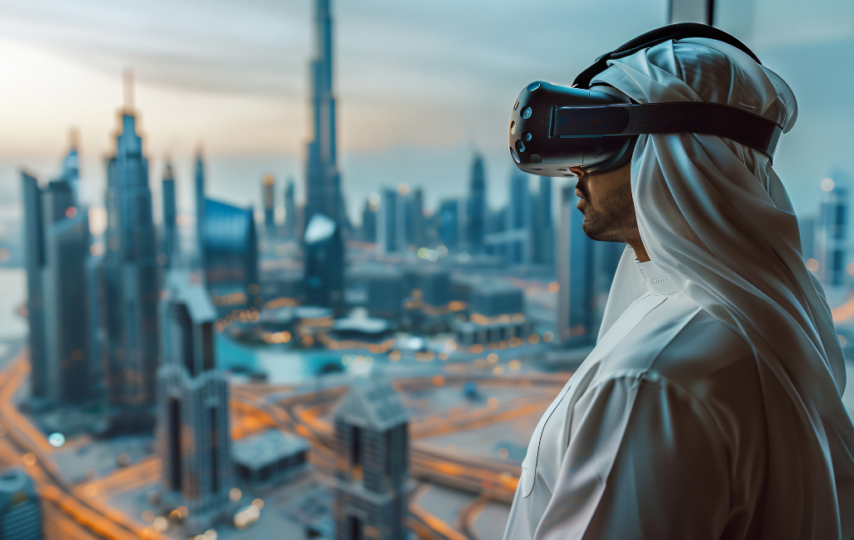

Innovation in the UAE no longer fits into one category. It is not limited to oil, trade, or property development. Today, the country’s progress stretches across digital entertainment, defence technology, artificial intelligence, renewable energy, space science, smart cities, and advanced manufacturing.
When we look at companies such as Anghami and EDGE Group, we see two completely different industries. Yet both reflect the same direction — building globally competitive, technology-driven organisations rooted in the region.
But these are only two examples. The broader innovation story of the UAE is far more expansive.
Digital Platforms and the Rise of the Creative Economy
Anghami represents a shift in how the region consumes and produces digital content. As a homegrown music streaming platform, it demonstrated that Middle Eastern tech companies could compete in a global market dominated by international giants.
Its growth reflects more than entertainment. It highlights:
- Digital infrastructure development
- Cloud-based services
- Data-driven personalisation
- Local content monetisation
- Digital advertising ecosystems
The success of such platforms has encouraged a wider digital economy. E-commerce platforms, fintech start-ups, online education services, and digital media companies have flourished in a regulatory environment designed to attract innovation.
The UAE has positioned itself as a launchpad for technology start-ups. Free zones, venture capital activity, and government-backed initiatives have created conditions that reduce barriers to entry and support scaling.
Strategic Industries and Technological Self-Reliance
While digital consumer platforms capture everyday attention, industrial and defence innovation represents a different layer of progress.
EDGE Group was established to consolidate advanced defence and technology capabilities within the UAE. It focuses on research, engineering, autonomous systems, cybersecurity, and secure communication technologies.
This signals a strategic shift. Rather than relying heavily on imported systems, the country has invested in building domestic expertise. That means:
- Research and development facilities
- Skilled engineering talent
- Advanced manufacturing capacity
- Cyber and electronic warfare technologies
- Autonomous and unmanned systems
The impact goes beyond defence. High-level engineering projects often generate innovations that benefit civilian industries, including robotics, AI applications, and advanced materials.
It is a reminder that innovation is not only about consumer convenience. It is also about national capability and long-term resilience.
Artificial Intelligence as a National Focus
The UAE was among the first countries to appoint a Minister of State for Artificial Intelligence. That decision reflected a long-term strategy rather than a short-term trend.
Institutions such as Mohamed bin Zayed University of Artificial Intelligence were created to specialise exclusively in AI research and postgraduate education. This focus aims to develop local expertise in machine learning, computer vision, robotics, and data science.
AI is now integrated across multiple sectors:
- Healthcare diagnostics
- Government services
- Financial risk modelling
- Transport management
- Energy efficiency systems
By embedding AI into governance and business operations, the UAE has turned artificial intelligence from a concept into daily application.
Renewable Energy and Sustainability Leadership
Sustainability is another pillar of the country’s innovation model. Through organisations such as Masdar, the UAE has invested in renewable energy projects across the globe.
Masdar City in Abu Dhabi was designed as a model for sustainable urban development. Large-scale solar energy projects support the transition towards cleaner power generation.
This progress reflects:
- Commitment to reducing carbon emissions
- Development of green technologies
- Investment in clean mobility
- Sustainable urban planning
Innovation here is both environmental and economic. Clean energy initiatives create new industries, jobs, and international partnerships.
Space Exploration and Scientific Ambition
The UAE’s space programme marked a significant milestone when the Hope Probe successfully entered Mars orbit in 2021. The mission was led by the Mohammed Bin Rashid Space Centre.
This achievement was symbolic and practical. It demonstrated:
- Advanced engineering capability
- International scientific collaboration
- Youth engagement in STEM education
- Long-term research ambition
Space exploration placed the UAE on the global scientific map. More importantly, it inspired a generation of students to pursue careers in science and engineering.
Smart Cities and Digital Governance
Innovation is also visible in everyday life. Digital identity systems, paperless government services, smart traffic management, and integrated transport solutions have transformed urban living.
Residents can now:
- Access government services online
- Renew licences digitally
- Use AI-driven public platforms
- Benefit from efficient infrastructure systems
Smart city initiatives are not about futuristic concepts. They are about improving efficiency, reducing waiting times, and enhancing quality of life.
Healthcare and Biotechnology Advancements
Another area of strong progress is healthcare innovation. The UAE has invested in research centres, specialised hospitals, and biotechnology initiatives.
From advanced medical imaging to AI-assisted diagnostics, healthcare systems are becoming more data-driven and precise. The pandemic further accelerated investments in local pharmaceutical manufacturing and research capability.
This sector shows how innovation also focuses on public well-being, not just economic growth
Education as the Foundation of Innovation
None of this progress would be possible without investment in education. The UAE has developed partnerships with international universities, created specialised research institutions, and launched scholarship programmes to nurture talent.
By building a skilled workforce in engineering, technology, science, and digital creativity, the country ensures long-term sustainability of its innovation ecosystem.
Talent development is the bridge between digital platforms like Anghami and industrial giants like EDGE Group. Without trained professionals, neither sector can scale or compete globally.
A Multi-Sector Innovation Model
What makes the UAE’s progress distinctive is its balance. Innovation is not confined to one industry. Instead, it spans:
- Digital entertainment
- Defence and advanced engineering
- Artificial intelligence
- Renewable energy
- Space science
- Smart infrastructure
- Healthcare research
Each sector strengthens the others. AI supports defence systems. Renewable energy powers smart cities. Research institutions feed skilled talent into technology companies.
The ecosystem is interconnected.
Looking Ahead
The journey from music streaming platforms to advanced defence technology shows how far the UAE has progressed in a relatively short period.
Anghami represents digital creativity and consumer-focused innovation. EDGE Group represents strategic industrial capability and engineering excellence. Together, they symbolise the diversity of the country’s technological landscape.
But the story does not end there. The UAE continues to invest in research, talent, infrastructure, and sustainability. It is building a knowledge-based economy designed to compete globally while remaining regionally grounded.
From everyday digital services to ambitious space missions, innovation in the UAE reflects a clear direction — diversify, modernise, and lead across multiple sectors.
The diverse faces of innovation here are not isolated achievements. They are part of a long-term national vision that connects creativity, science, engineering, and strategy into one forward-looking framework.