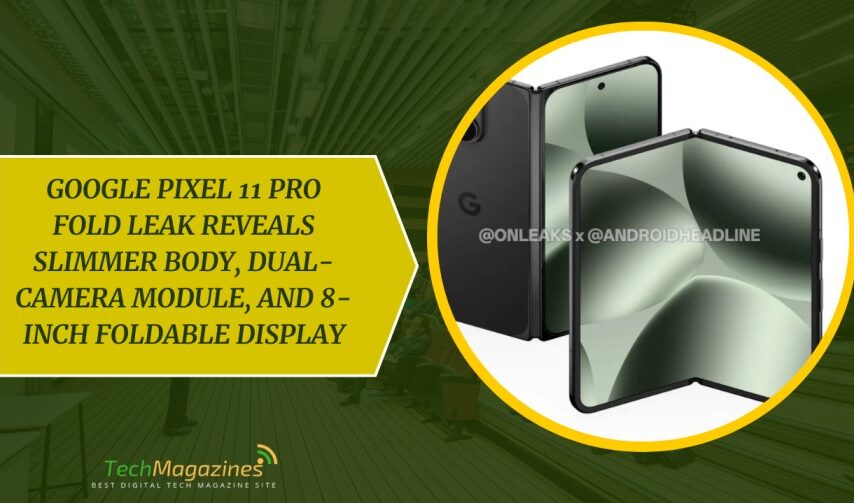

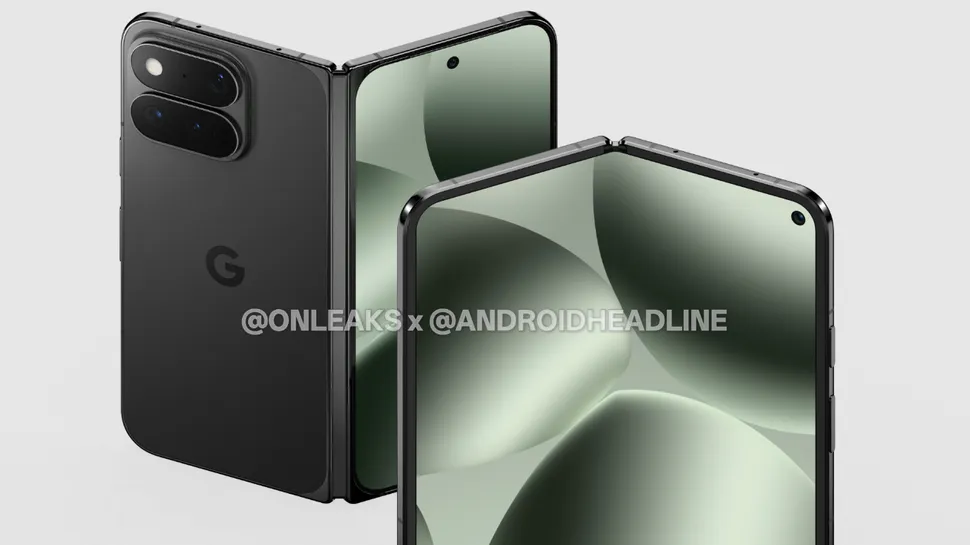
The Google Pixel 11 Pro Fold is still some months from release, yet its design has already found its way into the open. A known tipster, OnLeaks, working with Android Headlines, has shared CAD renders that show the phone from several angles. What these images suggest is not a radical change. The device appears to follow closely the design language of the Pixel 10 Pro Fold rather than depart from it.
There are, however, small details worth noting. Reports claim the Pixel 11 Pro Fold will be thinner than the model that came before it. The rear camera arrangement also seems restrained. Two oblong cameras sit on a squircle-shaped module, both protruding slightly from the back. Beyond this, little is known about the phone’s physical strength. One can only hope it proves sturdier than the Pixel 10 Pro Fold, which, despite its IP68 rating, failed a bend-and-fold test shown in a widely shared video.
Understanding the CAD-Based Renders
It should also be remembered that these renders are not photographs of a finished device. They are 2D images built from a 3D design model. Google itself has said nothing about the phone so far. This suggests the information may come from early design documents or related sources. The tipster behind the leak has been reliable in the past, yet leaks remain uncertain by nature. For that reason, the details should be viewed with a measure of caution.
Inner Display Expectations and Visual Layout
The Pixel 11 Pro Fold is said to come with a large 8-inch LTPO OLED display on the inside. This screen is expected to support a refresh rate that shifts between 1Hz and 120Hz, depending on what the user is doing. The inner panel appears to carry a small punch-hole camera set near the corner for selfies. Around the display sit thin bezels, even in width on every side, which gives the screen a clean and balanced look.
Cover Screen Details and Everyday Use
On the outside, the phone is reported to feature a 6.4-inch LTPO OLED cover display. Like the inner screen, it can adjust its refresh rate dynamically, reaching as high as 120Hz when needed. Google also seems likely to keep the rounded corners of the outer panel. A punch-hole camera sits in the centre for front-facing shots, while the bezels around the display remain fairly narrow.
Physical Dimensions and Form Factor
Because of this design, the Pixel 11 Pro Fold will end up being almost the same size as the model before it. Its height and width are said to remain largely unchanged whether the device is open or folded shut. To put it plainly, the phone measures about 155.2 × 150.4 mm when unfolded and 155.2 × 76.3 mm when folded.
Where the new device may differ is in its thickness. Reports claim the foldable will be slimmer than before. When opened like a tablet, it may measure just 4.8 mm thick. When folded into the form of a phone, the thickness could reach about 10.1 mm. Even so, these figures would still leave it slightly bulkier than the Samsung Galaxy Z Fold 7, which measures 158.4 × 143.2 × 4.2 mm when open and 158.4 × 72.8 × 8.9 mm when folded.
Rear Camera Layout and External Hardware
At present, nothing has been said about the weight of the Google Pixel 11 Pro Fold. Yet the renders offer a few hints about the design of the rear camera system. The lenses do not appear to sit level with the aluminium plate on the back. Instead, they seem to rest in two oblong openings that rise slightly from the surface of the camera island. The LED flash is built into the upper part of this module rather than placed outside it. So far, this seems to be the only visible detail that clearly separates the new device from the one before it.
In most other respects, the phone looks much the same. The charging port, microphone, and speaker grille appear unchanged in position and form. The aluminium frame and glass covering also seem to follow the same design as earlier models. The renders show space for three camera sensors on the rear platform, though it is not yet known whether these will be the same units used in the Pixel 10 Pro Fold.
Internal Hardware and Performance Expectations
As is usually the case, the main change may come from the hardware inside. The handset is expected to run on the Tensor G6 processor, which should bring a modest rise in performance. This chip will likely work alongside 16GB of RAM, with storage options reaching as high as 1TB. Together, these parts are meant to give the device the steady yearly improvement that has become routine with new smartphone releases.
Battery Capacity and Practical Use
One report suggests that the Pixel 11 Pro Fold may carry a slightly smaller battery than the model before it. The capacity is said to be 5,000mAh, a shade below the 5,015mAh unit used in its predecessor. In practice, such a small difference is unlikely to change how long the phone lasts through a day of ordinary use. Even so, it is mildly disappointing to see the number fall at a time when many manufacturers are moving in the opposite direction and fitting larger batteries into their devices.
Current Status and Market Alternatives
For the moment, this is about all that is known regarding the Pixel 11 Pro Fold. Further details will need to surface before one can judge whether the device will justify the wait. Those who want a foldable phone today may instead look at the Samsung Galaxy Z Fold 7. It stands out for its slim build, a fairly strong processor, capable cameras, and a software policy that promises steady support over time.
Final Words
Ultimately, the Google Pixel 11 Pro Fold does not seem like a bold redesign, but a cautious update. The leaked renders indicate that Google is following an old recipe and is simply making the device thinner and perfecting minor design elements. In the case the reports are true, the foldable will introduce the anticipated yearly upgrades: a new Tensor chip, ample RAM, and the huge two-screen configuration that characterizes this category.
It is yet to be determined whether that will be sufficient to stimulate the buyers. Foldable phones are not a new thing anymore, and the competition, in particular, with Samsung, has become tougher than ever. Nevertheless, the consistent strategy of Google has its advantages.