
Public parks and zoos play an important role in informal education, offering learning opportunities outside traditional classrooms. Visitors arrive seeking entertainment, relaxation, and meaningful experiences, but many institutions struggle to balance enjoyment with educational depth. Static signage and passive displays often fail to hold attention, particularly among younger audiences accustomed to interactive environments.
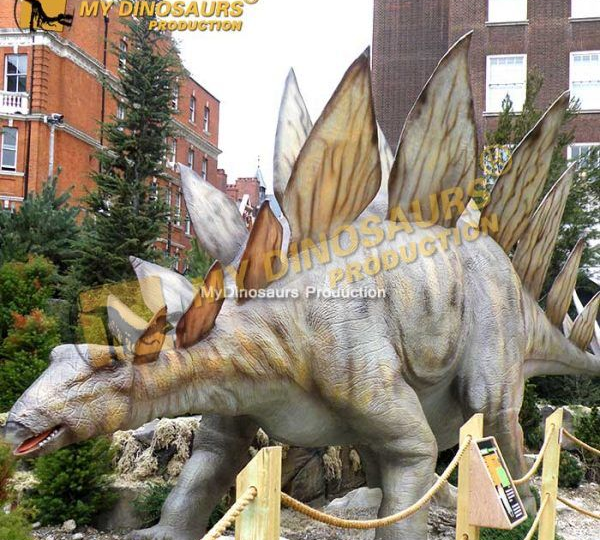
To address this challenge, many parks and zoos are turning to immersive installations such as life size dinosaur exhibits to spark curiosity and engagement. These realistic displays help translate scientific concepts into tangible experiences. When thoughtfully designed, they support learning goals while maintaining accessibility, making complex prehistoric science understandable and memorable for a broad public audience.
Common Visitor Pain Points in Outdoor Educational Spaces
Understanding visitor challenges helps clarify why interactive dinosaur displays are gaining popularity:
- Limited engagement: Traditional educational signage may be overlooked in open, recreational environments.
- Difficulty visualizing scale: Fossils and illustrations alone often fail to convey the true size and presence of dinosaurs.
- Short attention spans: Visitors may disengage quickly if exhibits lack movement or interactivity.
Life size dinosaur installations address these issues by combining visual impact, motion, and storytelling.
Why Life Size Dinosaur Exhibits Are Effective Learning Tools
Creating Realistic Context
Life size dinosaur displays provide a sense of scale that books and screens cannot replicate. Standing next to a full-scale model allows visitors to understand how large dinosaurs truly were, making abstract measurements more meaningful.
Educational benefits include:
- Improved spatial understanding
- Stronger emotional connection to content
- Greater curiosity about prehistoric ecosystems
This realism turns observation into experience, which is essential for effective learning.
Encouraging Exploration and Discovery
Visitors are naturally drawn to large, visually striking exhibits. Life size dinosaurs act as focal points, encouraging exploration of surrounding educational materials. Once attention is captured, supporting signage and activities can deliver deeper scientific context.
Supporting Science Education Through Experience
Learning Beyond Text
Many people learn best through visual and experiential methods. Life size dinosaur displays allow visitors to observe anatomy, posture, and movement in ways that static diagrams cannot.
Key learning outcomes include:
- Better understanding of skeletal structure
- Insight into posture and balance
- Awareness of how dinosaurs interacted with their environments
These observations help reinforce scientific concepts without relying heavily on technical language.
Inspiring Interest in Natural History
Exposure to engaging exhibits can spark lifelong interest in science. For children, encountering a realistic dinosaur may be their first meaningful connection to paleontology. For adults, it can renew curiosity and encourage further learning.
Role of Movement and Interactivity
Enhancing Attention and Retention
When life size dinosaur exhibits include motion or sound, they capture attention more effectively than static displays. Movement encourages visitors to pause, observe, and engage with accompanying educational content.
Interactive elements help:
- Increase time spent at exhibits
- Improve information retention
- Create memorable learning moments
These benefits are especially valuable in outdoor environments where distractions are common.
Supporting Storytelling
Movement allows educators to demonstrate behaviors such as walking, feeding, or breathing. These behaviors help visitors imagine how dinosaurs lived, transforming scientific facts into relatable narratives.
Applications in Public Parks and Zoos
Life size dinosaur installations can be adapted to various settings and educational goals.
| Location | Educational Purpose |
| Zoo pathways | Compare extinct and living species |
| Park exhibits | Introduce evolution and extinction |
| Children’s zones | Support early science learning |
| Seasonal displays | Reinforce themed educational programs |
This flexibility allows institutions to integrate dinosaurs into existing educational frameworks.
Accessibility and Inclusive Learning
Reaching Diverse Audiences
Public parks and zoos serve visitors of all ages, abilities, and backgrounds. Life size dinosaur displays support inclusive learning by offering visual, physical reference points that do not rely solely on reading ability.
Inclusive features may include:
- Clear sightlines
- Simple, layered explanations
- Visual cues supported by brief text
These elements ensure that learning remains accessible to a wide audience.
Multigenerational Engagement
Life size dinosaur exhibits naturally encourage shared experiences. Families, school groups, and individuals can engage together, fostering discussion and collaborative learning.
Long-Term Educational Value
Durability and Adaptability
Well-designed life size dinosaur displays are built for outdoor conditions and repeated public interaction. Their durability supports long-term educational use, while modular designs allow updates as scientific understanding evolves.
Reinforcing Educational Missions
Because dinosaurs remain a popular entry point into science education, these exhibits continue to attract interest over time. They support institutional goals by providing consistent educational value while remaining engaging.
Practical Considerations for Implementation
Institutions considering life size dinosaur exhibits should evaluate:
- Scientific accuracy and anatomical credibility
- Educational alignment with learning objectives
- Maintenance requirements and safety standards
- Flexibility for future educational updates
Thoughtful planning ensures that exhibits remain informative rather than purely decorative.
Ethical Responsibility in Public Education
Accuracy Over Spectacle
While visual impact is important, accuracy must remain the priority. Misrepresenting anatomy or behavior can confuse audiences and undermine trust.
Transparency Builds Trust
Clear explanations of what is known from fossil evidence versus scientific interpretation help visitors understand how knowledge is constructed. Transparency strengthens scientific literacy and credibility.
Conclusion
Life size dinosaur exhibits offer significant educational value in public parks and zoos by transforming abstract scientific concepts into tangible experiences. They address common visitor challenges by improving engagement, supporting visual learning, and encouraging curiosity across age groups.
When thoughtfully designed, these displays serve as powerful tools for informal science education. They inspire exploration, reinforce key learning objectives, and create lasting impressions that extend beyond a single visit. As parks and zoos continue to expand their educational roles, life size dinosaur exhibits remain effective, accessible, and engaging ways to connect the public with Earth’s prehistoric past.