
For every modern business, expansion is a key goal. In today’s connected world, growth is no longer just about selling more products locally. It is also about extending your reach beyond borders to markets around the globe. Yet one of the biggest challenges to scaling internationally is reliable connectivity. For example, how can you ensure that your employees, assets and devices stay seamlessly connected from Toronto to São Paulo or from Vancouver to Singapore? The answer lies in eSIM in Canada, a small but revolutionary technology now available nationwide that makes a truly borderless operating model possible.
The Connectivity Problem
For a long time, expanding a business abroad meant figuring out how to work around a network of problems. It was difficult to set up IoT ( Internet-of-Things) devices in different countries because you had to get real SIM cards for each territory, deal with complicated operator contracts and pay considerably high roaming charges.If your business has a number of tracking devices or employees who are on the move a lot, this was a major problem that made running the business and achieving profitability very difficult.a device is limited to a single network operator, creating vulnerabilities in network coverage and forcing businesses to incur significant physical intervention costs if they want to switch providers.
This excessive complexity has been a significant barrier to global ambitions, particularly for small and medium-sized enterprises that do not have robust IT departments.

Image Source: Pexels.com
eSIM Explained: The Future of Mobile Connectivity
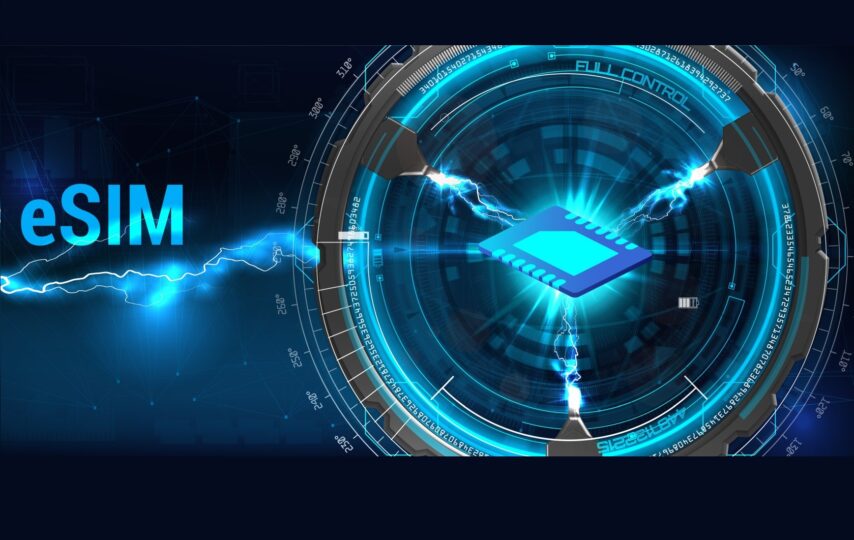
An eSIM (embedded SIM) is a compact integrated chip that replaces the conventional plastic SIM card. Its strength lies not in its dimensions, but in its software-controlled capabilities. An eSIM is reprogrammable and enables remote installation and modification of operator profiles via over-the-air (OTA) technology.
This transition from analog to digital technology opens up a realm of possibilities. A single device, manufactured in a single location, can be shipped worldwide and, when activated, seamlessly connected to the optimal local network without the need for a physical SIM swap.
The Strategic Advantages of eSIM for Businesses
The business benefits of integrating eSIM technology are profound and directly impact the bottom line:
Quick International Expansion
Rapid entry into new markets is now possible with an eSIM. Simply upload a new profile to expand your connected business worldwide with the eSIM. There is no need to ship different hardware or manage SKUs specific to certain countries. Businesses that choose this approach can enter new markets faster and with less risk.
Reliability & Performance
With eSIMs, you can switch networks in the blink of an eye. If a device loses connection to a particular network provider, it can automatically switch to a more reliable local partner, ensuring that critical asset data or seamless team communication is never interrupted. This increases the resilience of your operations internationally.
Cost Effectiveness
eSIM also eliminates roaming charges, as it enables seamless switching to local network profiles. ESIM technology also reduces the logistics costs associated with procuring, storing and distributing physical SIM cards around the world.
Simplified Management
Manage your entire global fleet of devices from a single, centralized platform. IT administrators can remotely provision, monitor, and manage connectivity for thousands of devices across multiple countries, all from one dashboard.
Conclusion
eSIM is not just another tech upgrade, but a powerful tool that can help companies of all sizes. With eSIM, they can compete around the world without being hampered by the limitations of traditional connectivity. It makes it easy and possible for them to enter new markets, meaning that a new generation of businesses will not be restricted by borders. IoT deployments can be used all over the world, and teams from different countries can work together as if they were all in the same room. Companies that want to stay ahead of the game need to adopt eSIM. It is the first step to developing a business that is flexible, strong and truly global.