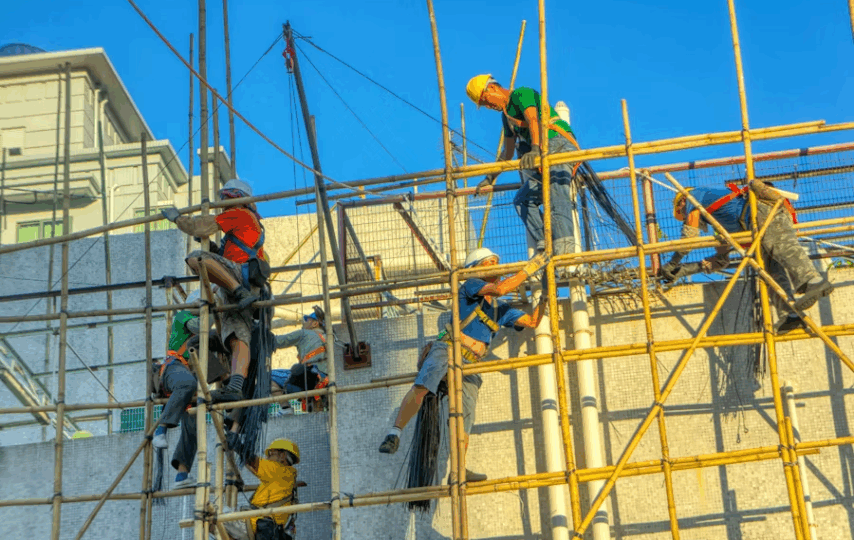

Modern construction goes beyond erecting buildings—it’s about creating safer, more efficient, and more comfortable spaces. The industry has shifted toward holistic development, integrating safety, sustainability, and smart project management.
Technologies like Building Information Modeling (BIM), real-time data systems, and advanced analytics now streamline planning, improve collaboration, and uphold safety standards. With innovative methods and lifecycle-focused practices, projects are designed for sustainability from start to finish.
Advances in Building Safety
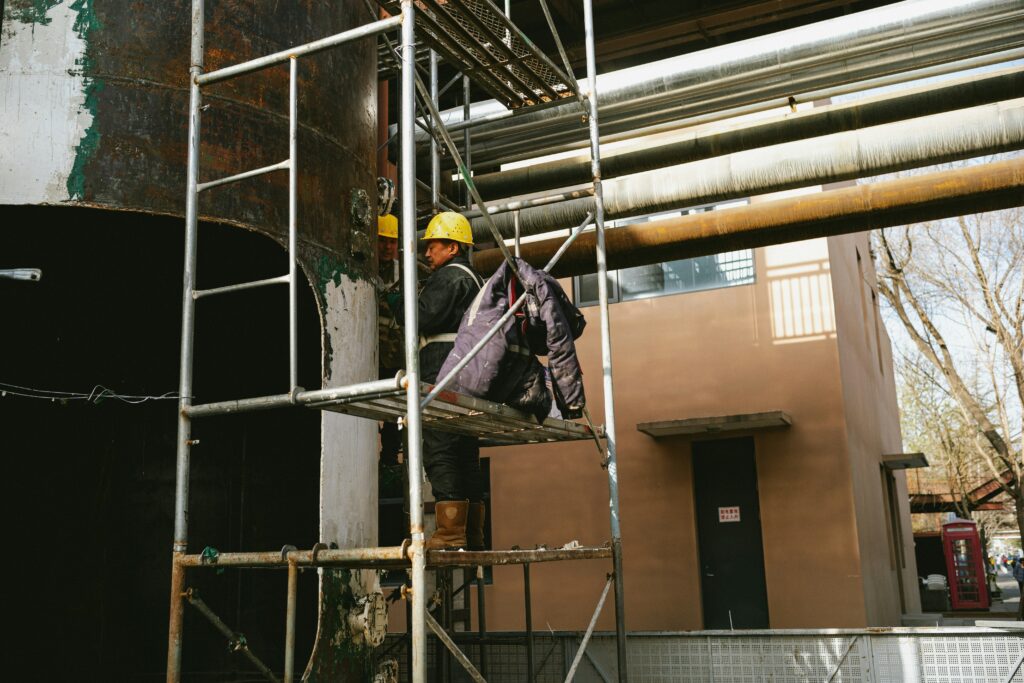
Source: https://unsplash.com/photos/a-man-standing-on-a-scaffold-next-to-a-building-dA4DdZxLPU4
Building Information Modeling (BIM) enables real-time monitoring and quick hazard detection, while LiDAR-powered virtual inspections streamline permits and reduce delays. Drones have transformed façade inspections, offering faster, safer, and more accurate assessments without risky manual work.
Fire prevention and management solutions have also seen significant improvements. Companies like Pyromech are at the forefront of delivering fire safety services and equipment, protecting both commercial and residential projects. Their expertise ensures that buildings are equipped with state-of-the-art fire safety systems, from advanced sprinkler systems to comprehensive fire detection and alarm systems.
Engineer training on lift safety components is prioritized to ensure compliance and quality in new lift and escalator installations. Remote Monitoring and Diagnostics (RM&D) solutions are paving the way for predictive maintenance of lifts, enhancing operational safety and preventing accidents.
The Building and Construction Authority (BCA) oversees major construction projects, ensuring safety standards are maintained throughout complex builds. This oversight is essential in maintaining the integrity and safety of our built environment.
Infrastructure That Enhances Functionality
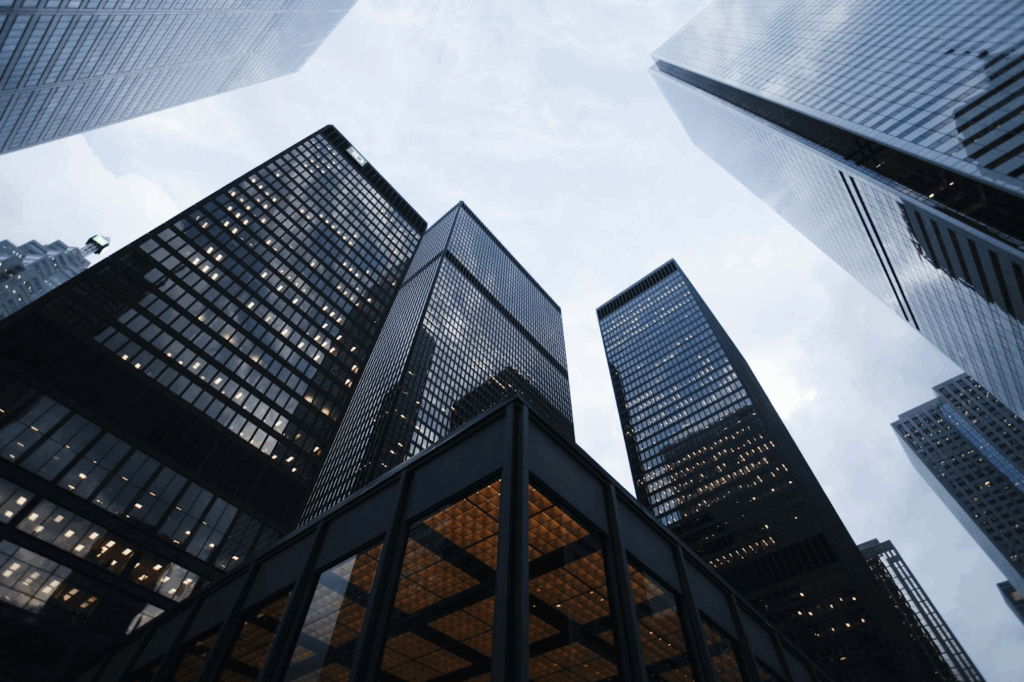
Source: https://unsplash.com/photos/low-angle-photo-of-city-high-rise-buildings-during-daytime-PhYq704ffdA
Thoughtful infrastructure design is paramount in ensuring the functionality and efficiency of public and private spaces. Proper layouts, markings, and signage are fundamental aspects that make these spaces safer and easier to use.
Smart building technology uses automated processes and IoT devices to enhance building performance and occupant experience. The evolution of smart technology has shifted from traditional management to intelligent systems that adapt to real-time data, enhancing operational efficiency and comfort through a smart building system.
One practical example of how thoughtful infrastructure design enhances functionality is carpark line marking. Clearly defined parking areas contribute to smoother traffic flow and reduced hazards, making public spaces safer and more efficient. This simple yet effective measure is a testament to how proper planning and design can significantly improve the usability of spaces.
Advanced energy management systems in smart buildings optimize consumption and support sustainability efforts. Integrated security features use IoT to enhance safety by monitoring vulnerabilities and responding to threats. Data analytics play a crucial role in smart buildings, allowing for immediate operational adjustments based on real-time insights.
Sustainable Solutions for Everyday Comfort
Sustainability is at the heart of modern sustainable construction practices, with a strong focus on integrating energy-efficient systems into construction projects that utilize sustainable materials and promote sustainable development. These systems not only reduce energy consumption but also enhance everyday comfort for occupants by minimizing the energy consumed and reducing carbon emissions.
Incorporating passive design principles in building architecture can significantly decrease energy usage by:
- Utilizing natural ventilation and strategic shading.
- Using solar panels on buildings to generate renewable energy and reduce energy costs, contributing to energy savings and improve energy efficiency measures while helping to conserve energy and reducing energy consumption.
- Applying innovative water management techniques, such as rainwater harvesting and greywater recycling, to minimize water consumption.
Heating solutions are a key component of sustainable construction. An underfloor heating plumber ensures that modern homes and offices achieve year-round comfort while keeping energy usage efficient. Underfloor heating systems are highly efficient, providing even heat distribution and reducing energy costs.
Green roofs and vertical gardens enhance urban environments by improving air quality and providing temperature regulation. Smart building automation systems leverage technology to optimize energy efficiency and air quality, enhancing occupant comfort. Utilizing eco-friendly materials and sustainable construction methods helps reduce greenhouse gas emissions, the environmental impact, and promotes healthier indoor spaces in green building practices, including green construction, with the use of green building materials and environmental quality in green buildings, offering significant environmental benefits.
Certifications like NABERS and Green Star promote adherence to sustainability standards in real estate developments, fostering a sustainable future. These measures ensure that modern buildings are not only comfortable but also environmentally responsible.
The Human Experience in Modern Spaces
Modern construction practices have a profound impact on the human experience, shaping how we interact with and perceive our built environment. These practices directly influence our daily lives, offering psychological benefits, convenience, and physical comfort.
Modern architecture impacts emotional well-being by creating spaces that foster connection and community. The use of natural light in building design can enhance mood and productivity for occupants. Incorporating biophilic design elements, such as greenery and water features, can improve the overall human experience in built environments.
The sensory aspects of architecture, including acoustics and materials, play a crucial role in shaping how people perceive and interact with spaces. The design of public spaces can influence social interactions and community engagement, promoting a sense of belonging.
Smart building technologies enhance safety, comfort, and efficiency by integrating various systems. Virtual and augmented reality are also being used to design and plan spaces that cater to human needs, ensuring that modern buildings are not only functional but also enriching for their occupants.
Conclusion
The interconnectedness of safety, efficiency, and comfort in modern construction is undeniable. The most successful construction projects are those that seamlessly combine innovations like professional fire safety systems, well-planned infrastructure, and sustainable comfort solutions into a unified approach that benefits everyone.
These modern practices address global housing shortages by providing efficient and cost-effective solutions while enhancing the safety and quality of construction projects. By integrating advanced technologies and sustainable methods, the construction industry is paving the way for a better future, one building at a time, through modular construction methods and industrial research in the building sector.
Frequently Asked Questions
How does Building Information Modeling (BIM) enhance construction safety?
Building Information Modeling (BIM) enhances construction safety by enabling real-time monitoring and immediate identification of potential hazards, ultimately leading to a more secure and efficient construction process.
What role does smart building technology play in improving building performance?
Smart building technology significantly enhances building performance by integrating automated processes and IoT devices, leading to improved operational efficiency and occupant comfort. This integration is essential for optimizing resource use and ensuring a better overall experience in modern buildings.
How do sustainable construction practices contribute to everyday comfort?
Sustainable construction practices significantly enhance everyday comfort by incorporating energy-efficient systems, like underfloor heating and smart automation, which minimize energy usage while optimizing environmental quality within the living spaces. This focus on efficiency not only lowers utility costs but also creates a more pleasant and healthier indoor atmosphere for occupants.
What are some examples of innovative technologies in modern construction?
Innovative technologies in modern construction encompass AI, robotics, 3D printing, drones for site surveys, and wearables for monitoring workers’ health and environmental conditions. These advancements significantly enhance efficiency and safety in the industry.
How do modern construction practices impact the human experience in built environments?
Modern construction practices significantly enhance the human experience in built environments by fostering emotional well-being and productivity through the use of natural light, biophilic design, and smart technologies. This focus on creating healthier, more engaging spaces ultimately contributes to a stronger sense of community.