
Technology is changing how legal professionals investigate and present complex cases. Digital information now plays a central role in determining what happened and who may be responsible. For families seeking justice, a lawyer for wrongful death lawsuits often relies on modern tools and data to build a stronger claim. These advancements are helping courts examine evidence with greater clarity and precision.
The Growing Role of Digital Evidence
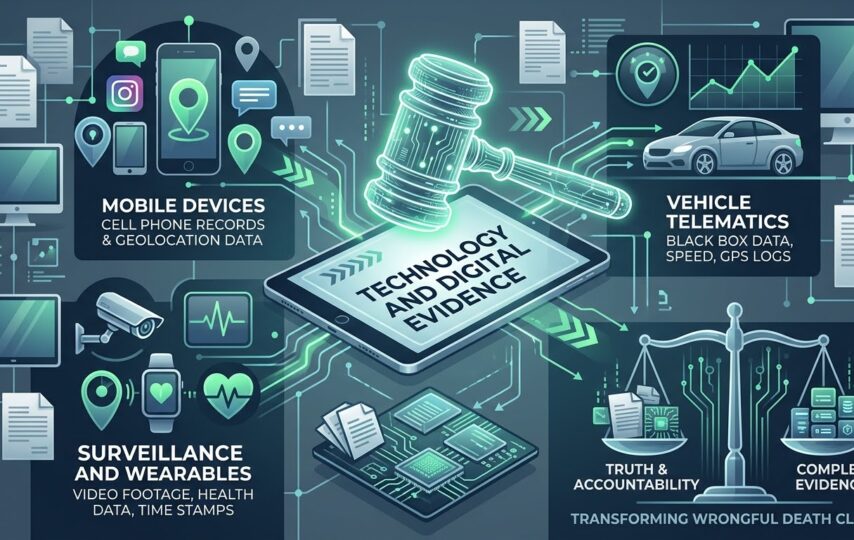
Digital evidence has become one of the most valuable tools in legal investigations. Smartphones, computers, and connected devices often store information that can reveal important details about a person’s actions or location. This type of data can help reconstruct events that led to a fatal accident.
Many cases now include information such as text messages, emails, and GPS records. These records may show communication between parties or confirm where someone was at a specific time. When used properly, digital evidence can strengthen claims about negligence or liability.
Surveillance and Video Footage
Video recordings have become an important source of evidence in many wrongful death cases. Cameras are now widely used in public spaces, businesses, and residential areas. As a result, incidents that once depended only on witness accounts may now be captured on video.
Traffic cameras and security systems can provide helpful views of how an accident unfolded. Footage may show the moments leading up to a collision or whether someone ignored safety rules. This type of evidence can help clarify disagreements about who may be at fault.
Video evidence also helps attorneys present events clearly and directly. Judges and juries often understand a situation more easily when they can see what happened. In complicated cases, this visual perspective can play a key role in explaining the facts.
Data from Vehicles and Transportation Systems
Many modern vehicles contain built in systems that record how a vehicle is being driven. Devices known as event data recorders track details such as speed, braking patterns, and steering movements. This information can provide important clues about what occurred just before a collision.
Transportation networks also gather extensive operational data. Commercial trucking companies, rideshare platforms, and delivery fleets often monitor routes, driving time, and vehicle activity. These records may help determine whether drivers followed required safety rules.
Legal teams frequently review this information with the help of technical experts. Specialists examine the data and explain what the readings indicate about the incident. Their insights help courts understand complex details in a clear and practical way.
Social Media and Online Activity
Social media has become an unexpected source of digital evidence in many legal cases. People regularly share photos, comments, and updates that reflect their daily routines. In certain situations, these posts can offer insight into what someone was doing before or after an incident.
Online activity may sometimes show whether a person was distracted or acting carelessly. For example, a message or update posted close to the time of an accident might raise questions about focus or responsibility. These details can help investigators better understand the circumstances surrounding an event.
At the same time, social media evidence must be reviewed with caution. Legal teams need to confirm that posts are genuine and obtained through proper legal methods. Courts also consider privacy rights before deciding whether this type of material can be used as evidence.
Accident Reconstruction Technology
Accident reconstruction has advanced significantly through technology. Investigators now use specialized software to recreate events based on available evidence. These digital simulations help visualize how an accident likely occurred.
Experts analyze factors such as vehicle speed, road conditions, and impact angles. The resulting models allow attorneys to present a clearer explanation of events. Jurors can better understand the sequence of actions that led to a fatal outcome.
This technology also helps identify contributing factors that may not be obvious. Mechanical failures, environmental conditions, or driver behavior can all be examined in detail. The analysis often supports arguments about negligence or responsibility.
Medical Records and Digital Health Data
Advances in medical technology have changed how injuries and deaths are recorded. Most hospitals now use electronic medical records to document treatment, diagnoses, and patient progress. These systems create a clear timeline that shows the care a person received.
In wrongful death cases, medical records often play a key role in explaining what caused a person’s death. Medical professionals may review the records to see whether the injuries match the details of the reported incident. Their findings can help support or question claims about responsibility.
Digital health records can also show how serious the injuries were and what treatment was provided. This information may help demonstrate the suffering experienced before death and the impact on surviving family members. Well organized documentation can make the legal case easier for courts to understand.
Final Thoughts
Technology has reshaped how wrongful death cases are investigated and presented in court. Digital records, video footage, and advanced analysis tools now provide deeper insight into tragic events. A skilled lawyer for wrongful death lawsuits can use these resources to uncover critical details that support a family’s claim. As technology continues to evolve, it will likely play an even greater role in pursuing justice.