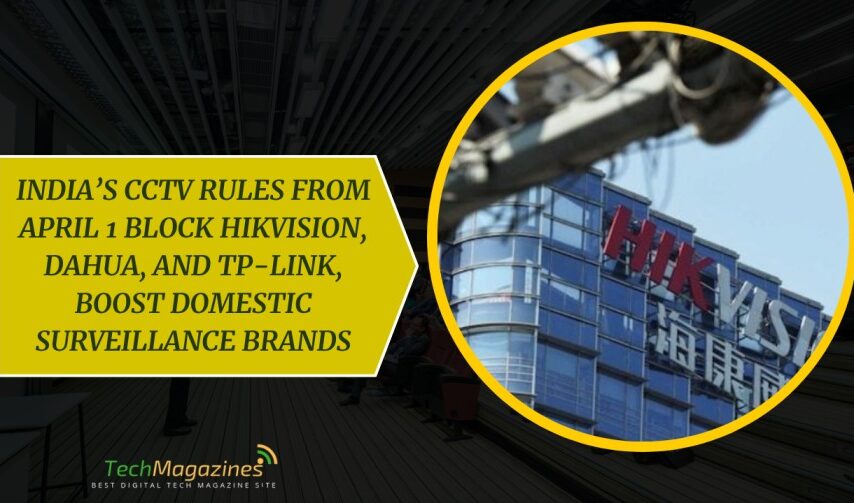

India is getting ready to put rules on surveillance devices. From April 1 companies like Hikvision, Dahua and TP-Link might not be allowed to sell internet-connected CCTV cameras or similar gadgets in India. The reason for this is rules under the STQC system, which says every product must be approved before it can be sold in India.
On paper these rules apply to all companies that sell surveillance devices. In reality it seems tougher for some companies that sell surveillance devices than others. Reports say that officials are not giving approval to brands of surveillance devices especially those using Chinese-made chipsets in their surveillance devices. If a surveillance device does not get this approval it simply cannot be sold in India. So even though it is a rule it basically blocks those surveillance devices from entering the Indian market.
Data Security Concerns Drive Regulatory Push
The main reason behind this move is security of India. These surveillance devices do not just sit there. They collect data. Send it somewhere often without people noticing what the surveillance devices are doing. So by controlling these surveillance devices the government of India is also trying to control where that data from the surveillance devices goes. When you look at it like that this move by the government of India does not seem sudden. It is part of a bigger plan to keep a closer watch on such technology, like surveillance devices.
The effect on Chinese brands could be pretty big. Not too long ago, they had almost one-third of India’s CCTV market. But now, that share has gone down. Indian companies have slowly started taking their place. This didn’t happen all at once, it changed little by little, and now the market clearly leans more towards Indian brands.
Domestic Manufacturers Expand to Fill the Gap
At the same time, Indian companies like CP Plus, Qubo, Prama, Matrix, and Sparsh have quickly expanded their business. They’ve carefully changed where they get their parts from. Many of them now avoid Chinese components and use chipsets from Taiwan instead. They’ve also started making their software (firmware) closer to home.
These aren’t small changes, they show that these companies really want more control over how their products are made. According to Counterpoint Research, Indian brands now control more than 80% of the market as of February. But when it comes to high-end products, big global companies like Bosch and Honeywell are still leading.
Policy Support Gives Indian CCTV Companies an Edge
For CCTV companies the government’s decision is actually pretty helpful. It gives Indian CCTV companies an advantage. The decision also matches what Indian CCTV companies want. Qubo, which is part of the Hero Group clearly said they support this move. Qubo said these rules will help control devices that do not follow safety standards, especially internet-connected ones.
Compliance Requirements Under MeitY’s Essential Rules
The new CCTV rules for CCTV companies did not just appear for no reason. The new rules come from something called the Essential Requirements made by the Ministry of Electronics and Information Technology in April 2024. These rules are quite clear. Indian CCTV companies have to tell where important parts of their devices come from like the chip. Indian CCTV companies also have to test their devices to find any security problems like hackers getting access from far away.
The government did not rush things for CCTV companies. The government gave CCTV companies two years to follow these rules. Some Indian CCTV companies have already done it. In fact than 500 CCTV models have been approved under this system. That is a big number and it shows that the change is already happening step by step, for Indian CCTV companies.
Final Words
India’s CCTV changes do not feel like a surprise. They seem to be a plan that was in the works for some time. The government is making rules, which means these devices need to go through proper checks before they start working. Now things like security, data safety and knowing where parts come from are very important. If a device does not follow the rules it could be removed from the market.
At the time Indian companies appear to be ready to benefit from this. They are making products and trying to use local parts instead of relying on others. It seems like they are now in the spotlight.
Course everything will not change at once. Big global brands that make high-end products are still doing well. Approvals for devices will continue to happen slowly. But one thing is clear. The rules are getting stricter. There is less room to bend them. So for CCTV companies the message is simple: follow the rules show where your parts come from. You can stay in the game. Otherwise April 1 might feel less like a day and more, like the end of the game.