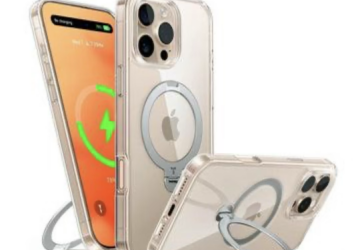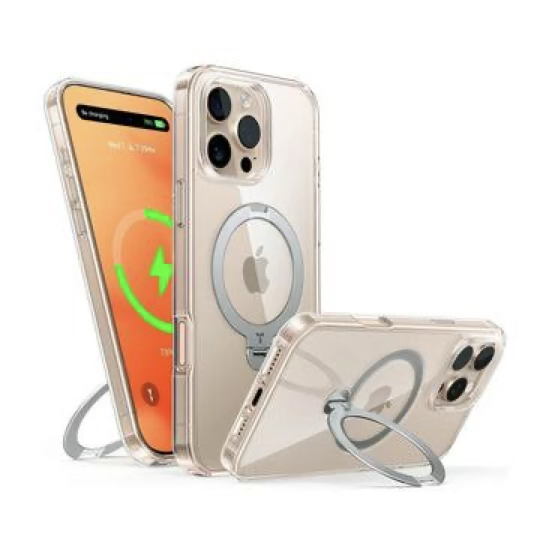

You spent good money on an iPhone 15, and its sleek titanium finish or bold color deserves to be seen — not buried under a bulky, opaque case. Clear cases seem like the perfect answer, letting your phone’s design shine through while still keeping it protected. But anyone who has owned one knows the frustration: within weeks or months, that crystal-clear case starts turning an ugly shade of yellow, making your premium smartphone look neglected and old.
It’s a surprisingly common problem, and for style-conscious users, it’s more than just a minor annoyance. A yellowed case can undermine the entire aesthetic you were trying to preserve in the first place. Fortunately, anti-yellowing clear cases have emerged as a genuine solution, engineered with advanced materials and coatings specifically designed to resist discoloration over time.
This article breaks down everything you need to know about iPhone 15 clear case anti-yellowing technology — from the science behind why cases turn yellow, to the innovations that prevent it, to practical tips for choosing a case that balances everyday defense with the style your phone deserves. Whether you’re a first-time buyer or replacing a case that’s already gone yellow, this guide will help you make a smarter, longer-lasting choice.
The Inevitable Yellowing: Why Traditional Clear Cases Fail
That pristine clear case you slipped onto your iPhone 15 on day one won’t stay crystal clear for long — and there’s real science behind why. Most budget and mid-range clear cases are made from standard thermoplastic polyurethane (TPU), a flexible material that’s affordable and easy to manufacture but highly vulnerable to a process called photo-oxidation. When UV light from sunlight or even indoor lighting hits the polymer chains in TPU, it triggers a chemical reaction that breaks down the material’s molecular structure, producing chromophores — light-absorbing compounds that give the case that unmistakable yellow tint.
Heat accelerates this degradation significantly. Leaving your phone on a sunny dashboard, near a window, or in a warm pocket creates the perfect conditions for rapid discoloration. Body oils and sweat from everyday handling also seep into the material, further compromising its clarity and contributing to that grimy, aged appearance. The combination of UV exposure, oxidation, and chemical contamination means most standard clear cases begin showing visible yellowing within just two to three months of regular use.
For style-focused iPhone 15 owners, this is particularly frustrating. You chose a clear case specifically to show off Apple’s careful design work — the titanium frame, the textured matte back, the distinctive color. A yellowed case doesn’t just look dirty; it actively undermines the phone’s premium aesthetic, making a flagship device look neglected. This unavoidable decline with conventional materials is precisely what makes anti-yellowing engineering not a luxury feature, but a genuine necessity for anyone who cares about how their phone looks over time.
Anti-Yellowing Technology Explained: The Science of Clarity
Modern anti-yellowing clear cases solve the discoloration problem by attacking it at the chemical level. The most significant advancement is the incorporation of UV inhibitors directly into the case material during manufacturing. These compounds, often based on benzotriazole or hindered amine light stabilizers (HALS), work by absorbing or neutralizing the UV radiation before it can trigger the photo-oxidation reactions responsible for yellowing. Rather than letting UV energy break down polymer chains, these inhibitors essentially intercept and dissipate that energy harmlessly — keeping the material’s molecular structure intact and the case visually clear.
Premium anti-yellowing cases also move beyond standard TPU formulations. High-quality manufacturers use either specially modified TPU blends with enhanced UV resistance or polycarbonate composites that are inherently more stable under light exposure. Some cases combine both materials — a rigid polycarbonate back for optical clarity and structural stability, paired with a TPU bumper for shock absorption. This hybrid construction resists not only UV-induced yellowing but also the thermal degradation that heat accelerates in single-material cases.
Hydrophobic nano-coatings represent another layer of defense in the best iPhone 15 clear case anti-yellowing designs. These microscopic surface treatments repel oils, sweat, and moisture — the chemical contaminants that compound UV damage and cloud the case over time. By preventing these substances from penetrating the material, hydrophobic coatings help the case maintain its original transparency far longer than untreated alternatives. Brands like TORRAS have applied this approach in their clear case lineup, combining optically pure resins with nano-coating treatments to minimize haze as the case ages. Together, these technologies represent a meaningful engineering leap over conventional clear cases.
Choosing the Best iPhone 15 Cases for Everyday Defense
With anti-yellowing technology established as the baseline, the next challenge is finding a case that delivers genuine everyday defense without compromising the clarity you’re paying for. The best iPhone 15 cases strike a careful balance — they need to protect a device that costs upward of $800 while remaining thin enough to preserve the phone’s premium feel in your hand. Start your evaluation by looking at the case’s overall construction quality. A well-engineered case will feel solid at the corners, where drop impacts concentrate most of their force, while remaining flexible enough along the sides to absorb shock rather than transmit it directly to the phone’s frame.
Material certification matters more than marketing language. Look specifically for cases that have passed MIL-STD-810G or MIL-STD-810H military drop-test standards — these certifications indicate the case has been tested against drops from four feet or higher across multiple angles and surface types. Cases that simply claim to be “protective” without third-party testing data are making unverifiable promises. Beyond drop resistance, check whether the case uses optically clear polycarbonate for the back panel rather than cheaper alternatives that sacrifice both clarity and rigidity over time.
Fit precision is another non-negotiable factor. A case designed specifically for the iPhone 15 — not a generic “compatible with multiple models” version — will have exact cutouts for the Dynamic Island, Action Button, USB-C port, and camera module. Loose or imprecise fits allow dust and debris to accumulate between the case and phone, scratching the very surface you’re trying to protect. Finally, consider the case’s edge profile: raised bezels around both the screen and camera bump are essential for protecting these vulnerable areas when the phone lands face-down or camera-side-down on hard surfaces.
Protection Features: Drop Resistance and Scratch Prevention
Military-grade drop certification is the clearest indicator that a case can handle real-world accidents, but the engineering details behind that certification matter just as much as the label itself. The most effective protective cases use a dual-layer approach — a rigid polycarbonate shell that distributes impact force across a wider surface area, backed by a TPU inner layer that absorbs and dissipates the remaining energy before it reaches the phone. Raised bezels of at least 1.5mm around the screen prevent direct contact with flat surfaces during face-down drops, while an elevated camera ring protects the iPhone 15’s protruding lens module from scratches on rough surfaces. Together, these features address the most common damage scenarios without requiring a bulky, heavy case that defeats the purpose of a slim, premium smartphone.
Practical Considerations: Grip, Port Access, and Wireless Charging
A case that looks great but feels slippery in your hand creates its own drop risk, which is why texture and ergonomics deserve serious attention. Matte finishes and subtle grip patterns along the sides significantly reduce the likelihood of the phone sliding out of your hand or off surfaces. For port access, confirm that the USB-C opening accommodates third-party cables, not just Apple’s own — some cases have overly tight cutouts that make charging unnecessarily awkward. Wireless charging compatibility is equally important: cases thicker than 3mm can interfere with MagSafe alignment and reduce charging efficiency, so verify the case’s stated MagSafe compatibility before purchasing. Cases with built-in MagSafe magnets maintain proper alignment and allow accessories like wallets and mounts to attach securely without any degradation in charging performance.
Aesthetic Enhancements: Style Meets Protection for Fashion-Conscious Individuals
Protection and clarity are table stakes — but for fashion-conscious iPhone 15 owners, how a case looks and feels is equally important. The good news is that the best anti-yellowing clear cases have evolved well beyond purely functional designs, offering thoughtful aesthetic details that actively complement the iPhone 15’s premium finish rather than simply tolerating it. A truly well-designed clear case should feel like a natural extension of the phone, not an afterthought slapped over it.
Slim profiles make an immediate difference in how the phone feels and looks in hand. Cases under 1mm thick at the back panel preserve the iPhone 15’s original silhouette, allowing the titanium frame’s precise edges to remain visible and tactile. Thicker cases, even attractive ones, visually bulk up the phone and obscure the design language Apple spent considerable effort refining. When evaluating case transparency, hold it against a printed page or patterned surface — truly optically clear cases will show sharp detail without color distortion, while lower-quality alternatives introduce a subtle blue, grey, or warm tint that mutes the phone’s actual color.
Finish choice is a genuinely personal decision with practical implications. Glossy finishes maximize visual clarity and make colors appear more vivid, but they attract fingerprints aggressively and can feel slick in hand. Matte finishes offer a more tactile, premium feel that resists smudging and provides better grip, though they slightly soften the visual crispness of the phone’s back. Some manufacturers offer a frosted semi-matte finish that splits the difference effectively. For style alignment, consider whether you want the case to be essentially invisible — prioritizing the phone’s design above all — or whether subtle texture patterns, colored frames, or tinted edges serve your personal aesthetic better. The right answer depends entirely on what drew you to the iPhone 15’s design in the first place.
Maintenance Tips to Prolong Your Case’s Clarity
Even the best anti-yellowing case benefits from consistent care. Clean it weekly using a soft microfiber cloth dampened with mild soap and water, wiping away body oils and residue before they penetrate the material. Avoid alcohol-based cleaners, bleach, or abrasive wipes — these strip protective coatings and accelerate the very degradation you’re trying to prevent. When your phone isn’t in use for extended periods, store it away from direct sunlight and heat sources, since prolonged UV and thermal exposure compounds over time even in high-quality materials. These small, regular habits meaningfully extend your case’s clarity and keep the anti-yellowing properties working as intended.
Choosing a Clear Case That Stays Clear
A clear case should do exactly what you bought it for — keep your iPhone 15 looking as sharp on day three hundred as it did on day one. Traditional TPU cases fail that promise within months, turning yellow through UV exposure, oxidation, and everyday chemical contamination. Anti-yellowing cases solve this with real engineering: UV inhibitors that intercept damaging light, polycarbonate composites that resist thermal degradation, and hydrophobic coatings that repel the oils and moisture that compound discoloration over time.
But lasting clarity is only part of the equation. The best anti-yellowing clear cases also deliver military-grade drop protection, precise fit, MagSafe compatibility, and thoughtful aesthetic details that complement rather than conceal the iPhone 15’s premium design. When you’re investing in a flagship device, your case should match that standard — not undermine it.
When shopping for your next case, make anti-yellowing technology a non-negotiable criterion, not an optional upgrade. Pair that with verified drop-test certification, proper fit, and a finish that suits your personal style, and you’ll have a case that genuinely earns its place on your phone. Combined with simple weekly cleaning habits and mindful storage, the right case keeps your iPhone 15 looking new far longer than any standard clear alternative ever could. Your phone’s design deserves to be seen — and with the right case, it will be.