
Several leading electronics firms, including Lenovo, Xiaomi, and Honor, published a series of previews and pre-statements on the eve of the Mobile World Congress (MWC) 2026. These revelations were estimated glimpses, intended to win attention prior to the commencement of the formal proceedings. Companies are trying to influence the story before the audience has even stepped into the hall. The Congress itself, which is held on an annual basis by the GSMA, will be held between March 2 and March 5, 2026, in Barcelona, Spain.
It is among the major conferences of the mobile and telecommunications sectors. Handset manufacturers are in line with network operators, chipmakers, and various other technology businesses. New equipment is proclaimed, experimental layouts are presented and general trends in the industry are discussed with a certain level of candor. It is a palace and a senate, where business and speculation have an interview. Some of the products and prototypes that have received specific attention that were announced before the event are highlighted below.
Lenovo Bets on Modularity, Flexible Displays, and AI Desk Companions
Lenovo showed a series of proof-of-concept models. They are not market-ready articles, but work demonstrations. One of the more conspicuous was a so-called modular laptop that has two screens and removable ports that can be rearranged. It is focused on flexibility. It must be said without any doubt that these machines are experimental. They have not yet been given a schedule to release and there is no guarantee that they will go further than this initial phase. At this moment they are more of propositions than promises.
ThinkBook Modular AI PC Concept: This is a device that is introduced as a machine that can be modified in shape through the mere process of removing and reconfiguring the components. Its secondary display does not have one fixed purpose. It can be a separate monitor, or can be attached to the back of the main display, according to the user.
The HDMI port is not considered permanent; it can be removed and replaced with another connector. The point, which is too clear, is to imply a computer that adapts to the situation instead of requiring the user to do so.
Legion Go Fold Concept: This proposed gaming device uses a flexible display instead of a solid panel, which can be expanded from 7.7 inches to 11.6 inches when unfolded. The controllers are not attached to the body but can be removed and held in hand. The screen itself may be positioned horizontally or vertically.
When it is set on its feet it allows a division of labor: one part to play, the other to stream. The design is based on the premise that one device can be used to perform multiple tasks simultaneously, without the necessity of having extra hardware.
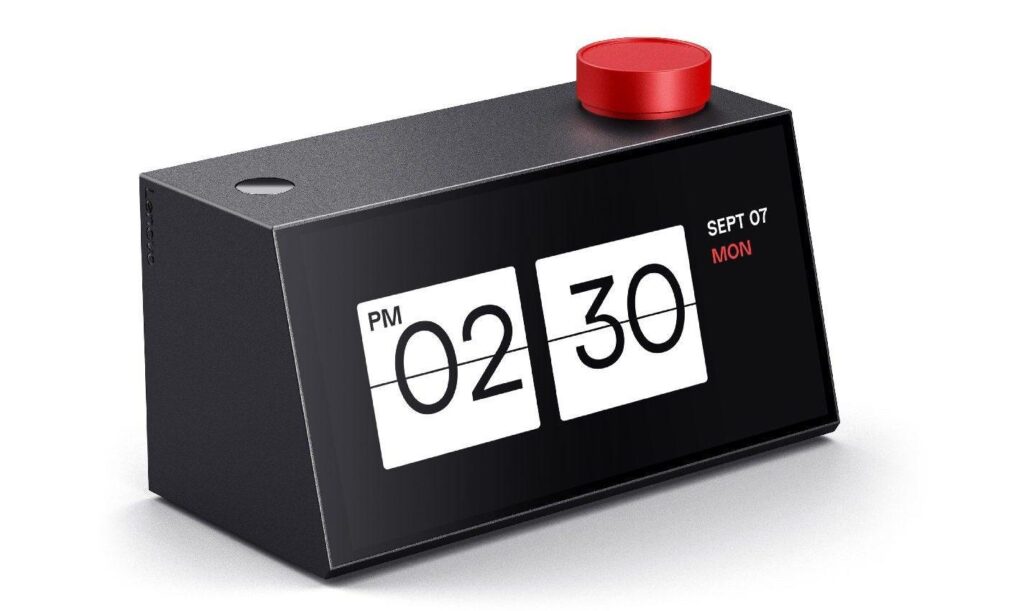
AI Work Companion: This idea is presented in the form of a small desk clock, but it is supposed to be something different. It contains an AI-based assistant that can synchronize tasks and appointments on several devices at once with a single touch. In addition to this, the clock is reported to suggest rest time and monitor the screen time of the user, and the mentioned purpose is to avoid exhaustion. When characterizing it, Lenovo proposes a device not only to keep hours, but to control the pace of work itself.
Xiaomi Expands Its Ecosystem: From Leica Tribute Phones to Smart Mobility
The latest collection presented under what the company calls the “House of Xiaomi” brings together a range of devices, each intended to occupy a particular corner of the modern consumer’s life. At its centre stands a flagship smartphone, described as an effort to extend the limits of mobile photography. Around it are arranged various accessories: dedicated photography kits, a tracking device comparable in purpose to an AirTag, a notably slim power bank, a revised smartwatch, and other additions besides. The emphasis is on completeness, as though the brand were not merely offering products, but an enclosed system.
Leica Leitzphone: Marking a century since the founding of the German camera manufacturer, Xiaomi has announced a special edition handset developed in tribute. The device is built with an aluminium-alloy frame treated with a nickel-anodised finish, a choice meant to suggest durability and craft. On the rear sits a rotating ring designed to adjust zoom in the manner of a traditional camera lens. The gesture is deliberate. It seeks to narrow the distance between the act of taking a photograph on a phone and the more tactile experience of using dedicated photographic equipment.
Xiaomi Scooter 6 Series: The company has also drawn attention to its Electric Scooter 6 Ultra, which it claims can deliver a peak output of 1200 watts and travel as far as 75 kilometres on a charge. The scooter is fitted with 12-inch tyres suited for varied terrain, along with disc brakes at both the front and rear. A three-inch TFT display provides information on speed and remaining range. In this instance, the appeal is less to novelty than to measurable performance, set out in figures that are meant to speak plainly for themselves.
Xiaomi Tag: Among the smaller devices is a tracking tag intended to serve the same practical end as Apple’s locator products. It is designed to operate with both Apple’s Find My network and Google’s Android Find Hub, thereby avoiding allegiance to a single platform. The unit weighs 10 grams and relies on a button cell battery said to endure for more than a year.
When misplaced, it may be prompted to emit a sound from afar, or its last recorded attachment time may be checked. The object is modest in size and ambition, but directed toward a common modern anxiety: the fear of losing what one owns.
Power Bank: The company has also introduced an unusually thin power bank, measuring 6 millimetres in thickness and weighing 98 grams. It carries a capacity of 5,000 mAh. Charging may be conducted at 22.5 watts by wire, or at 15 watts without one. The device, finished in an orange colour, is magnetic and can adhere to compatible phones in order to supply power wirelessly. The design appears guided less by ornament than by convenience, reducing bulk while preserving a tolerable degree of output.
Electric Hypercar: At its exhibition space during MWC 2026, Xiaomi is expected to display a concept electric hypercar known as the Xiaomi Vision Gran Turismo. The vehicle is being developed in collaboration with Gran Turismo 7 and Polyphony Digital, a subsidiary of Sony Entertainment. It incorporates a set of so-called intelligent systems, among them Xiaomi Pulse, which communicates with the driver by means of light and sound. The project stands somewhat apart from the firm’s handheld devices, yet it reflects the same tendency: an effort to extend the brand into new territories, where technology is not only used, but experienced.
Honor Reinvents Itself with AI Hardware and a Mechanical Camera Phone
In what it describes as a further step in recasting itself as an AI-centered hardware manufacturer, the Chinese firm Honor used the stage at MWC 2026 on Sunday, March 1, to present both a humanoid machine and what it terms a “robot phone.” The announcement was framed not merely as the launch of new devices, but as evidence of a change in direction.
Humanoid robot: The robot is said to be Honor’s first android built entirely in-house. It is capable of performing gestures and holding poses under remote control. Beyond these broad claims, the company has disclosed little. Its technical particulars, prospective price, and plans for mass production remain uncertain. For the present, Honor suggests that the machine will find its chief employment in customer service, where its human-like form may serve a practical function.
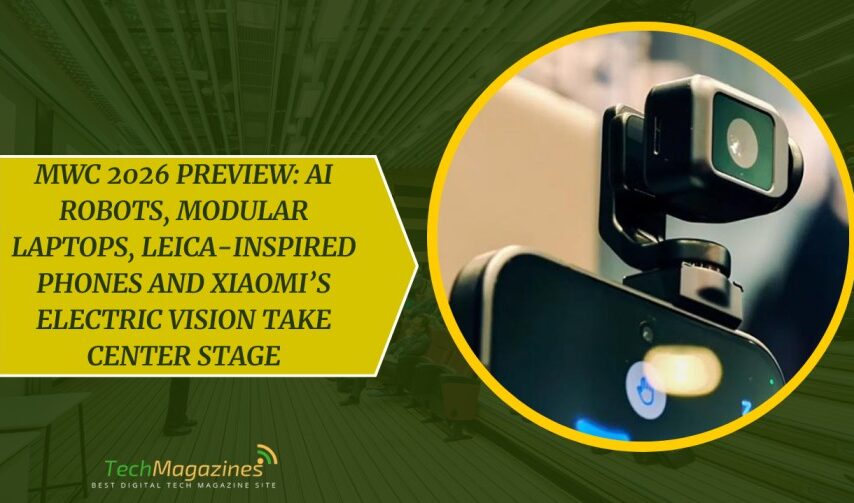
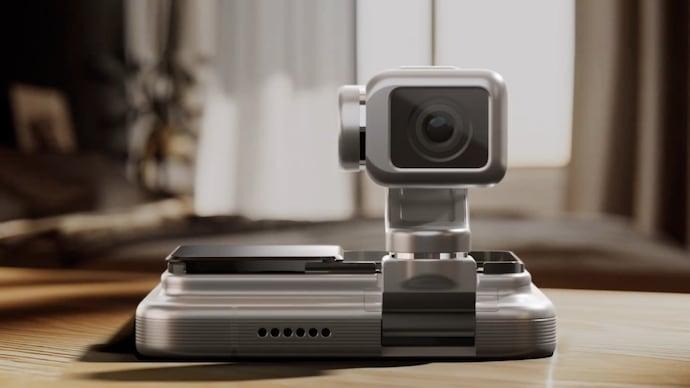
Honor Robot phone: The accompanying handset departs more plainly from familiar designs. It features a 200-megapixel camera fixed to a small mechanical arm mounted at the top of the device. This arrangement allows the phone not only to record images, but also to move in a manner suggestive of expression, turning or tilting as it engages with the user.
The camera may sway in time with music and respond with motions resembling nods or shakes of the head. According to the company, artificial intelligence governs subject tracking, recognizes spoken commands, and interprets gestures. The arm itself is driven by three micro-motors, which Honor claims are seventy per cent smaller than comparable components now in use.
Conclusion
As mentioned in the preview, manufacturers have come with modular laptops, foldable gaming computers, camera-crazed smartphones, electric scooters, hypercars, and even humanoid robots. There are those of these creations that might never get beyond the prototype phase; there are those that will be silently molding the devices we will be carrying next year.
Artificial intelligence is not an attribute anymore, but a framing device, modularity is a philosophy, not a gimmick. The question of whether or not robot phones will be a reality or a curiosity is yet to be answered, but one thing is indisputable: the mobile world is insistent on surprising us.