
Over the past few years, the issue of online privacy and data abuse has become a matter of concern, which has exposed a number of dubious online platforms to the limelight. One of these sites is ProxyEarth, a site that momentarily caught on by exposing personal details associated with Indian mobile phone numbers.
Nonetheless, the functionality and purpose of the platform have shifted dramatically since its first introduction. So it is worthwhile to learn what ProxyEarth is now, what it promises to be, and why one should treat it with the highest degree of caution.
What Is ProxyEarth?
ProxyEarth initially positioned itself as a phone number based look up site. On typing in an Indian mobile number, users were presented with personal information which seemed to have been obtained via telecom records. These information were allegedly containing the name of the subscriber, name of the father, address, alternative contact number, and email address.
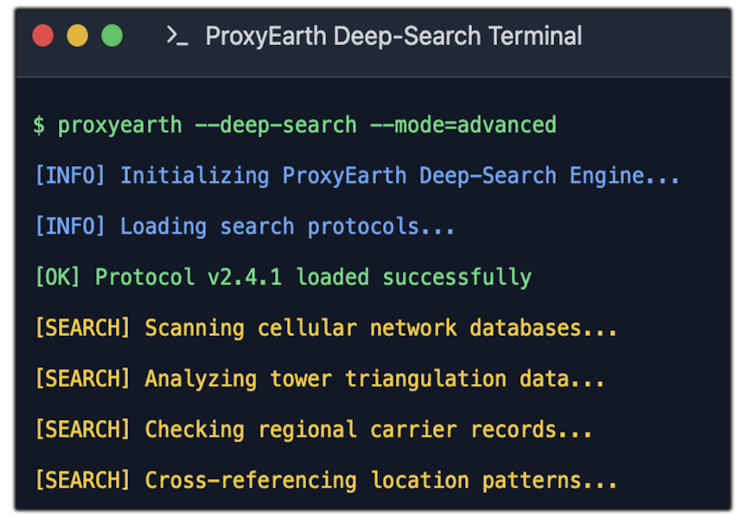
The information presented in the site seemed to be similar to the information that is usually provided when registering a SIM card with the telecommunication companies. This brought up instant questions of unauthorized access to sensitive personal information and potential combination of leaked data sets of prior breaches. However, with the growth of publicity, the behavior of ProxyEarth was altered.
The site stopped showing cellular or personal information. Rather, when users tried to follow some number, the site often directed them to third party pornographic sites. In other instances, it gave an error message like number not found. This change is a strong indication that the site was modified to make money instead of offering information, making most of its initial functionality irrelevant.
Is ProxyEarth Legal?
Legally speaking, ProxyEarth is in a very dubious area. The laws of Indian data protection, such as the clauses in the Information Technology Act, and the developing data privacy regulations, firmly forbid the unauthorized gathering, storing and sharing of personally identifiable data. Although the information presented on ProxyEarth may have been obtained through older leaks, it is still illegal to re-publish or commercialize the leaked personal information.
Also, the possibility of sending users to explicit content against their will can be against the regulations of cybercrime and obscenity, and even consumer protection laws. Although ProxyEarth does not explicitly charge users, deceptive design, misleading redirection, and abusing personal data all put the platform beyond the ethical and legal limits. So, users are advised to think that ProxyEarth is not a reliable service.
Advantages of ProxyEarth
Practically and ethically speaking, ProxyEarth does not provide much or no real benefit to the common user nowadays. The risks are much more than the perceived benefits.
With that said, there is one critical issue that the platform has put into the limelight. It shows that even the data that has already been leaked can be repackaged and abused, which is a lesson about the repercussions of data breaches in the long term. In addition to this value of indirect awareness, ProxyEarth does not offer any service that is reliable, safe, or constructive.
Disadvantages of ProxyEarth
The drawbacks of ProxyEarth are quite serious and manifold:
1. Severe Privacy Risks
Although a lot of the shown information may be old, the disclosure of names, addresses, and family information may facilitate identity theft, phishing, stalking, and financial fraud.
2. Misleading Functionality
Previous arguments of live location tracking or real-time network data were deceptive. Follow up checks later indicated that these features were either made unavailable.
3. Pornographic Redirects
The most problematic existing problem is the misdirecting of users to adult sites. This does not only kill trust but also subjects users including minors to inappropriate material without their consent.
4. Potential Malware and Scams
Websites based on misleading redirects can also act as entry points to malware, fake ads, or data-mining scripts, exposing devices and personal data of users to an even greater threat.
How ProxyEarth Uses Data
There is available evidence that ProxyEarth was not accessing telecom systems in real time. Rather, it probably assembled older data on previous data breaches of the Indian citizens. Massive data leaks that have been reported in the past years revealed phone numbers, addresses, Aadhaar information, and family information, most of which are still circulated in the dark web.
The proxyearth seems to have reused some of this data in a search engine, and then switched to monetizing traffic after the site became popular.
What Users Should Be Concerned About
The users need not worry so much about ProxyEarth but rather the larger connotations it embodies: Once personal data is leaked, it may be reused in years to come. Old information can also be used to commit scams. Browsing suspicious websites may expose the users to malicious content and cybercrime.
In a previous breach, when you have a suspicion that your information has been compromised, it is better to use well-known breach-notification services than to test untested ones.
Conclusion
ProxyEarth is no more what it once seemed to be. What started as an apparently frightening example of the exposure of data through phone numbers has turned out to be a deceptive and even dangerous site that redirects the users to indecent materials. It does not provide any valid advantages, creates severe legal and ethical questions and highlights the long-term risks of data breaches.
The most sensible thing to do is to simply stay away of ProxyEarth and be more aware of personal data safety and only trust transparent platforms that one is sure about when it comes to any privacy-related issues.