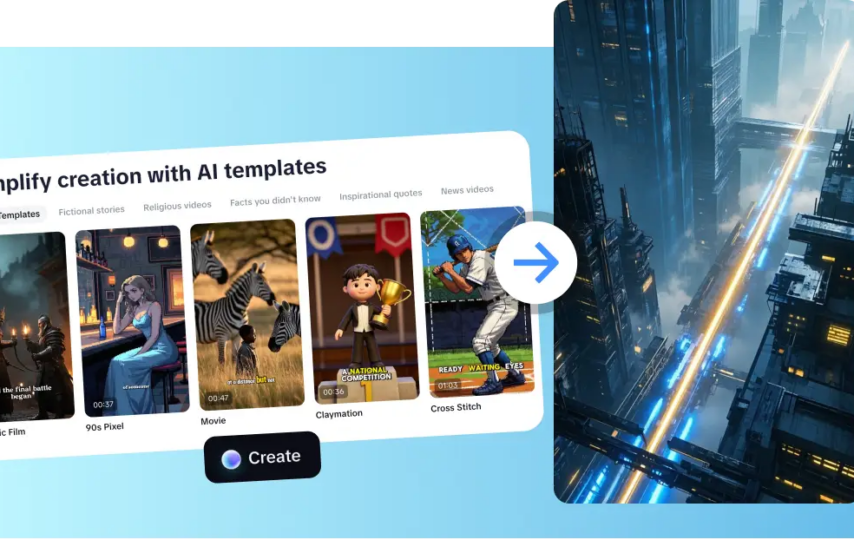

Digital creativity has entered a new chapter. What once required a full production team, expensive software, and years of training can now be done with a laptop and a clear idea. From small business owners to freelance creators, more people are stepping confidently into the world of visual storytelling. At the heart of this shift is the growing popularity of the ai video maker, a tool that allows users to transform simple concepts into polished videos without traditional editing experience.
This change is not about replacing creativity. It is about expanding access to it. Modern creators are no longer limited by technical barriers. Instead, they can focus on ideas, stories, and strategy while technology handles the heavy lifting behind the scenes.
The Evolution of Content Creation
Not long ago, producing professional video content meant mastering complicated editing software. Learning curves were steep, and mistakes were costly. Designers needed to understand timelines, keyframes, rendering formats, and countless technical details. While those skills remain valuable, new tools have reshaped how projects begin and end.
The shift began with automation features inside traditional programs. Templates, drag-and-drop systems, and preset transitions simplified workflows. Eventually, this development led to full-scale automation platforms capable of generating layouts, animations, and even scripts.
Today, content production feels more intuitive. Creators can input text prompts, upload images, or outline a message, and receive structured video drafts within minutes. This is not about shortcuts; it is about smarter workflows.
Why Simplicity Matters
Simplicity has become a competitive advantage. In fast-moving digital spaces, speed often determines visibility. Brands that respond quickly to trends perform better than those stuck in lengthy production cycles.
An ai video maker allows entrepreneurs to create product demos, explainer videos, and social media clips in record time. Instead of spending days editing footage, they can refine messaging and experiment with variations. The result is more content, better testing, and stronger audience engagement.
However, speed alone is not enough. Quality still matters. Modern tools focus heavily on visual consistency, typography balance, animation timing, and color harmony to ensure outputs feel professional.
The Role of AI Design in Modern Branding
Visual identity shapes how audiences perceive a brand. Logos, color palettes, layouts, and typography choices influence trust and recognition. Traditionally, building a strong brand identity required collaboration with professional designers and multiple revision cycles.
With advances in ai design, many early-stage creators can now explore branding concepts independently. These tools analyze trends, recommend color schemes, and generate layout options aligned with specific industries. Instead of staring at a blank canvas, users receive structured suggestions that spark ideas.
From Blank Page to Structured Concept
One of the most difficult parts of creative work is getting started. A blank page can feel overwhelming. Automated design systems reduce this friction by providing a starting framework.
For example, a small fitness coach launching an online program might need promotional graphics, social posts, and landing page visuals. With ai design support, they can experiment with bold athletic color themes, dynamic typography, and energetic compositions. Once a foundation is set, they can refine it manually to match their personality.
This balance between automation and personalization is crucial. The goal is not uniformity. It is empowerment.
Creative Freedom Without Technical Stress
Many people assume technology limits originality. In reality, structured tools often enhance creative thinking by removing repetitive tasks. When creators are not worrying about resizing formats or aligning text boxes, they can focus on storytelling.
An ai video maker can automatically adjust aspect ratios for different platforms, insert subtitles, and synchronize visuals with background music. This efficiency gives creators time to refine tone, pacing, and emotional impact.
Similarly, ai design platforms can suggest layout improvements or spacing adjustments that might otherwise require professional training. These subtle refinements elevate the final product while keeping the creator in control.
Small Businesses Benefit the Most
Large companies have always had access to professional production teams. The real transformation is happening among small and medium businesses. Startups, local shops, educators, and solo entrepreneurs now compete visually with established brands.
Consider a bakery launching a seasonal menu. Instead of hiring a full creative agency, the owner can produce promotional clips using an ai video maker and create matching digital posters through ai design platforms. The branding remains consistent, and the campaign can launch within days instead of weeks.
This accessibility levels the playing field. Creativity is no longer tied strictly to budget size.
Balancing Automation With Authenticity
While automated tools are powerful, authenticity remains essential. Audiences connect with stories, not just visuals. A well-designed video without emotional depth will not build loyalty.
The smartest creators treat these tools as collaborators rather than replacements. They use automation to draft structure, then add personal touches. Voiceovers, custom footage, unique messaging, and behind-the-scenes moments keep content human.
Authenticity also involves restraint. Not every effect needs to be used. Not every animation improves clarity. Strong storytelling still depends on intention.
Avoiding Over-Reliance
There is a temptation to let systems generate everything. However, creative growth requires active participation. Reviewing outputs critically, making adjustments, and experimenting beyond suggested templates keeps skills sharp.
Using an ai video maker effectively means guiding it with clear goals. The better the direction, the stronger the results. The same principle applies to ai design tools. Clear brand values and audience understanding lead to better visual outcomes.
The Future of Creative Collaboration
Technology will continue evolving, but its purpose remains the same: to enhance human potential. Future platforms will likely integrate deeper personalization, smarter analytics, and more adaptive visuals.
We may see systems that analyze audience behavior in real time and suggest design changes accordingly. Video content could adapt automatically to viewer preferences. Branding elements might adjust dynamically across platforms to maintain consistency without manual edits.
Yet, even as systems grow more advanced, creativity will still begin with ideas. Tools can execute and refine, but vision comes from people.
Education and Skill Development
Interestingly, automation does not eliminate the need for learning. Instead, it shifts the focus. Rather than memorizing complex technical shortcuts, creators can invest time in storytelling, marketing strategy, and audience psychology.
Understanding composition, color theory, and narrative pacing still matters. When paired with automation tools, these skills amplify results. An informed creator using an ai video maker can produce work that rivals traditional production teams.
The same holds true for ai design. Knowledge of branding principles allows users to evaluate suggestions effectively rather than accepting them blindly.
Conclusion: A New Era of Accessible Creativity
Digital creation is no longer reserved for specialists with expensive equipment and years of formal training. The combination of intuitive video tools and intelligent design systems has redefined what individuals can accomplish independently.
An ai video maker simplifies production without eliminating imagination. Ai design platforms provide structure without removing personality. Together, they represent a shift toward inclusive creativity where ideas matter more than technical limitations.
As technology continues to evolve, the most successful creators will be those who balance efficiency with authenticity. They will use automation to accelerate workflows while preserving human storytelling at the center of every project.
The future of digital content is not about machines replacing artists. It is about artists gaining new instruments. And with the right approach, those instruments can turn simple ideas into powerful visual experiences that connect, inspire, and endure.