
The healthcare organizations have become very thick in terms of obligations and pressures. Rules and regulations are harder, costs are increasing steadily, data is distributed in isolated systems and there is an all-time demand to be transparent in decision making and utilization of resources. Healthcare technology, in turn, has transcended its initial purpose of being a digital filing cabinet. It has moved to smarter, data-driven systems that are supposed to automate mundane operations, minimize errors, and assist in making timely and informed decisions. MCSI is dedicated to creating healthcare software solutions that emphasize automation, accuracy and reliability.
Their technology serves a broad range of healthcare transactions, including enrollment, authorizations, case management, customer service, notifications, repricing, adjudication, capitation, billing, reimbursement, ACH and EFT payments, reporting and system administration. The work of such companies as Managed Care Systems, Inc. can be observed as this change. Their software and data services are indicative of a pragmatic shift in healthcare management, in which systems are designed to integrate with each other as opposed to operating independently.
The company has designed a communication platform, called COMLINK, that is aimed at linking disparate applications in a secure environment, automating processes, and facilitating reliable sharing of healthcare data in large enterprise environments. Complexity is not an end in itself, but more efficient operations and control in an increasingly challenging system.
Technology as the Backbone of Healthcare Operations
The healthcare delivery business is based on numerous interconnected operations: member enrolment, claims settlement, billing, approvals, provider management, and reporting. These functions have long been performed by different systems or by hand, a procedure that was open to error, slowing of the process and additional administrative burdens. The aim of modern health technology is to remedy this by consolidating these functions in combined platforms that enable information to flow in a systematic, consistent manner throughout the entire spectrum of care.
At the heart of this change is automation software. Once systems manage routine and rule-bound tasks instead of people, then organizations have fewer areas of friction and still manage to meet the standards required in a consistent manner. No longer having to check and re-enter the data endlessly, staff can focus on more valuable work, which is the coordination of care, quality improvement, and meaningful contact with the people they work with.
Data-Driven Management in Healthcare Environments
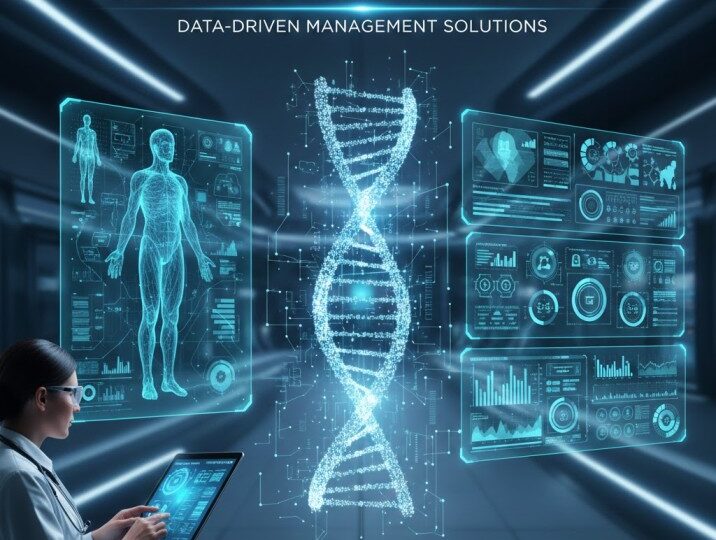
Data is among the most useful assets in healthcare, though only when it is correct, organized, and operational. The healthcare data-driven management solutions aim at gathering, validating, converting, and sharing information across systems in a manner that promotes both clinical and administrative processes. This comprises provider directory information, member enrollment information, claims information, and financial systems.
Proper data management will help healthcare organizations to make sound decisions, react promptly to changes in operations and be trusted by providers and members. Regulatory reporting, audit readiness and performance measurement are also supported by clean and reliable data. With the size of healthcare systems scaling, scrubbing, de-duplication and normalization of large datasets is necessary to ensure data integrity across various platforms.
MCSI’s Approach to Healthcare Software and Automation
The key component of this ecosystem is COMLINK, a Java-based application that is intended to serve as a secure communication channel between core systems and external services. COMLINK is a transport layer, which allows the controlled access to business logic and operational functions in healthcare management platforms. Its multi-port management and automatic load-balancing features enable healthcare organizations to manage large volumes of transactions without affecting the stability of the system.
Healthcare Data Services and Information Quality
In addition to software development, healthcare data services are required to ensure that the operational systems remain reliable. MCSI offers managed care software and services to scrub, clean, transform, and de-duplicate large volumes of data that are usually found in provider directories, enrollment files and similar healthcare data repositories.
These processes assist in the removal of inconsistencies that may interfere with claims processing, precision in billing, and communications with providers. Effective healthcare management is based on high quality data. Integrity and standardization data services help healthcare organizations to be confident in their systems and also support long-term scalability.
Expertise in Healthcare Data Management and Deployment
The solutions of healthcare technology should be deployed with a deep knowledge of the industry work processes, regulatory demands, and operational dependencies. The experience of MCSI is in virtually every area of healthcare data management and solution implementation, serving organizations in their lifecycle of system design, implementation, and optimization.
This knowledge enables medical organizations to adopt new technology in the current enterprise settings instead of substituting the whole systems. This will cause less disruption and will enable organizations to change with the changing market conditions, regulations, and business models. Healthcare technology innovation has been shown to be most effective when it is not imposed on the systems but rather it is in line with the real-life operational requirements.
Serving a Diverse Healthcare Ecosystem
Healthcare management solutions should be versatile to accommodate as many organizations as possible, including third-party administrators and preferred provider organizations, as well as accountable care organizations, insurers, and hospital systems. Self-funded employers, capitated payers, specialty carve-out payers, and correctional health systems also depend on proper data processing and automation to handle complicated care and financial plans.
Claims handling, enrollment management, and provider data workflow technology platforms that operate in these diverse environments can be used to ensure consistency and customization to organizational needs.
Conclusion
Technology and data-driven management solutions are no longer the luxury features of the contemporary care systems. They are critical in enhancing efficiency in operations, ensuring the integrity of data and assisting in timely and accurate decision making.
By automating management, providing healthcare software solutions, strong data services, and strong industry knowledge, such companies as MCSI show how technology can be utilized to fulfill the changing needs of healthcare administration. With the industry becoming more and more complex, data-centric solutions, which are well designed will continue to be the focus of sustainable and effective healthcare operations.