Most founders wait too long to open a current account. They don’t bother until something urgent comes up — maybe a vendor insists on a business account, an investor wants to wire seed money, or the GST department sends a notice. By then, months of business transactions have already flowed through a personal savings account. It’s a headache. Untangling business and personal money takes time, and you lose out on clean, easy records banks and auditors want to see.
Honestly, opening a current account right when you incorporate — not after your first sale — just makes sense. Banks these days even offer startup-friendly accounts with no minimum balance for up to three years, so the old excuses don’t really hold up anymore.
The Hidden Cost of Waiting
Running your business through a personal savings account doesn’t just look messy — it actually causes real problems:
• It’s tough to separate business and personal expenses at tax time.
• Claiming GST input credits? Good luck. Without a business account, you’ll have trouble proving what’s what.
• Investors and VCs want clear, auditable financial records. They won’t accept personal bank statements.
• Banks decide if you’re a good bet for a loan or overdraft by looking at your business account history. If you open late, you have almost no track record when you need credit.
What a Current Account Does (That a Savings Account Just Can’t)
Savings accounts are for individuals. They come with monthly transaction limits and don’t give you the features a business actually needs. Current accounts are built for business — unlimited transactions, bulk payments, and a bunch of tools made for companies. Here’s what matters:
• No monthly transaction cap — pay as many vendors or staff as you need.
• NEFT, RTGS, IMPS — so you can handle big vendor payments or payroll without any fuss.
• Cheques in your company’s name for formal deals.
• Overdrafts tied to your business turnover — not an option with savings accounts.
• Plug-and-play integration with payment gateways, UPI collections, and cash management services.
Why Opening Early Gives Startups an Edge
Clean Financial Records From Day One
Investors, lenders, and auditors all want to see a clear line between business and personal money. Open your current account at incorporation, and you’ll have clean records from the start. When you pitch investors in year one or two, they’ll want at least 12 months of proper business statements. You’ll have them.
Ready for GST and Compliance
Once your business crosses the GST limit — that’s ₹20 lakh for services or ₹40 lakh for goods — you need a business account linked to your GST number. Banks want the account in your company’s name to process GST payments right. If you already have the account, switching to GST is smooth, not a last-minute scramble.
Easier Access to Credit
Banks look at your current account’s history — average balance, regularity, how long it’s been active — to decide if you qualify for loans or overdrafts. If you’ve had the account for 12–18 months and use it well, your odds go way up when you ask for credit. Wait until you need a loan to open the account, and you’re starting from zero.
Credibility With Investors and Vendors
Getting payments into your personal account just looks unprofessional. A business account in your company’s name sends the right signal. Vendors trust you more, clients are comfortable making bigger payments, and investors see you’re serious about running a legit operation.
What You Need to Open a Current Account in India
The paperwork’s pretty standard for most startups:
• Certificate of incorporation or partnership deed
• Business PAN card
• GST registration certificate (if you’re over the threshold; not needed if you’re not)
• DPIIT recognition certificate (if you want a startup-specific account)
• Identity and address proof for all directors, partners, or signatories
• Board resolution or authorization letter naming signatories (for companies and LLPs)
A lot of banks let you do the whole thing online — just upload your documents and the account’s open in a few days.
Bottom Line
Opening a current account right at the start isn’t just a box to tick. It’s a smart move that sets you up for easier compliance, stronger investor trust, and better access to credit. Don’t wait for trouble — get this sorted from day one.
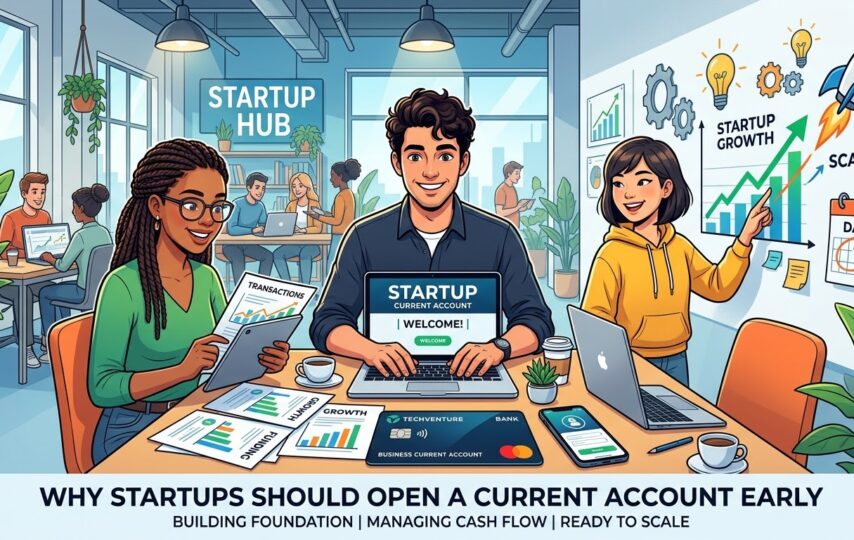
Why Startups Should Open a Current Account Early
 Written by: Astha Singh
Reading Time: 3 minutes