

Gaming has come a long way from the simple, pixelated graphics of the early arcade and home console games. In the 1970s, the introduction of home consoles marked the beginning of a gaming revolution that would forever change the landscape of entertainment. As personal computers became more accessible in the 1980s, they brought with them the ability to create more complex gameplay and introduced the world to early 2D graphics. These advancements laid the groundwork for the immersive experiences we enjoy today.
The 1990s saw a significant leap forward with the advent of 16-bit graphics and the introduction of early 3D gaming. These technological milestones transformed the gaming experience, making it more visually appealing and engaging for players. The rise of online gaming in the late 1990s and early 2000s further expanded the social aspects of gaming, allowing players to connect and compete with others around the world.
Fast forward to gaming today, and the gaming industry and video game industry is a powerhouse of innovation and creativity. Modern gaming technologies include:
- High-definition graphics
- Motion controls
- Virtual reality
- Augmented reality
These technologies have diversified the gaming experience, attracted a wider audience, and are now at the forefront of cutting edge technology, providing players with an unprecedented level of immersive gameplay and interactivity, including options powered by nvidia geforce and electronic arts.
The influence of immersive hardware on player experience
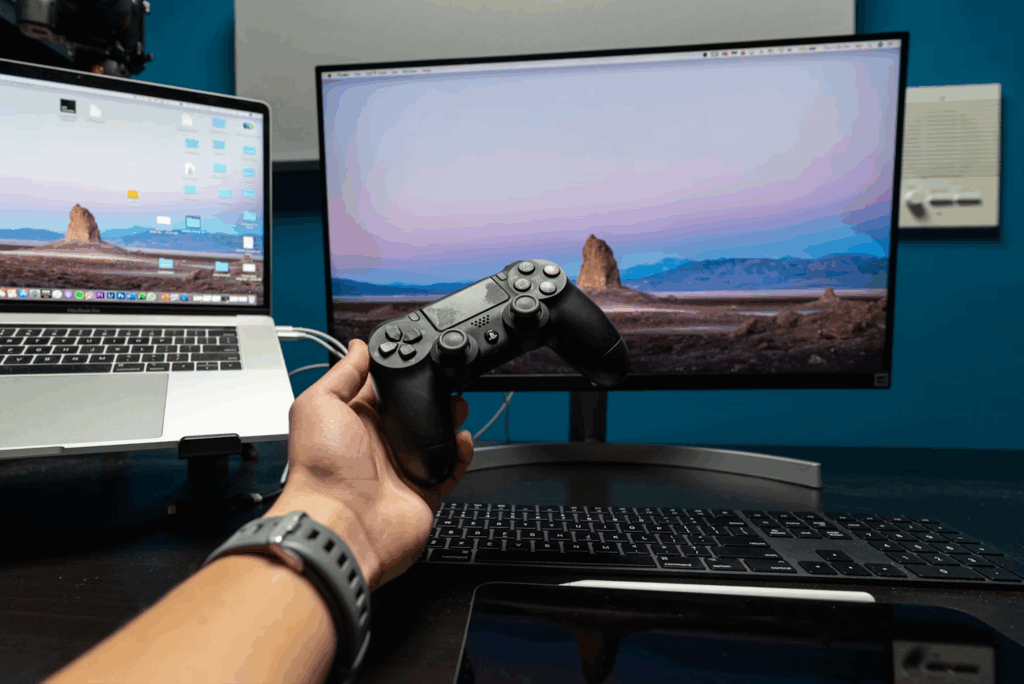
Source: https://unsplash.com/photos/person-holding-black-and-gray-game-controller-KLC3qRZq_C0
One of the most significant advancements in modern gaming technology is the development of immersive hardware. Virtual Reality (VR) has transformed gameplay by immersing players in 3D environments, enhancing their interaction with the game world. With VR headsets, players can physically engage with their surroundings, using body movements and haptic feedback to deepen their involvement and enjoyment.
Augmented Reality (AR) gaming is another groundbreaking technology that combines digital objects with the real world, enriching gameplay by encouraging players to explore their surroundings. High-resolution headsets and motion tracking have significantly improved VR and AR, making them more accessible and enjoyable.
Specialized gaming peripherals like Razer keyboards enhance precision and comfort for gamers. These devices are designed to provide competitive advantages, whether you’re a casual player or a professional gamer. The tactile feedback and ergonomic design of these peripherals contribute to a more immersive and enjoyable gaming experience.
The role of audio in creating deeper engagement
Audio is pivotal in gaming, creating immersive experiences and enhancing player engagement. High-quality sound design is crucial for storytelling, gameplay feedback, and overall immersion. Developers are integrating sound early in the game development process to ensure a cohesive experience with the visuals.
AI-generated sound and spatial audio are setting new benchmarks in gaming audio experiences. Players now equate high-quality audio with the overall quality of a game. This expectation makes sound a pivotal factor in player retention and enjoyment. Positional audio technology, for example, allows players to locate in-game elements based on sound direction, enhancing strategic gameplay.
True wireless in-ear headphones offer portable, powerful audio solutions for seamless play without distractions. These headphones provide high-quality sound, enabling players to fully immerse themselves in the game world. Whether you’re playing a single-player adventure or a competitive multiplayer match, the right audio equipment can make a significant difference in your gaming experience.
Sound design evokes emotions and draws players deeper into the game, not just creating realistic effects. Advanced audio technologies ensure every sound, from footsteps to explosions, contributes to a richer gaming experience.
Artificial intelligence in shaping new game experiences

Source: https://unsplash.com/photos/a-female-mannequin-is-looking-at-a-computer-screen-BBqVpTE4vw4
Artificial intelligence (AI) is revolutionizing gaming by creating smarter, more adaptive gameplay experiences. AI transforms non-playable characters (NPCs) into intelligent beings that adapt to player actions and environmental changes, enhancing gameplay. This level of sophistication in NPC behavior makes digital worlds more authentic and engaging for players.
Procedural content creation generation (PCG) is another area significantly impacted by AI. PCG allows for the dynamic creation of expansive game worlds, quests, and assets, ensuring that each player’s experience is unique. This technology allows developers to create vast, intricate worlds without manual game design, saving time and resources.
AI streamlines game testing and gameplay customization in the following ways:
- Automates the identification of bugs and glitches, speeding up quality assurance.
- Customizes gameplay by analyzing player behavior.
- Adjusts elements like difficulty to enhance engagement.
This level of personalization ensures that players remain challenged and entertained throughout their gaming journey.
In multiplayer settings, AI plays several important roles:
- Enhances matchmaking and balances teams based on skill levels, promoting fair competition.
- Future AI advancements may enable realistic interactions with game characters, creating emotionally engaging experiences.
- AI avatar generator platforms help creators design lifelike characters that exhibit realistic behaviors.
AI integration in game development transforms how games are designed, tested, and experienced. As AI technology continues to advance, we can expect even more innovative and immersive gaming experiences that cater to diverse player preferences.
Cloud gaming and the accessibility of play
Cloud gaming is revolutionizing the industry by making premium gaming experiences available to a wider audience without the need for expensive hardware. By streaming games directly to devices like smartphones, tablets, smart TVs, and low-end PCs, players can enjoy high-quality titles with only an internet connection. This democratization of access is particularly impactful in emerging markets, where affordable internet and smartphones now open the door to modern gaming.
The global cloud gaming market is growing rapidly, fueled by advancements in 5G technology. Ultra-low latency and higher bandwidth allow smoother, more responsive gameplay on mobile networks, narrowing the gap between traditional consoles and cloud-based platforms. Subscription services such as Xbox Game Pass are also changing consumption habits by offering large game libraries for a monthly fee, reducing upfront costs and letting players experiment with new titles.
Accessibility is another crucial advantage of cloud gaming. Features like adaptive controllers and customizable settings ensure that players with disabilities can participate fully. By breaking down both financial and physical barriers, cloud gaming creates a more inclusive and connected gaming community.
Esports and the social side of modern gaming
Esports has grown from a niche hobby into a global entertainment powerhouse, connecting millions of players and fans worldwide. Streaming platforms like Twitch and YouTube Gaming have fueled this rise, giving players the ability to broadcast gameplay and engage with global audiences in real time.
Major esports tournaments now attract massive viewership both online and in stadiums, celebrating the skill and competitive spirit of professional gamers. But beyond competition, these events foster community—bringing players and fans together to share their passion for games and build meaningful social connections.
Looking ahead, the future of esports is bright. As the market expands, technologies like VR and AR promise to make competitions more immersive and interactive, offering fans new ways to experience the excitement. At its core, esports is not just about winning—it’s about connection, community, and the shared joy of play.
Conclusion
The future of gaming is filled with possibilities, driven by VR, AR, cloud gaming, and AI that create richer, more immersive worlds. These innovations will make gaming more accessible and lifelike, though challenges like screen-time health concerns and privacy must be addressed.
With the rise of the Metaverse, gaming will foster deeper connections and shared virtual spaces. As stigma fades and technology advances, gaming is set to become an even more integral part of culture—reshaping how we play, connect, and experience the world.
Frequently Asked Questions
How has the gaming industry evolved over the years?
The gaming industry has come a long way from simple, pixelated graphics to creating highly immersive experiences through advanced technology. This transformation, fueled by home consoles, personal computers, and online gaming, showcases an exciting future for gamers everywhere!
What role does immersive hardware play in modern gaming?
Immersive hardware significantly elevates modern gaming by delivering stunning visuals and precise motion tracking, making gameplay more engaging and enjoyable. Embracing this technology enhances both casual and competitive experiences, opening up new possibilities for gamers.
How does audio technology impact player engagement in games?
Audio technology significantly enhances player engagement by creating immersive experiences through high-quality sound design and innovations like spatial audio. Embracing these advancements, like true wireless in-ear headphones, allows you to dive deeper into gameplay and strategy.
In what ways is AI transforming the gaming experience?
AI is transforming gaming by creating smarter NPCs, enhancing personalized gameplay, and improving matchmaking in multiplayer, making your gaming experience more engaging and immersive than ever!
What are the benefits of cloud gaming for players?
Cloud gaming makes high-quality gaming accessible without the need for expensive hardware, allowing you to enjoy your favorite games on various devices effortlessly. With affordable subscription models and the support of 5G technology, you can experience seamless, low-latency gameplay anytime, anywhere!