
As the internet continues to take over the day to day lives and the technological advancement continues to make leaps like a runaway freight train, individuals are increasingly seeking methods of tracking videos to their origins. The change is not that unnatural: nowadays moving images take over the online world, and people are more likely to watch a short video than read a piece of text.
However, with the increased speed and difficulty in verifying the videos, the challenge of establishing the origin of the video, as well as its ability to be trusted, has become a critical issue to both individuals and organizations. Reverse video search can provide an opportunity to do this. It enables the user to upload the footage itself as the point of origin, and in exchange it reveals the source, the credibility, and whatever additional context there might be behind the frames.
The Need for Better Tools to Trace Video Origins
Note the increasing numbers of tools that purport to do this job require a certain degree of caution. The artificial intelligence, machine learning and enormous data systems have increased the capabilities of these tools considerably as compared to previous years but also increased the confusion. Some are keen and economical; others are so cumbersome or overwrought, that a lay person will have difficulty in deciphering them.
It is necessary to be careful when selecting a reverse video search tool, as it should be fast, reliable, and able to navigate the maze of big databases and complex metadata. This article lists the most useful options that can be used in 2025, their main functions, where they can be most beneficial, and the benefits they can provide, so that you can choose a tool that would serve your purposes.
What Makes Reverse Video Search So Important Today
During reverse video search a piece of footage is used as the query itself and the user is able to find out everything that the web can tell about that piece of footage. This method has a number of purposes:
- Determining the authenticity of a video.
- Protecting intellectual property through identification of copied or abused content.
- Following a clip to the original source of its emergence.
The technique is helpful but also has its challenges. A video is much more complex than a still picture or a line of text, and it is just difficult to manipulate without a lot of heavy computation. The metadata that is attached to it may be thick, inconsistent and difficult to interpret accurately. And with the emergence of new formats with every technological shift, the tools are forced to become increasingly sophisticated just to keep up.
Luckily, the tools which are available today are much more competent than those of several years ago, relying on the recent developments in the field of technology. They are able to identify objects, faces and settings with some level of confidence which previously appeared unbelievable with the assistance of artificial intelligence. Better indexing systems allow one to search material faster and more accurately. Most of them are also connected to large multimedia archives, which provide the user with a broader field of videos and the possibility to conduct more comprehensive searches.
5 Best Tools for Reverse Video Search in 2025
1. TinEye
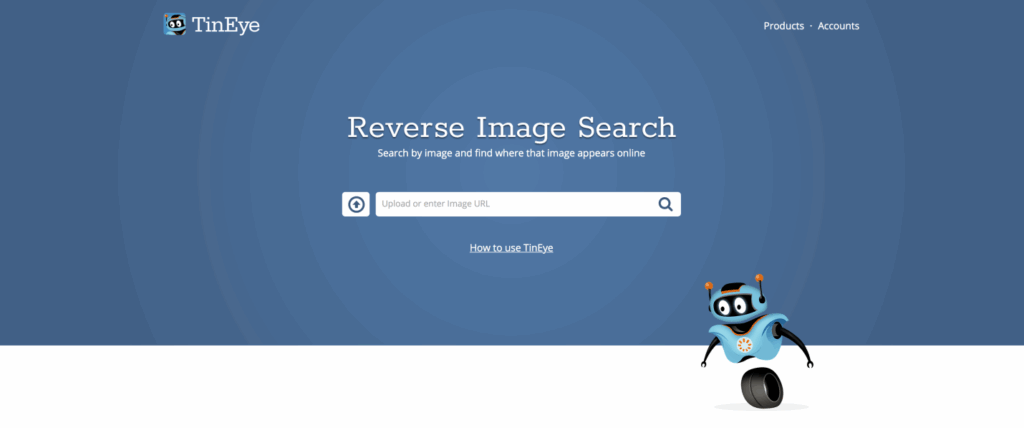
TinEye is among the pioneers in the reverse search industry, and it has continued to be a reliable option in matching videos and still images. The power of the algorithms behind this AI-based service is its ability to trace modified copies, close replicas, and the source of a visual object.
Its chief strengths include:
- Swift Searches: The tool is incredibly fast but the speed does not compromise the accuracy. It is able to find similar or altered versions of a file in a few seconds in most instances.
- Wide Format Support: It accepts image files, video frames and direct uploads without much ado.
- Browser Add-Ons: TinEye can be added to the browsers of the users, which makes it accessible at all times in case of any search.
TinEye provides detailed and credible results due to the large collection of images, so it is especially helpful to journalists, rights-management teams, and other people who work with visual material on a daily basis. Its focus on security also goes a long way in convincing organizations that need to deal with sensitive information to give it a degree of trust to an otherwise well-established and proven platform.
2. Google Reverse Video Search
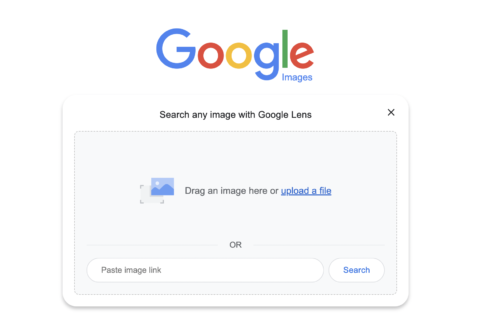
Google cannot be compared to any other company in terms of the volume of its index and the strength of its search engine. It allows a rapid and efficient reverse video look-up by partitioning a clip into its frames and comparing them across its huge stores of data.
Its main benefits and general applications are:
- Unmatched Reach: Google indexes and records billions of pages and an countless amount of multimedia.
- General Utility: It can be used to check the claims, locate the initial appearance of a clip, and track the dissemination of popular or misleading video.
The advanced algorithms of the company make it fast and accurate, hence making it an automatic selection of any individual, whether a personal user or a big organisation, who requires reliable output within a limited period of time.
3. RevEye
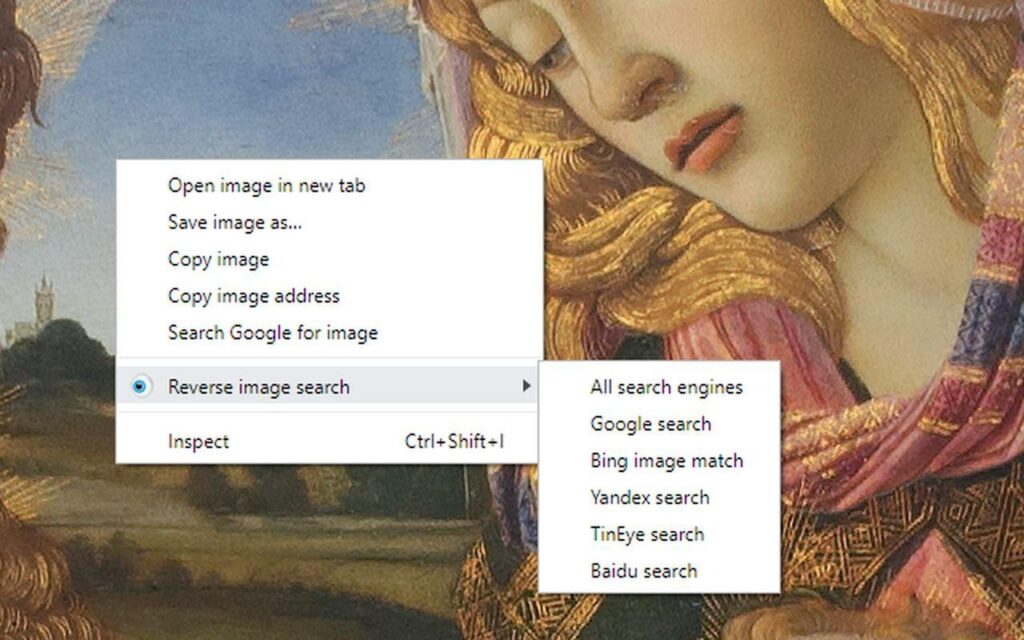
RevEye is a flexible browser extension designed to do reverse search of images and video frames. It is directly related to engines like Google, Yandex, and TinEye.
Its characteristic features are:
- Multi-Engine Searches: It is able to issue a query to multiple services simultaneously.
- Easy Installation: Works with Chrome, Firefox and Edge.
- Quick Search: The search is activated by a right-click.
The small size and good performance of RevEye makes the product a viable choice to both the researchers who have to process large amounts of material and the average user who requires fast and simple checks.
4. VideoFinder
VideoFinder is a more recent extension that is designed to track videos and it has already demonstrated its worth in practice, like tracking advertisements and verifying the authenticity of online clips.
Its main strengths include:
- Real-Time Updates: It reports new matches as they come.
- Broad Platform Compatibility: It is compatible with both the large and small video sites that are not as well known.
- Practical Applications: Marketers will be able to track the distribution of their campaigns, and reporters will be able to verify the sources of controversial videos.
VideoFinder is a simple and reliable tool that can be trusted by the professionals who require reliable and detailed results without any additional complexity.
5. Clarifai

Clarifai is a large scale reverse video search engine that is business oriented and heavily depends on advanced AI to handle the heavy workload. It facilitates mass searches, which is appropriate to organisations that have to scan large amounts of footage. Users can also use their own models, customizing the system to give the specific kind of results that they want.
Moreover, Clarifai focuses on high security, which provides companies with confidence when dealing with confidential information. It’s a popular option in industries like advertising and law enforcement.
Conclusion
Reverse video search is not a hard task, and a person without technical experience can easily use it. The main trick is to take a piece of good quality and to count on the peculiarities of the footage, as they are the most easily recognized by the system.
Sometimes the search may yield little and this can be attributed to errors that can be avoided. Unfocused long clips are likely to undermine the accuracy of the results and must be avoided. Similarly, it is not prudent to ignore the advanced features of the tool that can be used to give the refinements necessary to identify the most precise match.