
As competition on Amazon intensifies, advertisers are looking beyond Sponsored Ads to maintain growth and reach new audiences. Programmatic Amazon DSP ads now form the foundation of advanced retail media strategy, enabling brands to target audiences across Amazon’s ecosystem and beyond, using data-rich signals to drive both immediate conversions and long-term brand lift.
Unlike manual PPC management, DSP delivers automated buying, granular audience control, and full-funnel measurement that ties every impression to a customer journey. For brands and agencies scaling serious ad operations, mastering DSP best practices is the key to sustainable reach, precision targeting, and efficient spend.
What’s Unique About Amazon DSP Ads and Why Do They Matter for Growth?
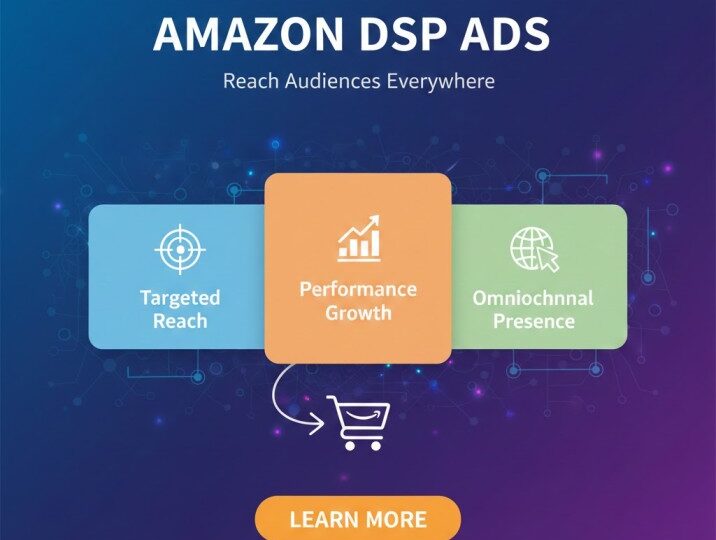
Amazon DSP isn’t just another ad channel; it’s a comprehensive programmatic ecosystem that lets advertisers reach shoppers wherever they browse, stream, or shop.
The main benefits include:
- Expanded reach: DSP connects to both Amazon-owned and third-party inventory—websites, mobile apps, Fire TV, Twitch, and IMDb—delivering reach far beyond on-site Sponsored Ads.
- Advanced audience control: Advertisers can target by behavior, intent, category, or purchase history. This precision turns awareness campaigns into measurable sales drivers.
- Full-funnel visibility: Unlike Sponsored Ads, DSP tracks performance from impression to purchase across devices, making it ideal for building brand awareness and measuring long-term ROI.
- Retargeting at scale: DSP automatically identifies users who viewed but didn’t purchase, allowing brands to re-engage with tailored creative and offers.
- Custom segmentation: Combine first-party, third-party, and Amazon shopper data to create distinct audience pools for acquisition and retention simultaneously.
For growth-focused advertisers, DSP bridges the gap between brand storytelling and measurable performance. It’s the only Amazon-native platform that enables brands to plan, buy, and measure across the entire funnel.
How to Build High-Performing Amazon DSP Campaigns from the Start
Success with DSP starts before the first ad goes live — in how you plan, define audiences, and structure campaigns. Proper planning ensures that automation and targeting work toward the right goals from day one.
Follow this best-practice checklist:
- Clearly define your objectives: Establish whether your campaign’s primary goal is brand awareness, product consideration, or direct conversion. Each stage uses different formats, placements, and KPIs. Additionally, create a full-funnel strategy to ensure that your DSP ads complement your Sponsored Ads campaigns — for instance, using DSP for awareness and Sponsored Ads for conversions.
- Leverage Amazon Marketing Cloud (AMC) for insights: Use AMC to map the path to purchase, identify overlapping audience segments, and attribute conversions across touchpoints. AMC data clarifies how DSP impacts both paid and organic performance.
- Select the right ad mix: Combine display, video, and CTV (connected TV) placements for broader reach. For instance, running a video for awareness and displaying it for retargeting ensures balanced performance across the funnel.
- Layer audiences intelligently: Combine new-to-brand, retargeting, and lookalike segments. Audience layering improves targeting accuracy and helps capture incremental sales without overspending on repeat buyers.
- Set bidding rules and frequency caps early: Smart frequency management prevents ad fatigue and wasted impressions. Start with conservative daily caps and expand once engagement metrics stabilize.
Brands that follow these steps from launch often see performance stabilize 2–3x faster than campaigns built without defined objectives or audience discipline.
Creative and Messaging Best Practices for Amazon DSP
Even with precise targeting, creative remains the first impression—and one of the most powerful levers for improving DSP performance.
Keep these principles in mind:
Prioritize clarity and consistency.
Keep visuals simple, brand-forward, and instantly recognizable. Every asset should communicate the value proposition in seconds.
Optimize for every device.
Ensure the creative is fully responsive for mobile, desktop, and CTV environments. A large portion of DSP impressions come from mobile screens, so design for that experience first.
Use direct, action-driven CTAs.
Whether it’s “Shop Now,” “Discover More,” or “See Details,” clear calls-to-action consistently outperform passive messaging.
Avoid clutter and heavy copy.
Simple layouts with concise text perform better than crowded visuals. Amazon’s ad guidelines reward relevance and readability.
Refresh creatives frequently.
Update ad sets every 6–8 weeks to combat banner fatigue. Rotate between seasonal offers, testimonials, or new lifestyle imagery to maintain engagement.
Test formats and adapt quickly.
Compare performance between static display, video, and interactive DSP placements. A CPG brand running both static and video saw CTR rise by 34% when optimizing budget toward high-performing video units.
Good creatives not only drive clicks, they reinforce trust and brand recall across every DSP touchpoint.
How to Track, Optimize, and Scale Amazon DSP Ads
Effective optimization is the main differentiator between stable campaigns and those with exponential ROI. DSP offers the transparency and control to refine performance continually, but only if teams actively use data.
Apply these practices consistently:
- Use AMC models for attribution and lift: AMC reveals true incremental sales and cross-channel effects—showing where DSP influences awareness, consideration, and conversion. Instead of relying on last-click metrics, you can see which audiences contributed to final purchases.
- Monitor dashboards for efficiency signals: Regularly review ROAS, CTR, and cost-per-completed-view (CPCV). Look for emerging patterns—such as audiences converting faster after exposure to specific creatives or devices.
- Adjust bids, frequency, and audience splits weekly: Weekly optimization is fast enough to capture trends without overreacting to short-term noise. Scale winning audiences gradually while keeping budgets balanced across funnel stages.
- Run cohort and time-lag analyses: Identify high-value segments by purchase behavior and exposure recency. Use these cohorts to build more accurate lookalike audiences or reallocate spend toward underexposed segments.
DSP optimization isn’t about chasing clicks; it’s about understanding how each impression contributes to a measurable lift in both awareness and sales.
FAQ
How does DSP complement Sponsored Ads for full-funnel impact?
Sponsored Ads focus on intent and conversion at the point of purchase, while DSP builds brand visibility and drives pre-purchase interest. When used together, they deliver end-to-end coverage—DSP fills the upper and mid funnel, and Sponsored Ads close the sale.
Which creative formats drive the most engagement and sales?
Video and CTV formats typically deliver the highest engagement for awareness, while static display works best for retargeting and conversion. The best mix depends on campaign goals and audience maturity.
What targeting or bidding errors waste the most budget?
Common mistakes include over-bidding without frequency controls, neglecting negative audiences, and failing to segment between new and returning shoppers. Each one inflates cost without improving reach or conversion.
Why is AMC visibility key for confident DSP scaling?
AMC provides the attribution depth that DSP alone cannot. It quantifies incremental lift and reveals multi-touch interactions, allowing brands to scale with confidence rather than assumptions.
Final Thoughts
Running successful Amazon DSP campaigns requires precision across every layer—audience design, creative execution, and data-driven optimization. The advertisers winning today treat DSP not as a one-off campaign tool but as a long-term growth engine that combines automation, intelligence, and transparency.
With structured planning, consistent creative refreshes, and disciplined reporting, Amazon DSP ads deliver the dual advantage of reach and efficiency—expanding awareness while improving profitability at every stage of the funnel.
For brands ready to move beyond manual targeting and limited Sponsored Ads visibility, mastering DSP best practices is how you turn advertising into measurable growth.