
Access control systems play a critical role in maintaining workplace security. Offices, hospitals, warehouses, and educational institutions rely on these systems to manage who can enter specific areas of a facility. When access control works well, employees move through entry points quickly and security remains strong.
However, slow systems can create serious operational challenges. Employees may queue at entrances during busy periods, and security teams may struggle to manage high traffic areas. Delays at entry points can frustrate staff and reduce productivity. Solutions such as hid-proximity-cards help facilities improve entry speed while maintaining reliable access control.
Why Slow Access Systems Create Operational Problems
Many organisations experience bottlenecks at entry points during peak hours. This often happens when employees arrive at work in the morning or return from lunch breaks.
Access systems that require manual input can slow down the entry process. Keypads, PIN entry, or manual verification steps may take several seconds for each person. When hundreds of employees arrive within a short period, those small delays quickly create long queues.
These delays can also create security concerns. Employees who are trying to avoid waiting may allow others to follow them through entry points. This behaviour reduces the effectiveness of access control systems and increases the risk of unauthorised entry.
How HID Proximity Cards Enable Faster Entry
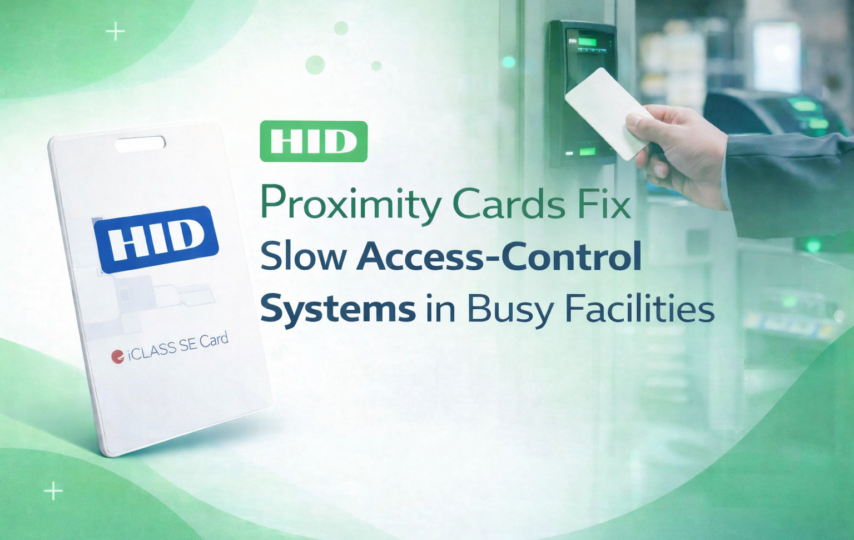
One of the main advantages of proximity technology is speed. Instead of entering codes or waiting for manual verification, employees simply present their card to a reader.
HID proximity cards use contactless technology that allows quick authentication at access points. The reader detects the card and verifies permissions within seconds.
This process significantly reduces entry times. Employees can move through access points quickly, even during busy periods. The result is a smoother and more efficient entry process for both staff and visitors.
Improved Security Without Slowing Down Access
Speed alone is not enough when managing access to secure facilities. Organisations also need systems that maintain strong security standards.
HID proximity technology allows facilities to combine convenience with reliable access control. Each card contains encoded information that is recognised by authorised access systems. Permissions can be assigned based on employee roles or access requirements.
This approach ensures that only authorised individuals can enter specific areas. At the same time, employees experience a faster and more convenient authentication process.
Reliable Technology for High Traffic Facilities
Busy facilities require access solutions that can handle frequent daily use. Entry systems must remain reliable even when hundreds or thousands of employees use them each day.
HID proximity cards are designed for high traffic environments. They are durable, easy to carry, and simple for employees to use. Because the technology requires minimal physical contact, wear and tear on access equipment is reduced.
This reliability helps organisations maintain consistent operations. Employees can enter buildings quickly while security teams maintain effective access control.
Easy Integration With Existing Access Systems
Many organisations hesitate to upgrade access systems because they worry about compatibility with existing infrastructure. Replacing an entire system can appear expensive or complex.
One advantage of HID proximity cards is their compatibility with many modern access control systems. Facilities can often integrate proximity technology with existing readers, software, and security frameworks.
This flexibility allows organisations to improve access speed without completely replacing their current systems. By upgrading to proximity technology, facilities can modernise their access control while maintaining operational stability.
Creating Faster and More Efficient Access Control
Efficient access control systems are essential for modern facilities. Employees need to move through entry points quickly, while organisations must maintain reliable security.
Slow entry systems can create congestion, frustration, and operational disruptions. Contactless solutions such as HID proximity cards help solve these challenges by improving both speed and reliability.
Facilities that implement proximity technology benefit from smoother entry processes, stronger security controls, and a more efficient workplace environment.