
With NAB 2026 now only days away, the pace of announcements from companies in the film and video industry has begun to gather speed. New live production cameras have been introduced. Editing software, once considered stable ground, is undergoing notable change. Even GoPro has entered the cinema camera space, a move that would have seemed unlikely not long ago. With the event drawing near, the stream of updates shows little sign of slowing.
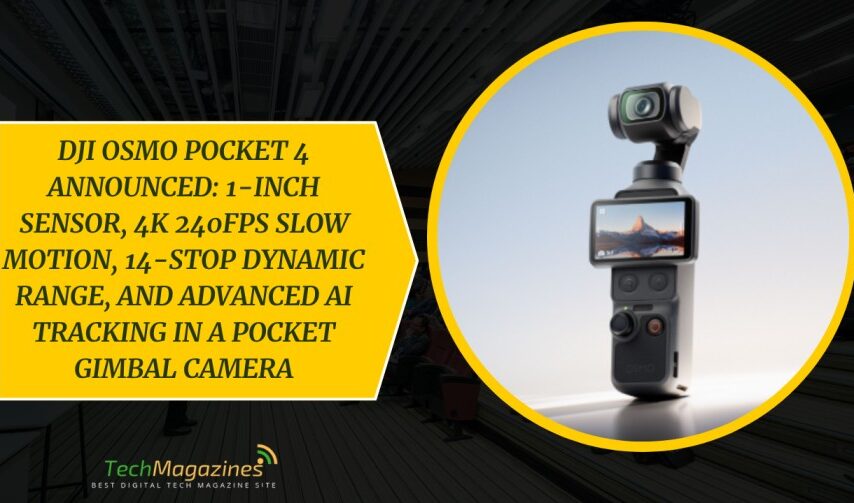
DJI, however, remains close to its familiar path. It has introduced a new pocket-sized gimbal camera, the Osmo Pocket 4. Built around a 1-inch CMOS sensor, the device is expected to shoot 4K footage at up to 240 frames per second, while also offering improved results in low light. The specifications are strong, and the purpose is clear. This new model marks the latest step in DJI’s compact camera line, and it sets out to make its case with some force.
Compact Powerhouse Camera With High-End Video Capabilities
The Osmo Pocket 4 arrives with a clear emphasis on video. It records at 4K and 240 frames per second. It also handles low light with more control, aided by 14 stops of dynamic range and 10-bit D-Log. The result is meant to carry a certain cinematic weight, though the aim is practical as much as aesthetic.
Like earlier models in the Osmo Pocket line, it includes a range of useful tools. Intelligent tracking stands out among them. It helps the user hold a subject in focus and within the frame, even in busy streets or crowded sets where movement is constant.
The camera uses a 1-inch CMOS sensor and an f/2.0 aperture. This combination works to keep images sharp in dim conditions. It also allows for fuller tones and colours that appear closer to what the eye sees.
There is, in addition, a new control for zoom. A dedicated button lets the user move between 1x and 2x lossless zoom with a single press. The camera also supports Ultra HD slow motion, reaching up to 4K at 240 frames per second, which places it among the more capable devices of its size.
Intelligent Tracking, Stabilisation, and User-Friendly Controls
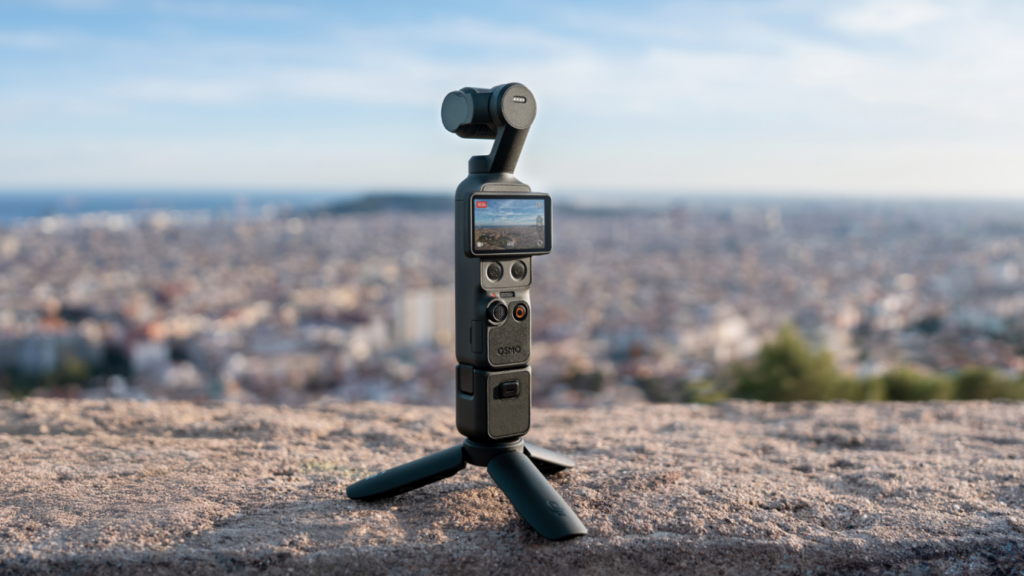
Overall, the Osmo Pocket 4 is a definite step forward by DJI. It demonstrates the ability of a small gimbal camera. The difference is not merely in the numbers, but the manner in which the device will help the user. There has been more consideration of its use. The camera is based on three-axis stabilisation. This maintains footage in various types of motion. It enables the user to move without worrying about shaking all the time.
ActiveTrack 7.0 provides an additional level of control. It tracks objects even when the zoom is four times. It also adds new features like Spotlight, Follow and Dynamic Framing. These provide the user with additional options of shaping a shot without a lot of effort. The autofocus system is also enhanced. It is quicker and can now accept simple gestures as input.
Control has been made simpler in other ways. Recording can start or stop with a touch or a turn of the screen. A new 5D joystick allows quick movement. The user can pull the camera back, centre it again, or flip it as needed. Each change is small on its own, but together they alter how the device behaves in the hand.
Creative Shooting Modes, Visual Enhancements, and Battery Performance
A fuller account of the new features gives a better sense of the device. Some changes are small. Others affect how the camera is used from moment to moment.
- There is now a slow shutter option in video mode. The user can lower the shutter speed to produce motion blur. This makes it possible to show movement as a trail, rather than a fixed point. It gives a clearer sense of time passing.
- The camera also offers a set of film tones. These allow the user to imitate older styles with little effort. The aim is to reach a more refined look without long work in post.
- There is, in addition, a built-in beautify function. It adjusts skin texture, brightness, and tone. The effect is meant to remain natural, whether the shot is a close selfie or a wider group.
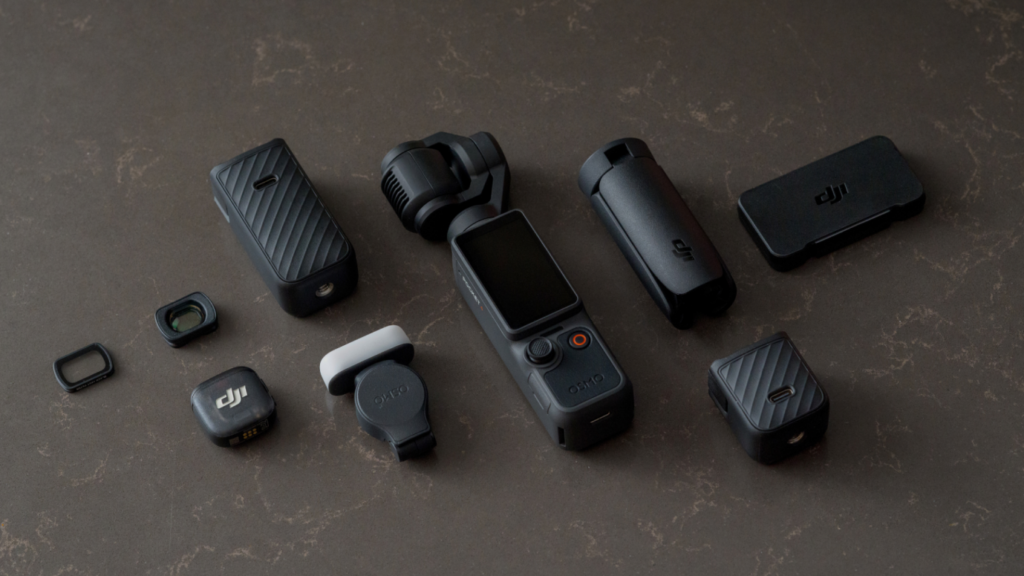
- An attachable fill light is included. It casts a soft and even glow. This helps in dim scenes or when the subject stands against strong backlight. The user can choose from three levels of brightness and colour temperature.
- Battery life has also been extended. The device charges quickly. It can reach eighty per cent in about eighteen minutes. This allows for close to three hours of use. At full charge, it can record up to four hours of 1080p footage at 24 frames per second.
Osmo Pocket 4 Pricing Details, Pre-Orders, and Global Availability Status
DJI continues a pattern that is not easy to follow. It says the Osmo Pocket 4 has been released “globally,” yet it does not state clearly if or when it will reach the United States. The omission stands out. Earlier DJI products have missed that market, in part due to the limits placed on its drones. The same question now hangs over this device.
For the moment, the picture is simpler elsewhere. The Osmo Pocket 4 is open for pre-order. Shipments are expected to begin next week. Those who want details on price or availability must turn to DJI’s own website, where the information is set out, though not in full.
Final Words
The Osmo Pocket 4 is small, competent and it is becoming harder and harder to ignore it as a “secondary” camera. It has 4K/240fps, better dynamic range and a considered range of smart features, bringing it nearer to the realm of larger, more serious rigs. And yet, it goes into a pocket. Of course, there are still some unanswered questions concerning the availability and market accessibility, which DJI does not appear to be in a rush to address. However, to those who are able to lay their hands on it, the attraction is simple. It is powerful and effective.