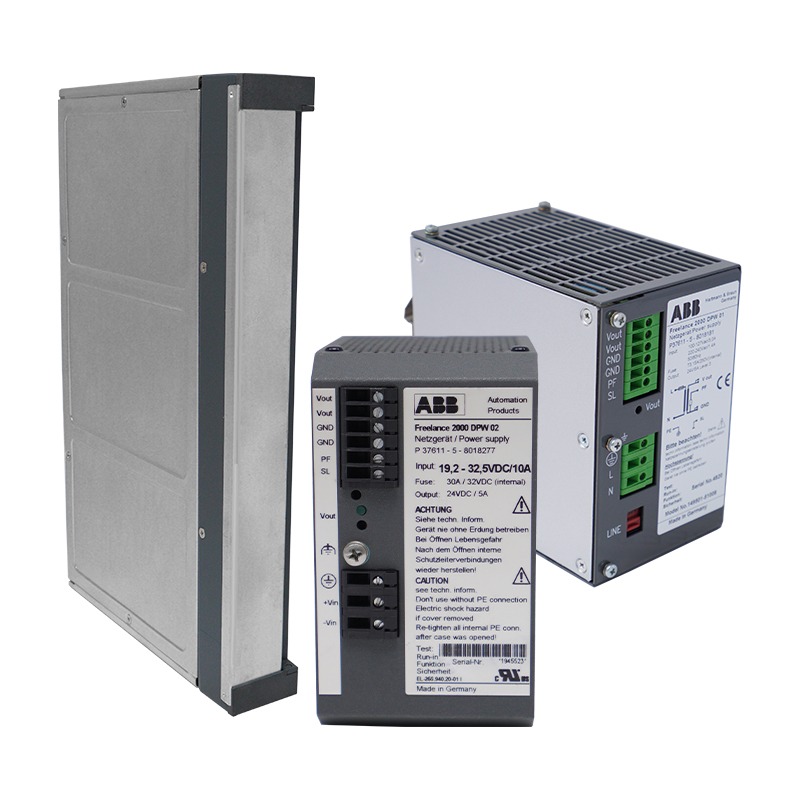
Motors serve as the workhorses of industrial manufacturing, driving everything from conveyor systems and pumps to compressors and critical process equipment. When a motor fails unexpectedly, the consequences extend far beyond a single machine—production lines halt, delivery schedules collapse, and costs escalate rapidly. Studies consistently show that unplanned downtime can cost manufacturers tens of thousands of dollars per hour, making motor protection not just a maintenance concern but a strategic business priority.
The challenge facing maintenance teams is clear: how do you safeguard critical machinery from thermal overloads, phase imbalances, bearing failures, and other common fault conditions before they escalate into catastrophic breakdowns? ABB automation components offer a proven answer to this challenge. Through sophisticated motor protection solutions—including the ABB Triguard safety system—these technologies deliver continuous monitoring, early fault detection, and integrated safety functions that keep operations running reliably. This article explores how ABB’s advanced protection portfolio addresses the real-world needs of maintenance professionals tasked with maximizing uptime and extending equipment life across demanding industrial environments.
The Imperative of Motor Protection in Industrial Environments
Motor failures rarely announce themselves politely. A winding insulation breakdown, a bearing seizure, or an undetected phase imbalance can escalate from a minor anomaly to a full production shutdown in minutes. For manufacturing facilities running continuous or near-continuous operations, the financial toll is staggering—lost output, emergency repair costs, expedited parts shipping, and potential damage to upstream and downstream equipment all compound rapidly. Beyond direct costs, repeated failures erode confidence in maintenance programs and strain relationships with customers who depend on consistent delivery.
Maintenance teams face mounting pressure to shift from reactive repair cycles to proactive strategies that catch problems early. Predictive maintenance, powered by continuous monitoring of temperature, vibration, current signatures, and other key parameters, has emerged as the most effective approach to reducing unplanned downtime. However, predictive maintenance is only as strong as the protection infrastructure supporting it. Without reliable sensors, intelligent relays, and integrated safety systems feeding accurate data into decision-making frameworks, even the best maintenance strategies fall short.
This reality is driving growing demand for advanced motor protection solutions that combine real-time monitoring with automated response capabilities. Industrial facilities need components that not only detect faults but also act on them—isolating compromised circuits, alerting operators, and logging diagnostic data for root cause analysis. The stakes are too high and the operating environments too demanding for anything less than purpose-built protection engineered for industrial reliability.
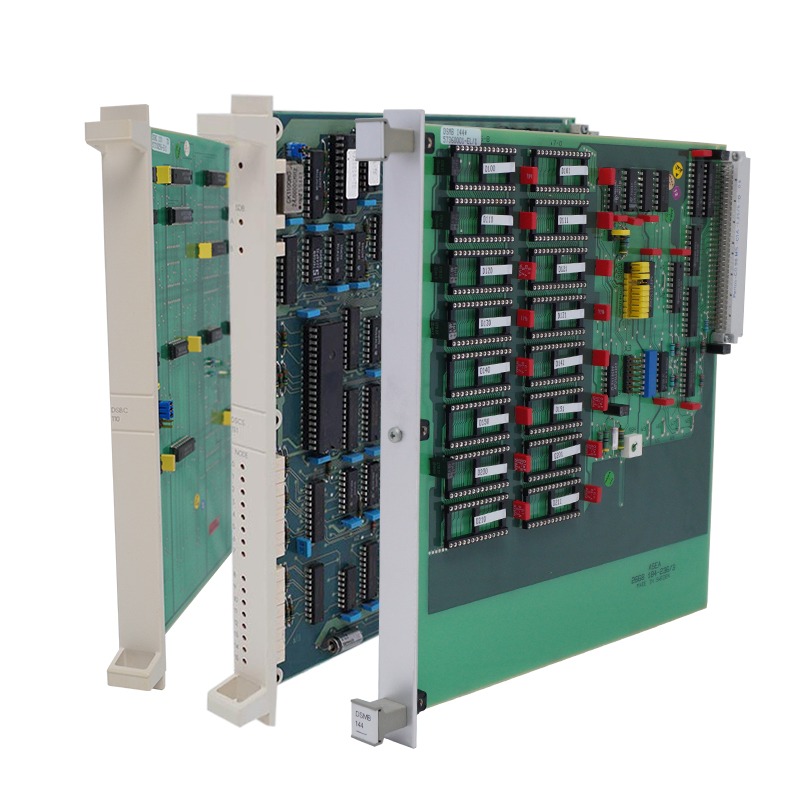
An In-Depth Look at ABB Automation Components for Motor Safety
ABB automation components encompass a broad portfolio of devices specifically engineered to monitor, protect, and control motor-driven systems across industrial applications. Rather than relying on a single device to handle all protection duties, ABB’s approach layers multiple specialized components into a cohesive protection architecture that addresses the full spectrum of motor failure modes.
At the relay level, ABB offers electronic overload relays and motor protection relays that continuously measure current, voltage, and temperature parameters. These devices go beyond simple trip functions—they incorporate algorithms that distinguish between harmless transient events and genuine fault conditions requiring intervention. Protection relays serve as the first line of defense, providing thermal modeling of motor windings and detecting conditions like phase loss, phase reversal, ground faults, and locked rotor scenarios before damage occurs.
Complementing the relays are ABB’s sensor technologies, including current transformers, temperature probes, and vibration monitoring devices that feed real-time data into the protection system. These sensors provide the raw intelligence that relays and controllers need to make informed decisions about motor health. On the control side, ABB’s programmable safety controllers and I/O modules tie individual protection devices into plant-wide automation networks, enabling centralized monitoring and coordinated response across multiple motor circuits simultaneously.
Together, these ABB automation components form the backbone of modern motor protection solutions by creating an integrated ecosystem where detection, decision-making, and response happen within milliseconds. Each layer reinforces the others, eliminating blind spots that standalone devices inevitably leave exposed.
Core Features and Technologies in ABB Motor Protection
The effectiveness of ABB’s motor protection portfolio stems from several advanced features working in concert. Thermal overload protection uses sophisticated mathematical models that simulate heat accumulation within motor windings in real time, accounting for ambient temperature, duty cycle history, and cooling conditions rather than relying on simplistic bimetallic elements. This approach provides far more accurate trip decisions, preventing nuisance trips during normal startup surges while still catching genuine overload conditions early.
Phase monitoring capabilities detect imbalances, loss, and reversal conditions that can destroy motor windings within seconds. ABB’s protection relays continuously analyze the symmetry of three-phase supply voltages and currents, triggering protective action when asymmetry exceeds configurable thresholds. Communication capabilities represent another critical technology layer—modern ABB protection devices support industrial protocols like Modbus, PROFIBUS, and EtherNet/IP, allowing them to transmit diagnostic data, alarm states, and operational statistics directly to SCADA systems and maintenance management platforms. This connectivity transforms individual protection devices into nodes within a predictive maintenance network, enabling maintenance teams to identify degradation trends weeks or months before a failure occurs and schedule interventions during planned downtime windows.
ABB Triguard: Advanced Protection for Reliable Operation
Within ABB’s extensive motor protection portfolio, the ABB Triguard system stands out as a purpose-built safety platform designed to bridge the gap between conventional motor protection and plant-wide functional safety requirements. Unlike standalone protection relays that operate in isolation, ABB Triguard integrates safety controllers, distributed I/O modules, and communication gateways into a unified architecture that treats motor protection as one element of a comprehensive safety strategy. This architectural approach means that motor protection decisions don’t happen in a vacuum—they’re coordinated with emergency stop circuits, guard monitoring, process interlocks, and other safety functions across the facility.
At its core, ABB Triguard employs safety-rated controllers that execute protection logic with the determinism and redundancy required by international functional safety standards such as IEC 61508 and IEC 62061. These controllers continuously process inputs from motor protection relays, temperature sensors, vibration monitors, and current transformers, applying configurable logic to determine whether conditions warrant a controlled shutdown, an alarm escalation, or a load reduction command. The modular design allows maintenance teams to scale the system incrementally—starting with protection for the most critical machinery and expanding coverage as budgets and operational priorities allow.
For facilities navigating increasingly stringent safety compliance requirements, ABB Triguard delivers a significant advantage by consolidating safety and motor protection functions onto a single platform. This eliminates the complexity of managing separate safety PLCs alongside independent motor protection devices, reducing wiring, simplifying spare parts inventories, and creating a single source of truth for safety and protection status. The result is enhanced operational continuity, because every motor protection event is automatically documented, traceable, and integrated into the facility’s broader safety management framework.
How ABB Triguard Prevents Downtime in Manufacturing
The ABB Triguard system’s real-time monitoring capabilities give maintenance teams continuous visibility into motor health across an entire facility from a centralized interface. Rather than waiting for an operator to notice unusual noise or a maintenance technician to take periodic readings, the system continuously evaluates thermal profiles, current signatures, and vibration trends against baseline parameters established during commissioning. When deviations exceed predefined thresholds—such as a gradual increase in bearing temperature or a subtle shift in current draw suggesting winding degradation—the system generates targeted alerts that direct maintenance personnel to the specific motor and the specific fault condition developing.
This early warning capability transforms how maintenance teams respond to emerging problems. Consider a scenario where a cooling fan on a large process motor begins to degrade, reducing airflow across the motor frame. Traditional protection would only trip the motor after winding temperatures reached dangerous levels, resulting in an unplanned shutdown and potential insulation damage. ABB Triguard, by contrast, detects the rising temperature trend early, issues a maintenance alert, and can automatically reduce the motor’s load or duty cycle to prevent thermal damage while the maintenance team schedules a fan replacement during the next planned outage. The system also logs the complete event history—initial deviation, alert timestamps, operator acknowledgments, and corrective actions—providing valuable data for root cause analysis and continuous improvement of maintenance strategies. For manufacturing operations where every hour of uptime directly impacts throughput and revenue, this combination of proactive detection and intelligent automated response represents a measurable reduction in unplanned downtime risk.
Implementing Motor Protection Solutions: A Step-by-Step Guide for Maintenance Teams
Deploying a comprehensive motor protection strategy requires more than purchasing the right equipment—it demands a structured approach that aligns protection capabilities with operational realities. Maintenance teams that follow a disciplined implementation process consistently achieve better outcomes, fewer commissioning issues, and faster time-to-value from their investment in ABB automation components. The following framework breaks the implementation journey into three practical phases that maintenance professionals can adapt to facilities of any size or complexity.
Step 1: Assessment and Planning for Critical Machinery
Every effective motor protection program begins with a thorough audit of existing motor assets and their operational context. Start by cataloging all motors across the facility, documenting nameplate data, duty cycles, historical failure records, and current protection arrangements. Next, assign criticality rankings based on each motor’s impact on production throughput, safety, and replacement lead time. A large compressor motor feeding a continuous process line, for example, warrants a higher protection tier than a redundant utility pump. This criticality assessment directly informs ABB component selection—high-criticality motors may require full ABB Triguard integration with vibration and thermal monitoring, while lower-tier assets might be adequately served by electronic overload relays with communication capability. During planning, identify existing control system infrastructure, available communication protocols, and physical installation constraints so that component specifications match real-world site conditions from the outset.
Step 2: Installation and Configuration of ABB Components
With the protection architecture defined, installation should proceed methodically starting with the most critical motor circuits. Mount protection relays, current transformers, and temperature sensors according to ABB’s technical documentation, paying close attention to cable routing and electromagnetic interference considerations that can compromise measurement accuracy. During configuration, program thermal models to reflect each motor’s specific characteristics—service factor, insulation class, locked rotor current, and allowable stall time. Configure alarm and trip thresholds conservatively during initial deployment, then refine them based on observed operating data over the first several weeks. For ABB Triguard installations, map safety I/O assignments carefully and verify that safety controller logic correctly coordinates motor protection actions with broader facility safety functions such as emergency stops and process interlocks.
Step 3: Integration and Testing for Seamless Operation
Integration connects individual protection devices into the plant’s automation and monitoring ecosystem. Establish communication links between ABB protection relays and the facility’s SCADA or DCS platform using the appropriate industrial protocol, verifying that alarm states, diagnostic parameters, and event logs transmit correctly and appear in operator displays. Conduct end-to-end functional testing by simulating fault conditions—phase loss, overcurrent, high temperature—and confirming that the protection system responds with the correct sequence of alarms, load reductions, or trips within specified response times. Document all test results as part of the commissioning record. Finally, train maintenance personnel on interpreting diagnostic data, acknowledging alarms, and performing routine device health checks so the protection system remains effective long after initial deployment. Periodic retesting on a scheduled basis ensures that protection integrity is maintained as process conditions and motor loads evolve over time.
Benefits, Case Studies, and ROI of ABB Motor Protection
The measurable advantages of deploying ABB motor protection solutions extend across multiple dimensions of plant operations. Extended equipment life ranks among the most significant benefits—motors operating under continuous thermal and electrical monitoring consistently outlast those protected by basic overcurrent devices alone, because degradation is caught and addressed before it causes irreversible damage to windings, bearings, or insulation. Maintenance costs shift from unpredictable emergency expenditures toward planned, budgeted interventions, smoothing operational spending and freeing maintenance teams to focus on improvement initiatives rather than firefighting.
In food and beverage manufacturing, facilities that have adopted integrated ABB protection architectures across critical mixer and pump motors typically report reductions in unplanned motor-related downtime ranging from 30 to 50 percent within the first year of deployment. Automotive assembly plants leveraging ABB Triguard for conveyor drive protection have documented similar gains, with the added benefit of streamlined safety compliance auditing thanks to automated event logging and traceable protection records. Suppliers like Apter Power, which serve the automotive parts sector, recognize that reliable motor protection on production lines directly impacts component quality and delivery consistency for their customers. In water treatment operations, where motor failures can trigger environmental violations, continuous vibration and thermal monitoring through ABB components has enabled maintenance teams to transition almost entirely to condition-based maintenance schedules, eliminating unnecessary preventive replacements while still catching genuine faults early. The return on investment for these deployments typically materializes within 12 to 18 months, driven primarily by avoided production losses and reduced emergency repair costs. For maintenance teams responsible for protecting critical machinery and ensuring reliable operation, the financial case for comprehensive ABB motor protection is compelling and well-supported by field experience across diverse industrial sectors.
Building a Proactive Motor Protection Strategy with ABB Solutions
Motor protection is no longer a secondary maintenance consideration—it is a foundational requirement for any industrial operation that depends on continuous, reliable production. The financial consequences of unplanned motor failures, from lost throughput to emergency repair costs and downstream equipment damage, make a compelling case for investing in protection systems that detect problems early and respond intelligently before minor faults become major shutdowns.
ABB automation components deliver on this need through a layered protection architecture that combines advanced relays, precision sensors, and programmable controllers into a unified ecosystem capable of monitoring motor health in real time. The ABB Triguard system elevates this capability further by integrating motor protection with plant-wide functional safety, giving maintenance teams a single platform for coordinated fault detection, automated response, and traceable compliance documentation. For maintenance professionals responsible for safeguarding critical machinery and maximizing uptime, these solutions provide the tools necessary to transition from reactive repair cycles to proactive, condition-based strategies that extend equipment life and stabilize operational costs.
As industrial facilities continue to embrace digitalization and connected monitoring, motor protection solutions will only grow more sophisticated—leveraging advanced analytics, machine learning, and deeper integration with enterprise maintenance platforms. Organizations that build their protection infrastructure on proven ABB components today position themselves to adopt these future capabilities seamlessly, ensuring reliable operation for years to come.