
Not too long ago, packaging wasn’t something most teams spent much time thinking about. It came at the end. Product’s ready, pack it up, ship it out.
Simple. But that doesn’t really work anymore.
In industries like electronics or new energy, things are different now. Products are more sensitive, more valuable, and a lot less forgiving. A bit of static. Some moisture. A rough handoff during transit. That’s all it takes to cause real damage.
That’s also why companies like EONSEN Pack, a trusted custom manufacturer of flexible packaging, are being brought in earlier than before. Not just to produce packaging, but to help make sure it actually works for the product and the way it moves.
And the journey itself has changed too. Products don’t just move from A to B. They pass through multiple locations, multiple teams, sometimes across countries. More steps. More handling. More chances for something to go wrong.
So naturally, packaging has had to step up.
It’s no longer just there to hold things together. It’s part of how products move, how they’re protected, and how operations stay on track. Flexible packaging, especially, is starting to play a bigger role here. It helps companies protect what they’re shipping without slowing everything else down.
The Growing Demands of High-Tech Supply Chains
If you look at supply chains today, they’re just… heavier. Not in weight, but in pressure.
Products are more complex. Think electronics, batteries, precision components. These aren’t items you can toss into a box and hope for the best. They need careful handling from the start.
At the same time, the path they travel has become longer and more complicated. One shipment can pass through several facilities before it reaches its destination. Each stop adds another layer of risk.
And when something goes wrong, it’s rarely a small issue.
Static can damage components without you even seeing it. Moisture can affect performance. A minor impact during transport can lead to returns or failures later on.
So where does packaging come in?
Right in the middle of it all.
It’s no longer just a container. It’s one of the few things that stays with the product from start to finish. And because of that, it’s become a key point of control. Get it right, and you reduce a lot of downstream problems. Get it wrong, and issues start to stack up quickly.
How Technology Is Changing the Way Packaging Is Designed
This shift is also changing how packaging gets designed.
Before, most companies worked with standard options. A few materials, a few formats, and that was enough. It made sense at the time.
But now? Not so much.
Products behave differently, so packaging has to keep up. Instead of choosing what’s available, businesses are starting to choose what actually fits.
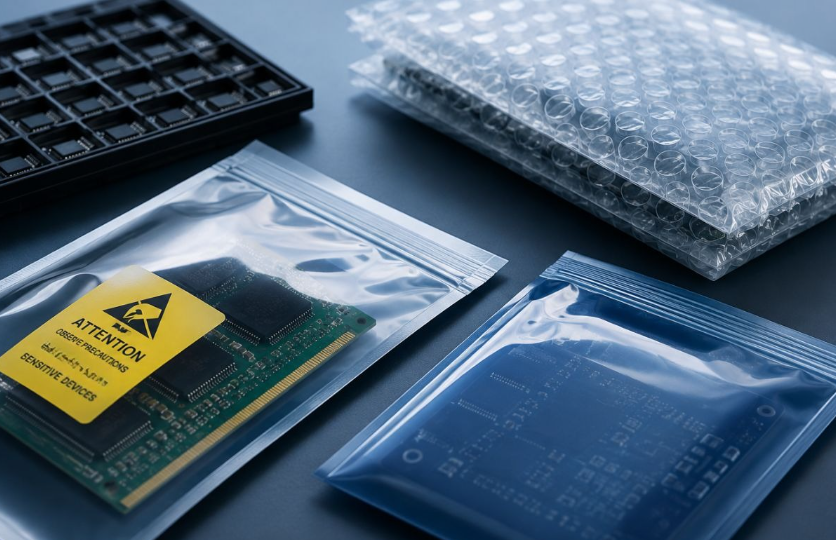
For example, electronic parts often need anti-static protection. Some components need barriers to keep moisture out. Heavier items need packaging that can handle pressure without tearing or failing.
Nothing too complicated. Just… more specific.
Another big change is how decisions are made. It’s not just based on experience or assumptions anymore. Testing, simulation, and real-world data are playing a bigger role. Companies want to know what works before something goes wrong.
And because of that, more of them are working closely with specialized suppliers. Not just vendors, but partners who understand the product and the environment it moves through. That’s where companies like EONSEN Pack come in, helping build packaging around real use cases instead of generic needs.
Flexible Packaging and the Push for Efficiency
Of course, protection is only part of the story.
Efficiency matters just as much.
Because here’s the reality. Most operations today are under pressure to move faster and cost less at the same time. And packaging, whether people notice it or not, plays a role in that.
Flexible packaging helps in a few simple ways.
It’s lighter, so shipping costs go down. It takes up less space, so storage becomes easier. That might not sound like much, but across thousands of units, it starts to make a real difference.
Then there’s the day-to-day side of things.
Flexible packaging is easier to handle. Easier to stack. Easier to move. Packing becomes a bit quicker. Workflows feel a bit smoother. Nothing dramatic, just small improvements that add up over time.
And when you zoom out, it fits well with how modern systems work.
Automated warehouses, streamlined fulfillment, faster turnaround times. All of these rely on consistency. Packaging that’s simple, predictable, and easy to work with.
Flexible packaging does that quietly. It doesn’t get in the way. And in operations, that’s usually what you want.
Protecting High-Value Products Without Slowing Things Down
But none of that matters if the product doesn’t arrive in one piece.
That’s the trade-off businesses deal with all the time. Move fast, but don’t break anything.
In industries like consumer electronics or new energy, that balance is even tighter. Products like circuit boards or lithium batteries are sensitive. Not just expensive, but fragile in ways that aren’t always visible.
Too much pressure. Too much moisture. The wrong conditions during transport. Problems don’t always show up immediately, but they’re there.
So the question becomes: how do you protect these products without slowing everything down?
This is where better materials start to make a difference.
Flexible packaging today can be strong without being bulky. It protects without adding extra weight. And more importantly, it fits into existing processes. No extra steps. No unnecessary complications.
It just works alongside everything else.
And that’s really the goal. Good packaging doesn’t draw attention to itself. It just helps reduce losses, avoid returns, and keep things moving the way they should.
What Businesses Should Look for Moving Forward
So where does this leave businesses?
Probably with one simple realization. Packaging isn’t just a cost anymore.
It’s easy to treat it that way, especially when you’re looking at budgets. But in more demanding environments, that mindset starts to fall apart.
More companies are beginning to ask different questions.
- Does the packaging actually protect the product?
- Does it make operations easier?
- Does it help reduce problems later on?
Those questions matter more than the upfront cost.
It also means choosing the right partners. Not just someone who can produce packaging, but someone who understands how it will be used. In real conditions. Across real supply chains.
That’s where experienced manufacturers like EONSEN Pack come in. Not by pushing products, but by helping businesses figure out what works.
Because looking ahead, packaging is only going to matter more.
And the companies that treat it as part of the system, not just an afterthought, are the ones that will be better prepared for what’s coming next.