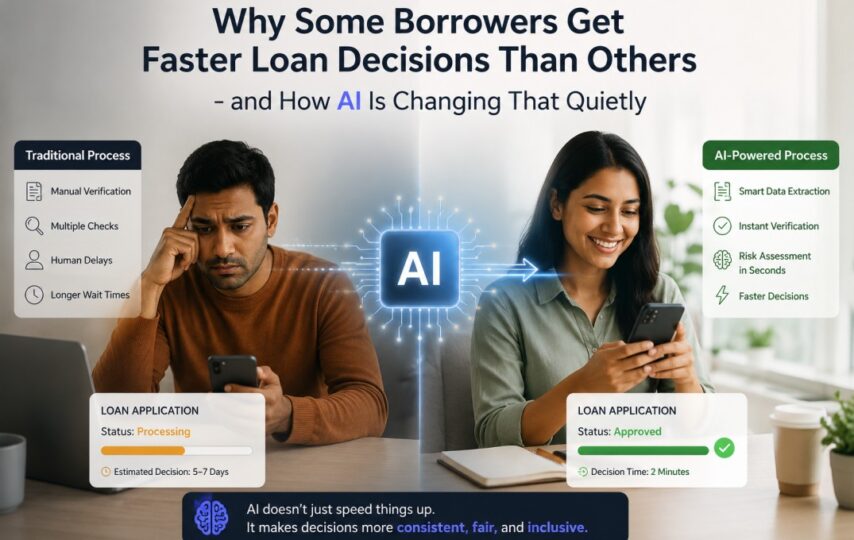

Most borrowers assume loan decisions depend mainly on income.
A stable salary, decent repayment history, and basic eligibility should be enough.
At least that’s what many people believe.
But digital lending systems are quietly becoming far more complex than that.
Today, many financial platforms use behavioural analysis, automated verification systems, and lending automation models to understand borrower patterns beyond traditional paperwork. In many cases, borrowers exploring structured digital personal loan access through mobile-first financial systems are interacting with lending environments that evaluate far more than salary alone.
And honestly, most people never see that process happening.
They only notice the result.
One application moves quickly.
Another takes longer.
Sometimes two people with seemingly similar financial profiles receive very different lending outcomes.
The reasons are often hidden inside behavioural risk analysis systems working quietly in the background.
As digital lending platforms increasingly adopt AI-based credit assessment models, borrower behaviour patterns are becoming just as important as traditional eligibility checks.
Loan Decisions Are Becoming More Behaviour-Driven Than Document-Driven
For years, lending decisions depended heavily on documents.
Salary slips.
Bank statements.
Employment verification.
Basic credit history.
Those factors still matter.
But many fintech systems now evaluate how financial behaviour aligns with repayment reliability.
For example:
- repayment consistency
- transaction regularity
- borrowing frequency
- account stability
- financial discipline over time
These signals often help lending systems understand risk more dynamically.
And sometimes borrowers are surprised by this.
Someone may have a strong salary profile but show financial patterns that create uncertainty.
Meanwhile, another borrower with a moderate income may demonstrate highly stable financial behaviour.
The outcome can look unexpected from the outside.
But behavioural lending models increasingly prioritize consistency over isolated financial snapshots.
Borrowers Often Think Faster Approvals Are Random
They usually are not.
In many digital lending environments, approval speed often reflects how easily systems can interpret borrower information.
If verification signals appear stable and financial behaviour looks predictable, automated systems may process applications with fewer interruptions.
But when patterns appear unusual, additional reviews can happen.
That does not automatically mean rejection.
It simply means the system requires more confidence before making a decision.
And honestly, borrowers rarely receive visibility into that process.
Most people only see:
- approved
- pending
- additional verification required
- under review
The behavioural reasoning behind those outcomes often remains invisible.
That hidden layer is where lending automation is changing borrower experiences quietly.
AI Is Changing Verification More Than Most Borrowers Realize
Verification used to be one of the slowest parts of lending.
Manual reviews created delays.
Documents required multiple checks.
Identity validation often depended on human processing.
Today, automated systems can identify:
- document inconsistencies
- verification mismatches
- unusual application behaviour
- duplicate identity patterns
- repayment risk indicators
much faster than traditional review systems.
This does not mean automation removes all risk.
It simply improves operational efficiency at scale.
And in large digital lending environments, scale matters enormously.
Because thousands of applications can arrive simultaneously.
Without automation, approval timelines would slow down dramatically. AI-driven verification systems increasingly support faster risk evaluation and fraud detection processes across digital lending operations.
Borrower Intent Is Quietly Becoming Part of Risk Analysis
One of the most interesting changes inside fintech innovation is the growing focus on borrower intent.
Not just eligibility.
Intent.
That sounds unusual at first.
But lending systems increasingly try to understand whether borrowing behaviour appears planned or reactive.
For example:
A borrower taking occasional, controlled financial support may present a very different behavioural pattern compared to someone making repeated urgent borrowing requests within short periods.
Financial stress often appears in behaviour before it appears inside formal documentation.
Some AI-driven risk systems now attempt to identify those behavioural signals earlier.
And borrowers usually never see that analysis happening.
Traditional Lending Looked at Documents. Modern Systems Watch Behaviour.
This may be one of the biggest shifts happening across digital credit systems.
Traditional underwriting focused primarily on fixed documentation.
Modern lending environments increasingly analyze behaviour alongside documentation.
The difference is important.
Because financial behaviour often reveals patterns that documents cannot.
For example:
- repayment habits
- spending discipline
- account consistency
- financial stability during pressure periods
These patterns help lending systems build a broader understanding of borrower reliability.
That does not make AI perfect.
Far from it.
Human oversight still matters significantly.
But lending systems are clearly moving toward behavioural interpretation rather than purely static evaluation. Researchers increasingly identify behavioural data and alternative financial signals as major drivers behind modern AI-based credit assessment models.
Faster Decisions Depend on Better Financial Visibility
One reason digital lending has expanded so quickly is because borrowers leave more financial signals than before.
Digital payments.
UPI activity.
Online banking behaviour.
Repayment records.
Transaction consistency.
These signals create financial visibility that older lending systems simply did not have access to.
And that visibility helps lending automation make faster assessments.
However, visibility alone is not enough.
Consistency matters more.
A borrower with predictable financial behaviour often creates fewer risk uncertainties compared to someone whose patterns fluctuate dramatically month to month.
That distinction is becoming increasingly important in modern credit assessment.
Financial Awareness Is Becoming Part of Borrower Readiness
Interestingly, borrowers themselves are changing too.
People now spend more time understanding:
- credit behaviour
- repayment obligations
- financial planning
- borrowing discipline
- loan eligibility factors
before submitting applications.
Many users also explore educational resources explaining personal loan document requirements and borrower verification readiness because smoother verification often begins long before an application is submitted.
That awareness matters.
Because technology can simplify access.
But responsible borrowing still depends on financial understan ding.
And honestly, many repayment problems begin not because people lack access to credit – but because they underestimate future repayment pressure.
The Future Of Lending May Feel More Invisible Than Ever
Most borrowers associate lending innovation with faster apps.
Faster approvals.
Faster disbursals.
Faster onboarding.
But the larger transformation may be happening underneath.
Inside risk engines.
Behavioural models.
Verification systems.
Financial decision frameworks.
The future of lending may feel increasingly invisible because the systems making decisions are becoming better at interpreting behaviour quietly in the background.
Most people will never see those systems directly.
They will simply experience:
- smoother approvals
- fewer manual steps
- faster verification
- personalized assessments
- changing eligibility outcomes
without fully understanding why.
And honestly, that invisible shift may become one of the most important fintech developments of the next decade.
Frequently Asked Questions
Why do some borrowers receive faster loan decisions?
Borrowers with stable financial behaviour, organized repayment history, and lower-risk verification patterns may experience smoother automated evaluations.
How does AI help digital lending systems?
AI helps analyze repayment behaviour, verification consistency, transaction activity, and financial risk indicators more efficiently.
Does AI replace human decision-making in lending?
No. Most lending systems still combine automated assessments with human oversight, especially for complex financial cases.
Why is borrower behaviour becoming important in lending?
Behaviour often provides stronger repayment insights than static documentation alone, helping lenders assess risk more accurately.
Can financial discipline improve lending outcomes?
Consistent repayment behaviour, responsible borrowing habits, and organized financial management may contribute to healthier credit profiles over time.
Final Thoughts
The biggest change inside digital lending may not be speed.
It may be interpretation.
Financial systems are gradually shifting from evaluating documents alone to understanding behavioural patterns that reveal how borrowers manage money in real life.
That transformation is happening quietly.
And while most borrowers never see the systems operating behind approval decisions, those systems increasingly influence how lending journeys unfold.
The technology will continue evolving.
But the growing focus on borrower behaviour, financial discipline, and repayment consistency is already reshaping how modern lending works.