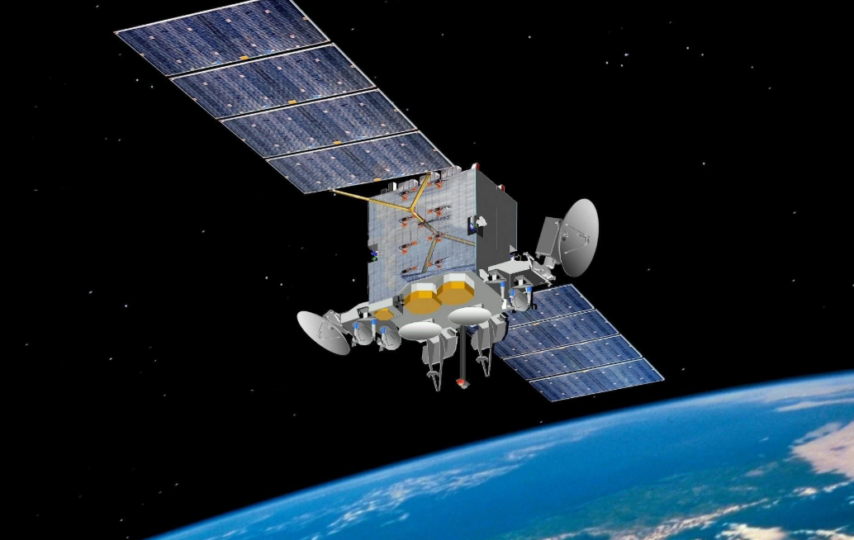

Imagine spending four years and hundreds of millions of dollars building and launching a satellite constellation. Everything works perfectly at first. Then a solar flare rips through the orbit. Satellites running standard commercial electronics start glitching. One goes silent. Then another. Revenue dries up while replacement launches are scheduled.
This happens. And it’s almost always avoidable.
The lesson the industry keeps relearning is simple: space is not Earth. Components built for Earth environments will eventually fail in orbit. The only real question is how much that failure will cost.
What Space Actually Does to Electronics
Radiation Doesn’t Announce Itself
Three radiation sources constantly bombard satellite components in orbit:
- Trapped radiation from Earth’s Van Allen belts — high-energy protons and electrons
- Galactic cosmic rays — particles drifting in from outside our solar system
- Solar particle events — intense bursts released during solar flares
Over time, this radiation quietly accumulates inside electronics. Transistors shift. Circuits begin behaving unpredictably. A component that worked perfectly at launch starts producing errors years later — not because it was defective, but because space rewrote it at the atomic level.
Then there are single-event effects — one heavy particle hitting a transistor gate at the wrong moment. It can scramble data, crash a processor, or permanently destroy the component. No warning. No second chance.
Temperature Swings That Break Things Slowly
Low-earth-orbit satellite components also face brutal thermal cycling. Temperatures swing from scorching heat in sunlight to deep cold in shadow — sometimes 16 times per day. Materials expand and contract with every pass. Over a multi-year mission, that mechanical fatigue adds up. It cracks solder joints, loosens connections, and degrades structural integrity in ways that are very hard to predict from the ground.
Radiation-Tolerant vs. Radiation-Hardened: Why It Matters
Match the Component to the Orbit
Not every orbit carries the same radiation risk, and not every satellite payload component needs the same level of protection.
Radiation-tolerant components are built for LEO, where Earth’s magnetosphere still provides meaningful shielding. Annual radiation doses in low-inclination LEO orbits typically stay between 100 and 1,000 rad(Si). These parts use cost-efficient materials and high-volume manufacturing — perfect for large constellations where hundreds of units need to be affordable.
Radiation-hardened components are engineered for MEO and GEO satellites operating at altitudes up to 35,790 km. There, radiation doses can reach 1 Mrad over a 10-to-15-year mission. Ceramic packaging, specialized circuit design, and stringent testing make these parts survive where standard electronics simply cannot.
Choosing the wrong tier — especially going too cheap for the orbital environment — is where financial volatility begins.
The Real Cost of Using the Wrong Components
“Saving Money” That Isn’t Saving Anything
We’ve seen operators try to cut upfront costs by using commercial-off-the-shelf (COTS) electronics in space. The logic makes sense on paper. In reality, a single radiation event can destroy those components entirely — and the cost of one replacement launch dwarfs whatever was saved on the original hardware.
The full cost picture is brutal. Design, build, test, launch, insure, operate — a satellite program represents years of capital deployed before a single dollar returns. Building that program on components not rated for the space environment introduces a risk that simply shouldn’t be there.
Reliable Dragonfly satellite components designed specifically for orbital conditions change that calculation entirely. A higher component cost at the start pays back steadily across a mission lifetime of uninterrupted operation.
What Are the Main Components of a Satellite That Need Protection?
The satellite structural components most at risk are the active electronics — processors, power converters, communication modules, and sensors. These need radiation-hardened encasements, redundant circuits, and ceramic packaging to survive long-term exposure.
Passive elements like solar panels, antennas, and structural frames also need attention. Thermal blankets manage temperature cycling. Protective coatings fight corrosion from atomic oxygen in LEO. Every layer of protection extends satellite life and delays the financial pain of early replacement.
Why the Satellite Components Market Is Raising the Bar
The commercial space industry is moving fast. Launch costs are lower than ever. New operators enter orbit every year. But competition also means less tolerance for failure. Customers expect reliable service. Investors expect predictable returns.
Satellite component manufacturers who meet radiation qualification standards aren’t just selling reliability — they’re selling the financial stability of an entire business model. A constellation that performs as designed, for as long as planned, is one that generates steady revenue and builds investor confidence.
One that fails early burns capital, damages reputation, and sometimes doesn’t recover.
Reliability Is a Financial Strategy
Space has always been harsh. What’s different now is the financial scale of what’s at risk. Satellite operators today are running businesses, not experiments. Their orbital infrastructure needs to work — for years, sometimes decades — with no one available to fix it.
We think the operators who treat component quality as a first principle will consistently outperform those who treat it as a line item to minimize. The math is straightforward. Invest in the right satellite components upfront, or pay far more to recover from the failure later.