
Manufacturing has always come down to one thing: building exactly what the customer needs. But as products grow more complex and buyers expect more from the purchasing experience, a familiar problem keeps surfacing, the gap between what a customer imagines and what actually gets built.
That gap costs manufacturers time, money, and deals.
3D product configurator software is one of the more practical answers to that problem. This article explains what it does, why manufacturers are adopting it, and what’s at stake for those who haven’t yet.
What Is a 3D Product Configurator Software?
Think of it as an interactive product builder, one that works in three dimensions, in real time.
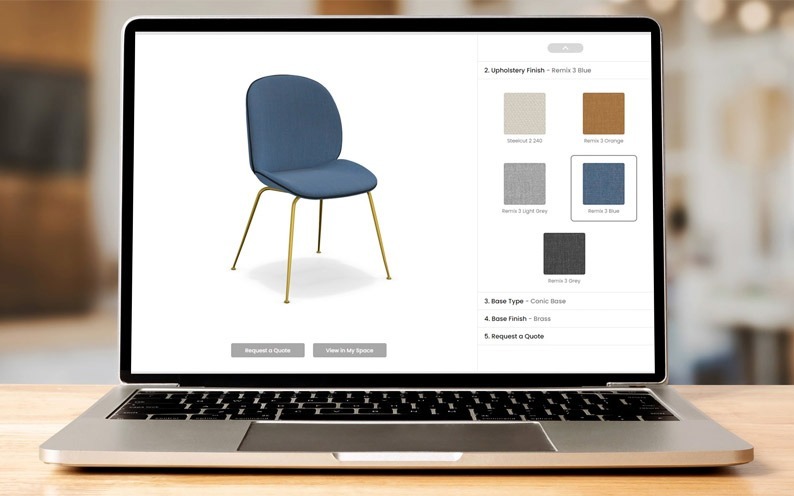
Instead of handing a prospect a static brochure or a multi-tab spreadsheet, a 3D configurator lets them actually build the product on screen. Change the finish. Adjust a dimension. Swap out a component. The model updates as they go, and the system quietly validates every choice against the manufacturer’s engineering rules.
For manufacturers selling customizable, complex products like industrial equipment, modular systems, specialty vehicles, custom enclosures, this kind of tool changes the entire sales conversation. The buyer isn’t trying to imagine a product anymore. They’re looking at it in real-time.
The Problem with Legacy Systems
Before 3D configurator and product visualization software became accessible, most manufacturers handled custom orders through a combination of spreadsheets, printed spec sheets, hand-drawn sketches, and a lot of email.
It worked until it didn’t.
Communication gaps were constant: A sales rep captured requirements one way. Engineering interpreted them differently. The customer received something slightly off from what they’d agreed to. Rework followed. Relationships took the hit.
Sales cycles dragged: Getting a quote for anything custom often meant waiting days, sometimes weeks, for engineering to validate specs, confirm feasibility, and produce sketches. By then, a competitor may have already moved in.
Buyers approved products they couldn’t fully picture: Signing off on a major capital purchase based on a 2D drawing and a written spec sheet takes a certain leap of faith. Many buyers hesitated. Many came back with revision requests.
The quoting was inconsistent: Without a centralized rules engine, different reps could quote the same configuration differently. The margin slipped and customers noticed that.
These aren’t edge cases. They’re the everyday friction of selling complex products without the right tools.
Why Manufacturers Are Investing in 3D Product Configurator Software
1. Buyers Can Finally See What They’re Getting
A lot of what makes selling complex products difficult is that words and sketches can’t do full justice. A photorealistic, interactive 3D model does something a spec sheet never can; it makes the product feel real before it exists.
Buyers respond to that. Seeing a configured product in three dimensions, in the right material and color, at the right scale, builds a kind of confidence that’s hard to manufacture any other way. For engineer-to-order and configure-to-order manufacturers where every product is different, visual clarity is genuinely valuable.
2. Bad Configurations Don’t Make It to Engineering Anymore
Every manufacturer has rules: combinations that don’t work, materials that only apply within certain dimensions, components that require add-ons to function. In a traditional process, enforcing those rules relies on experienced people remembering them.
That’s a fragile system.
In 3D product configurator software, those rules are embedded directly into the tool. Invalid combinations get blocked before they become orders. A newer sales rep can configure a technically complex product without needing an engineer on the line to catch mistakes. The system does that work automatically.
The downstream effect is significant: fewer errors reaching production, less time spent correcting avoidable mistakes, and an engineering team that isn’t constantly pulled into pre-sales firefighting.
3. Sales Cycles Get Shorter Without Cutting Corners
In competitive markets, speed matters. The first manufacturer to put a clear, accurate, visually compelling proposal in front of a buyer often has a head start.
With 3D product configuration software, a sales rep can build a full configuration during a live call, adjusting in real time to what the buyer says, generating a quote-ready output before the meeting ends. What previously took days of back-and-forth can happen in a single conversation.
That’s not just a time-saving benefit. It’s a way of holding a buyer’s attention and momentum at exactly the moment when they’re most engaged.
4. Engineering Spends Less Time on Pre-Sales
Ask any engineering team at a complex manufacturing scenario about what takes up their time, and pre-sales validation usually comes up quickly. Reviewing configurations submitted by sales. Answering technical questions. Producing sketches for prospects who may not even buy.
When product configuration is handled by a rules-driven 3D system, most of that pre-sales engineering load disappears. The configurator already knows what’s valid. It generates accurate BOMs and manufacturing data automatically. Engineering gets to focus on building products and not on reviewing sales inquiries.
That shift in capacity has real operational value.
5. It Meets Buyers Where They Are
B2B buying behavior has quietly changed. More industrial buyers today prefer to research and configure independently before they ever speak to a sales rep. They want to explore options at their own pace, without being guided through a sales process they’re not ready for.
A 3D configurator supports that. It gives prospects something to engage with on their own terms and for manufacturers, it creates a stream of inbound leads who have already self-selected into specific configurations. Those are better conversations to have.
This matters especially for manufacturers who sell through dealer or reseller networks, where direct sales contact is limited to begin with.
6. It Changes How Prospects Perceive the Business
Most manufacturers compete on the same dimensions: price, lead time, technical specs. These matter, but they’re often hard to differentiate on when competitors are closely matched.
A polished, responsive 3D product configurator signals something subtler, that this manufacturer has thought carefully about the buyer’s experience, that their processes are modern, and that they take customization seriously as a capability. For buyers making significant purchasing decisions, that impression carries more weight than most manufacturers expect.
It Works Best When It’s Connected to the Rest of the Business
A 3D configurator running in isolation is useful. A 3D configurator connected to CPQ, ERP, and CRM systems is a different proposition entirely.
Integrated with a CPQ platform, it generates accurate, real-time pricing alongside the visual model. Every component change updates the price automatically, with no manual calculation required. Connected to an ERP, a finalized configuration flows directly into production planning, triggering BOMs, routing instructions, and procurement workflows without anyone manually re-entering data.
That integration layer is what turns a 3D configurator from a sales tool into a genuine operational advantage.
Where It Makes the Biggest Difference
3D product configurator software has broad applicability, but some manufacturing segments feel the impact more than others, usually because the products are complex, the stakes are high, and the cost of a misconfigured order is significant.
· Industrial equipment and machinery: These are high-value, long sales cycle where a buyer might spend months evaluating options. A 3D configurator gives them something concrete to engage with throughout that process and gives the sales team a way to demonstrate options without pulling engineering into every conversation.
· Medical equipment and device manufacturing: In this industry, component compatibility isn’t just a technical requirement; it’s a regulatory one. Buyers need to see exactly what they’re procuring, and manufacturers need confidence that every configuration meets compliance standards before it ever gets quoted.
· Specialty vehicles: No two builds are quite the same. Body configurations, accessory packages, regulatory requirements, and the combinations multiply quickly. Static documentation can’t keep up. A live 3D model can.
· HVAC manufacturing: System sizing, unit compatibility, regional code compliance, these aren’t details a buyer can afford to get wrong. A 3D configurator helps them see how a system comes together before anything gets ordered, reducing the back-and-forth that typically slows these sales down.
· Electrical and electronics manufacturing: Modular product architectures and tight tolerance requirements mean a single incompatible selection can compromise an entire system. Embedding compatibility logic into a visual configurator catches those issues early before they become production problems.
· Power generation equipment manufacturing: Buyers in this segment are technically sophisticated and expect precision. They need a configuration that’s been validated against their specific application, environment, and load requirements. A 3D configurator meets them at that level.
· Pumps and valves manufacturing: Pressure ratings, material compatibility, flow specifications; every selection has to align with the process engineering requirements of the installation. A rules-driven configurator ensures that those constraints are respected at the point of configuration, not discovered after the order is placed.
In each of these industries, the pattern is the same: products are complex, buyers need confidence before they commit, and the cost of a configuration error, whether caught before or after production, is too high to leave to chance. That’s exactly the problem a 3D tool is built to solve.
Wrapping Up
The case for 3D product configurator software isn’t really a technology argument. It’s a business argument.
Manufacturers who sell complex, customizable products face a consistent set of challenges: communication errors, slow sales cycles, engineering bottlenecks, and buyers who struggle to commit to something they can’t fully visualize. A 3D configurator addresses all of these, not by adding complexity to the process, but by bringing structure and clarity to a process that has historically lacked both.
For manufacturers competing on customization and precision, that’s not a minor upgrade. It’s a meaningful shift in how the business operates and how it’s perceived by the people doing the buying.
FAQs
Q1: What’s the difference between a 3D configurator and a standard CPQ tool?
A standard CPQ tool manages pricing and quoting logic but typically presents output as text, a list of selected options and a price. A 3D configurator adds a visual layer: the buyer watches the product take shape in real time as they configure it. The two are most powerful when used together.
Q2: Do buyers need special software to use a 3D product configurator?
No. Most modern 3D configurators are browser-based. Buyers can access and interact with them from any device without installing anything.
Q3: How does the software prevent invalid configurations?
Configuration rules are built directly into the system. If a buyer selects an option that conflicts with another, the software either blocks it or automatically adjusts dependent selections. Invalid configurations don’t reach the quote stage.
Q4: Can 3D configurator software connect to existing ERP or CRM systems?
Yes. Most leading platforms offer standard connectors for common ERP systems like SAP, Oracle, and Microsoft Dynamics, as well as CRM platforms like Salesforce. API-based custom integrations are also supported for more specific requirements.
Q5: Is a 3D configurator only useful during the sales process?
Not at all. When connected to downstream systems, configuration data can flow directly into engineering and production workflows, generating BOMs, routing instructions, and procurement triggers automatically. The value extends well beyond the sale.
Q6: How long does implementation typically take?
It depends on product complexity and integration scope. Simpler configurations can go live in a matter of weeks. Complex ETO product catalogs with deep ERP integration may take several months. Most vendors support phased rollout to get something live while the fuller build-out continues in the background.
Q7: What returns should manufacturers realistically expect?
The main ROI drivers are reducing pre-sales engineering hours, shorter sales cycles, lower order error rates, and better close rates from a stronger buyer experience. Manufacturers in complex, high-value product categories often recover implementation costs within the first year of deployment.