
Choosing the right workplace refreshment setup can affect employee convenience, break-room usage, and the amount of time staff spend leaving the building for food or drinks. Some employers need a compact vending solution, while others want a broader self-service experience that feels closer to an office pantry or small on-site store. In 2026, both vending machines and micro markets remain practical options, but they serve different workplace sizes, schedules, spaces, and product needs.
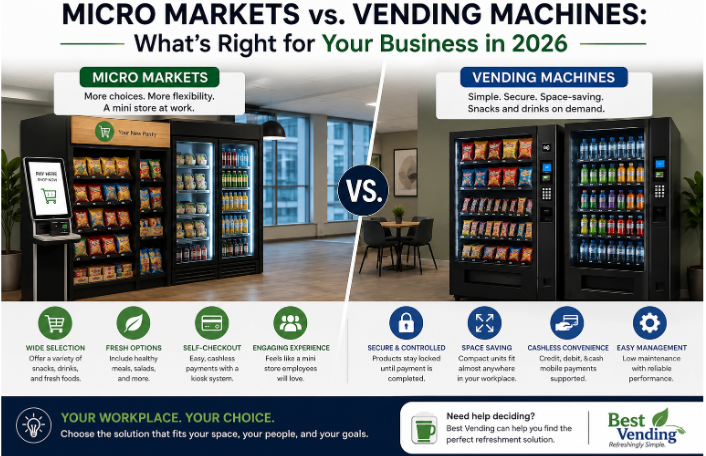
Traditional vending machines provide secure, controlled access to individually dispensed snacks and beverages. Micro markets use open shelves, refrigerated coolers, and self-checkout kiosks to offer a wider retail-style selection. Neither option is automatically better for every location. The right choice depends on how many employees use the break room, when they work, what products they want, and how much space is available.
A local refreshment provider such as Best Vending can evaluate the workplace before recommending equipment. Employee count, operating hours, security, available floor space, product demand, and expected usage should all influence the final setup. A professional assessment helps employers avoid installing a system that is too limited, too large, or poorly matched to daily operations.
What Is a Workplace Micro Market?
A micro market is an unattended self-service retail area installed inside a workplace. It typically includes open shelving, refrigerated coolers, product displays, and a digital checkout kiosk. Employees select their preferred items, scan them, and complete payment without waiting for a cashier.
Micro markets generally offer more flexibility than traditional vending machines. Because products are displayed openly rather than placed inside individual vending coils, providers can stock a wider variety of package sizes, fresh meals, cold drinks, snacks, and grab-and-go foods.
Typical Micro Market Products
Depending on the workplace and available equipment, a micro market may offer:
- Sandwiches and wraps
- Salads and refrigerated meals
- Yogurt and breakfast items
- Bottled water and flavored drinks
- Energy drinks and soft drinks
- Chips, candy, and familiar snacks
- Protein bars, nuts, and trail mixes
- Fresh fruit or other perishable items
The open layout makes it easier for employees to browse products, read packaging, and compare choices before making a purchase.
What Are Modern Vending Machines?
Modern vending machines are automated units that securely store and dispense products after payment. Snack machines, beverage machines, and combination machines can serve workplaces of different sizes while requiring relatively little floor space.
Current machines may support credit cards, debit cards, mobile wallets, and contactless payment. Some can also provide remote inventory information, sales data, or service alerts that help providers manage restocking and equipment maintenance.
Why Vending Still Works Well
Vending machines remain useful because they offer:
- Controlled product access
- Compact equipment placement
- Simple self-service purchasing
- 24-hour availability
- Cashless payment options
- Secure storage
- Suitability for different workplace environments
They are especially practical for locations where open product displays may not be appropriate or where the available break-room space is limited.
Micro Markets vs. Vending Machines at a Glance
| Comparison | Micro Market | Vending Machines |
| Product selection | Broad, including fresh food | Focused snacks and beverages |
| Shopping experience | Open, retail-style browsing | Products selected from inside a machine |
| Space requirement | Requires more floor and wall space | Compact footprint |
| Payment | Self-checkout kiosk | Built-in machine payment reader |
| Security | Works best in controlled employee areas | Products remain physically secured |
| Fresh meals | Strong option | Limited by machine type |
| Employee count | Often better for larger teams | Works for small through large workplaces |
| Setup style | Full break-room destination | Simple equipment-based solution |
This comparison provides a starting point, but employers should also consider employee behavior and operating schedules.
When a Micro Market Is the Better Choice
A micro market may be the stronger option when a workplace wants to offer more than standard snacks and drinks. It can provide employees with convenient access to meals and refrigerated products without operating a staffed cafeteria.
Larger Employee Population
Micro markets often work best where enough people use the service consistently. A larger employee population creates greater demand and makes it practical to maintain a broader inventory.
Corporate offices, distribution centers, manufacturing plants, and facilities with multiple departments may have enough daily usage to support the setup.
Employees Work Long or Multiple Shifts
Employees working overnight, extended, or rotating shifts may have limited access to nearby restaurants. A micro market can provide meals, snacks, and drinks throughout operating hours without requiring a cashier.
This can be especially useful when employees have short breaks and cannot comfortably leave the property.
The Business Wants Fresh-Food Options
If employees frequently request sandwiches, salads, wraps, yogurt, or more substantial meals, a micro market usually provides greater flexibility than standard vending equipment.
Open refrigerators and shelves can accommodate product shapes and sizes that may not fit traditional machines.
The Break Room Has Enough Space
A micro market needs room for shelving, coolers, a checkout station, and comfortable customer movement. Employers should ensure the area can support the layout without creating congestion.
When Vending Machines Are the Better Choice
Vending machines may be more suitable when the workplace needs a dependable refreshment option without redesigning the entire break room.
The Workplace Is Small
A smaller office may not generate enough daily demand to support a full micro market. A combination vending machine or separate snack and beverage units can provide useful choices without occupying unnecessary space.
Space Is Limited
Vending equipment can fit against a wall or within a compact break area. This makes it practical for locations where shelving and open coolers would interfere with seating, walkways, or other workplace functions.
Product Security Is Important
Because vending products remain locked inside the machine until payment is completed, machines can be appropriate for semi-public areas, shared buildings, schools, and facilities with frequent visitors.
Micro markets usually perform best in controlled workplace environments where the shoppers are primarily employees.
The Business Wants Simple Management
Vending machines offer a familiar and straightforward experience. Employees select an item, pay, and receive the product. Employers do not have to oversee shelves, manage checkout stations, or supervise the transaction process.
How Cost and Payment Differ
For employers, the financial arrangement depends on the provider, workplace size, expected usage, equipment needs, and service plan. Businesses should not assume that one format is always cheaper.
Micro markets may involve more equipment because they require shelving, coolers, and checkout technology. Vending machines may need fewer components, but larger workplaces may require several units to provide enough capacity and variety.
Employees usually pay for their own purchases in either format. Some employers may also choose to subsidize products, provide employee credits, or combine paid refreshment services with complimentary pantry items.
Consider Employee Preferences
Before selecting a setup, employers should ask employees what they are most likely to use. A micro market with fresh food is not valuable if the team mainly wants quick drinks and packaged snacks. Similarly, a single vending machine may disappoint employees who need meal options during long shifts.
A brief survey can ask:
- Which snacks and beverages do employees prefer?
- Would they purchase fresh meals at work?
- Do they work outside normal restaurant hours?
- How often do they leave the building for refreshments?
- Are cashless payments important?
- Do they want healthier or more varied options?
Employee feedback should guide the decision, but it should be considered alongside space, demand, and operational practicality.
Can a Business Use Both?
The decision does not always need to be either a micro market or vending machines. Larger workplaces may benefit from a combined setup.
For example, a main break room could contain a micro market, while vending machines provide refreshments near production areas, warehouse floors, or secondary employee spaces. A beverage machine may also complement a market by serving high-volume drink demand.
A combined program can improve access across a large facility without duplicating a complete micro market in every location.
Questions to Ask a Refreshment Provider
Before moving forward, ask the provider:
- How much daily usage is needed for a micro market?
- What equipment will fit the available space?
- How are products selected and updated?
- How often will the location be serviced?
- Which payment methods are available?
- How are fresh-food expiration dates managed?
- What happens when equipment needs repair?
- Can the program expand as the workforce grows?
- Is a combined vending and micro market setup practical?
Clear answers help employers understand both the initial setup and the ongoing service experience.
Final Thoughts
Micro markets offer a broad, open, and retail-style break-room experience with greater flexibility for fresh food and meal choices. Vending machines provide secure, compact, and familiar access to snacks and drinks with minimal space requirements.
For larger workplaces with steady demand, controlled access, and room for a more complete refreshment area, a micro market may be the better fit. For smaller businesses, public-facing locations, or break rooms with limited space, vending machines may provide better value and simplicity.
The right choice in 2026 starts with the workplace—not the technology. By evaluating employee count, schedules, space, security, and product preferences, businesses can choose a refreshment program that employees will actually use.