
Workplace expectations have changed. Employees now look for fast, convenient, and flexible access to food and beverages during the workday, while facility managers want refreshment programs that are easier to monitor and maintain. Modern office vending machines are responding to these needs with cashless payments, connected inventory systems, improved product visibility, and more reliable service data. Instead of operating as isolated snack machines, smart vending systems can become part of a broader workplace refreshment strategy designed around employee schedules, product demand, and day-to-day convenience.
Traditional vending depended heavily on manual checks. A driver or service team often needed to visit a location to determine what had sold, which products were running low, and whether a machine required attention. That model could result in unnecessary visits, unavailable products, or slower responses to equipment issues. Connected technology gives service providers more information about machine activity before arriving at the workplace.
For businesses in Connecticut and Upper Westchester County, New York, a local refreshment provider such as BFoods can help evaluate how vending technology fits the workplace rather than treating every location the same. Office size, shift patterns, employee preferences, available space, and daily usage all influence which equipment and product mix will be practical. The value of smart vending comes from combining better technology with consistent local service and thoughtful program management.
What Is Smart Vending Technology?
Smart vending refers to machines and supporting systems that use connected technology to improve purchasing, inventory tracking, payments, maintenance, and service planning. The exact features vary by equipment and provider, but the goal is generally the same: make vending more convenient for employees and more manageable for the people responsible for keeping it operational.
A smart vending setup may include card and mobile payments, remote sales information, product-level inventory tracking, digital displays, automated alerts, and tools that help service teams plan restocking. These capabilities do not remove the need for physical service. They provide better information so the service can be more targeted and responsive.
Common Smart Vending Features
Modern systems may support:
- Credit and debit card payments
- Contactless and mobile wallet transactions
- Remote inventory monitoring
- Product sales reporting
- Machine health notifications
- Digital product displays
- Flexible pricing controls
- Energy-management settings
- Automated service alerts
The right combination depends on the workplace and the machine model. A small office may prioritize cashless convenience, while a larger warehouse may place greater value on inventory visibility and dependable access across multiple shifts.
Cashless Payments Make Workplace Vending More Convenient
Employees increasingly expect to pay without carrying cash or coins. A vending machine limited to cash can create friction, particularly when someone wants a quick drink or snack but does not have exact change. Cashless readers can make purchases easier by accepting cards, contactless payments, or supported digital wallets.
This convenience can be particularly useful in workplaces with younger teams, visiting employees, contractors, or multiple shifts. It also reduces the need for employees to leave the building simply because they cannot use the available machine. For employers, easier payment does not require them to manage a complicated internal checkout process.
Supporting Faster Breaks
The purpose of a workplace break is to let employees pause, get what they need, and return to their responsibilities without unnecessary delays. A straightforward cashless transaction can shorten the purchasing process and make the vending area easier to use.
Employees do not need to search for change, ask coworkers for cash, or abandon a purchase. This small improvement can make the refreshment program feel more current and dependable.
Connected Inventory Helps Reduce Empty Selections
Few vending problems frustrate employees more than repeatedly finding an empty slot where a popular product should be. Traditional service schedules may not always reflect actual demand. One machine may sell through water quickly, while another may have stronger demand for snacks, energy drinks, or particular product types.
Connected inventory data can help providers understand what is selling and what requires replenishment. Rather than relying entirely on estimates or routine visual checks, service teams can use machine data to plan visits and prepare the right products before arriving.
Better Product Availability
Inventory information can help identify:
- Products that sell out frequently
- Items with limited demand
- Differences between shifts
- Seasonal changes in preferences
- Machines that need earlier service
- Opportunities to adjust the product mix
This does not guarantee that every item will always be available. It creates a more informed service process and can reduce avoidable shortages when the technology is supported by consistent restocking.
Smart Vending Supports a More Relevant Product Mix
A vending program should reflect the people who use it. A generic product selection may not work equally well in a corporate office, warehouse, school, medical setting, or manufacturing facility. Smart vending data can show which products employees actually purchase instead of relying solely on assumptions.
Over time, this information can support practical product changes. A location may need more bottled water, more filling snacks, different coffee-related products, or a better balance between traditional favorites and alternative choices. Product decisions can be based on local demand rather than a fixed selection used across every account.
Giving Employees More Useful Choices
A better product mix does not mean replacing every familiar snack with an unfamiliar alternative. Employees have different tastes, schedules, dietary preferences, and energy needs. A practical vending program can include a balanced range of drinks, snacks, and more substantial options where equipment allows.
The strongest selection is not necessarily the largest. It is the one that employees consistently find useful.
Remote Monitoring Can Improve Service Response
Connected vending systems may provide alerts when equipment experiences a technical issue, payment reader interruption, temperature concern, or other condition supported by the machine. This information can help a provider understand that attention may be needed before the workplace submits a complaint.
Remote monitoring cannot solve every mechanical problem from a distance. It can, however, make the issue more visible and help the service team arrive with better information. Knowing which machine is affected and what type of alert occurred may support faster diagnosis.
Less Guesswork for Facility Managers
Without connected monitoring, an office manager may need to identify the machine, explain the problem, and wait while the provider determines what happened. Smart alerts can reduce some of this uncertainty.
Facility and operations teams benefit when they do not have to repeatedly check equipment, track inventory, or coordinate preventable supply requests. A professionally managed system should reduce internal workload rather than add another responsibility.
Digital Interfaces Improve the User Experience
Some modern vending machines include brighter screens, product information displays, or more intuitive selection systems. These features can make it easier for employees to identify available items, understand prices, and complete purchases.
Digital interfaces may also help employees navigate a larger selection without making the machine feel confusing. Clear product presentation is particularly valuable when a workplace offers different drink types, snack categories, or items with similar packaging.
Accessibility and Clarity Matter
Technology should make the vending experience simpler, not more complicated. Screens, payment prompts, and product labels should be understandable for employees who may use the machine quickly during a short break.
A modern interface is only valuable when the equipment remains reliable, properly stocked, and easy to operate. Visual upgrades cannot replace strong service, but they can improve the overall experience when paired with it.
Smart Vending Can Support Multiple Work Schedules
Not every employee works from nine to five. Warehouses, manufacturing facilities, medical environments, and other operations may have early, late, overnight, or rotating shifts. On-site vending gives employees access to refreshments when nearby stores, cafeterias, or office kitchens may not be available.
Smart technology can help providers see how demand changes throughout the day. One shift may purchase more coffee-related drinks, while another may rely more heavily on water, energy beverages, or substantial snacks. Understanding these patterns can support more suitable stocking.
Consistent Access Beyond Standard Office Hours
Vending machines do not depend on a staffed counter. Once properly installed and maintained, they can provide access throughout the workplace’s operating hours.
For employers with extended schedules, this availability can make the break room more useful and reduce the need for employees to leave the property during limited break periods.
Smart Vending and Micro Markets Serve Different Needs
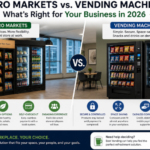
Smart vending machines and office micro markets both use technology to improve workplace refreshment, but they are not identical. Vending machines securely dispense individual products through a compact unit. Micro markets use open shelving, refrigerated cases, and a self-checkout system to offer a broader retail-style experience.
The best choice depends on employee count, available space, product expectations, security considerations, and daily demand. Some workplaces may use vending only, while others may combine machines with coffee, water, pantry services, or a micro market.
When Smart Vending Is a Strong Fit
Smart vending may be particularly suitable when:
- Space is limited
- Controlled product access is important
- Employees work multiple shifts
- The workplace needs simple self-service
- A compact refreshment solution is preferred
- Cashless payment is a priority
A proper site assessment can help determine whether vending, a micro market, or a combined setup is the better fit.
Technology Does Not Replace Reliable Local Service
Connected equipment can provide valuable information, but the workplace experience still depends on the service behind it. Machines need to be filled, cleaned, inspected, maintained, and adjusted as employee needs change.
A provider must interpret the data, respond to alerts, maintain appropriate inventory, and communicate with the workplace. Without these operational steps, technology becomes another dashboard rather than a meaningful service improvement.
What Employers Should Evaluate
When reviewing a vending provider, employers should ask:
- How are machines monitored?
- How are restocking decisions made?
- What happens when equipment reports a problem?
- Who handles service communication?
- Can the product mix change over time?
- Which payment methods are supported?
- How frequently is equipment inspected?
- Can the program scale as the workplace grows?
The answers reveal whether the provider offers a complete service or simply installs equipment.
How Smart Vending Benefits Workplace Management
A well-managed smart vending program can provide greater visibility and reduce routine administrative work. Office managers should not need to count products, collect employee requests, troubleshoot payment problems, or repeatedly report the same empty selections.
Technology can help organize these tasks, while the service provider handles the physical work. This arrangement gives employers a clearer refreshment program without requiring an internal employee to manage every detail.
More Informed Break Room Planning
Sales and usage patterns may also help employers understand whether their current break room setup still fits the workforce. Increased demand, additional shifts, office growth, or changing preferences may indicate that the company needs more equipment or a different service model.
Smart vending data can support these decisions with real usage information rather than guesswork.
Choosing the Right Smart Vending Setup
The most advanced machine is not automatically the best machine for every workplace. Employers should begin with practical questions about employee count, operating hours, available floor space, product preferences, electrical access, and expected usage.
A small office may need one dependable snack and beverage solution. A larger facility may require multiple machines placed near different departments or shifts. Other workplaces may benefit from connecting vending with coffee, water, or pantry services.
Start With the Workplace, Not the Technology
The right process begins with understanding:
- Who will use the machines
- When employees take breaks
- What products they prefer
- Where equipment can be placed
- How frequently service may be needed
- Whether vending or a micro market is more suitable
Technology should support the workplace plan. It should not force the workplace into an unsuitable setup.
Final Thoughts
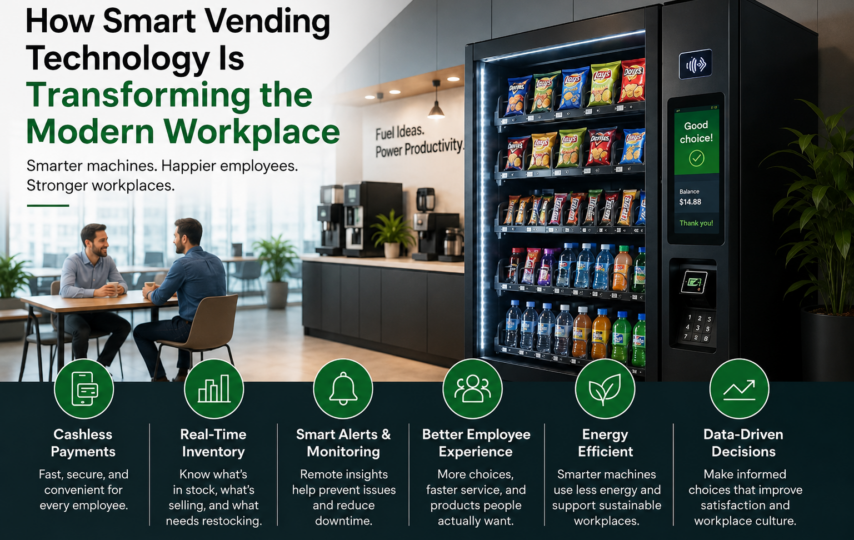
Smart vending technology is transforming modern workplaces by making refreshment access more convenient, connected, and responsive. Cashless payments simplify purchases, inventory data supports better restocking, remote alerts improve service visibility, and usage information helps refine product selections.
Still, technology alone does not create a successful program. The best results come from combining modern equipment with reliable local service, suitable products, regular maintenance, and a setup designed for the actual workforce. When those pieces work together, smart vending can turn a basic break room amenity into a more dependable part of the employee experience.