Introduction: The Growing Importance of Advanced Filtration in Industry
Across chemical manufacturing, pharmaceutical production, and specialty materials processing, filtration technology has evolved from a simple separation step into a critical engineering discipline. The demands placed on modern process plants — tighter purity standards, stricter environmental regulations, and the constant pressure to reduce operational costs — have pushed engineers to look beyond conventional filtration methods. Among the solutions that have risen to prominence is the nutsche filter, a pressure or vacuum-driven vessel that combines filtration, washing, and drying into a single enclosed unit. Understanding where and how this technology is deployed is essential for any process engineer seeking to optimize plant performance.
What Makes Nutsche Filters Distinct from Conventional Filtration Equipment
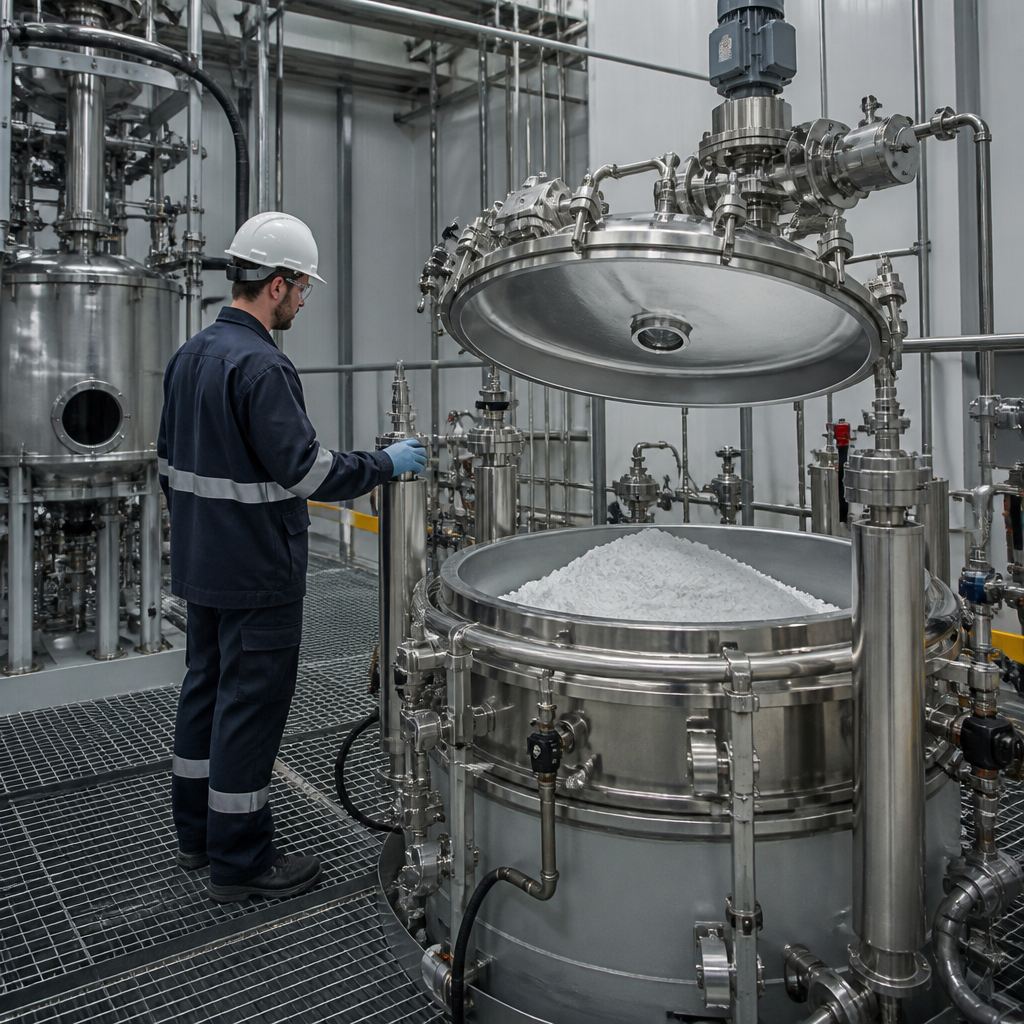
Traditional filtration equipment often requires multiple processing stages, each with its own vessel, transfer lines, and associated contamination risks. A nutsche filter consolidates these stages. The unit typically consists of a cylindrical vessel fitted with a filter plate or membrane at the base, an agitator mechanism, and sealed connections that allow operators to apply pressure or vacuum as needed. Once the slurry is loaded, the liquid phase is drawn or pushed through the filter medium, leaving behind a solid cake. That cake can then be washed in place — without opening the vessel — and subsequently dried using heated jackets or nitrogen purging.
This closed-system design is particularly valuable when handling toxic, flammable, or highly potent compounds. Containment is maintained throughout the entire process cycle, reducing operator exposure and minimizing product loss. The agitator also allows for cake re-slurrying, which improves washing efficiency and ensures more uniform solids processing compared to static filter systems.
Pressure vs. Vacuum Operation: Choosing the Right Configuration
Nutsche filters can be configured for either pressure or vacuum-driven filtration, and the choice depends heavily on the physical properties of the slurry and the desired throughput. Vacuum nutsche filters are well-suited for free-filtering slurries where the solid particles do not compact excessively under reduced pressure. Pressure nutsche filters, on the other hand, are preferred for fine-particle slurries or highly viscous mother liquors where vacuum alone cannot generate sufficient driving force. In many pharmaceutical applications, pressure operation is standard because it allows tighter control over filtration rates and cake moisture content.
Key Industrial Sectors Leveraging Nutsche Filter Technology
The versatility of nutsche filters means they appear across a remarkably broad range of industries. In pharmaceutical manufacturing, they are used to isolate active pharmaceutical ingredients (APIs) from reaction mixtures, where product purity and containment are non-negotiable. In agrochemical production, they handle the separation of herbicide and pesticide intermediates that often require careful washing to remove residual solvents. Fine chemical and specialty chemical manufacturers rely on them for batch processing of high-value compounds where yield recovery is paramount.
Beyond chemistry, nutsche filters find application in food-grade processing, where hygienic design standards must be met, and in the production of advanced materials such as pigments, catalysts, and battery-grade materials. The ability to process small to medium batch sizes with high flexibility makes them particularly attractive for contract manufacturers who handle diverse product portfolios.
Pharmaceutical API Isolation: A Closer Look
In pharmaceutical settings, the nutsche filter is often the centerpiece of the downstream processing train. After a chemical synthesis reaction is complete, the product slurry is transferred directly into the filter vessel. The mother liquor is removed under pressure, and the cake is then washed with a series of solvents to remove impurities. Because the entire operation occurs within a sealed environment, cross-contamination between batches is minimized and cleaning validation is more straightforward. For highly potent compounds — including cytotoxic drugs — this level of containment is not merely convenient but regulatory mandatory.
Understanding the Full Scope of Nutsche Filter Applications
The range of environments in which these units operate continues to expand as process engineers discover new use cases. Detailed guidance on nutsche filter applications reveals how these systems are being adapted for everything from traditional batch chemical synthesis to emerging sectors like battery material production and advanced catalyst manufacturing. The ability to integrate washing, drying, and discharge into one vessel dramatically reduces processing time and the risk of product degradation during inter-stage transfers, making the nutsche filter a compelling choice for any operation where product integrity is a priority.
Fluid Handling Systems That Support Nutsche Filter Operations
A nutsche filter does not operate in isolation. It is part of a broader process system that includes pumps, valves, heat exchangers, and instrumentation. Among the most critical supporting components are the pumps responsible for transferring slurries into the filter vessel and for evacuating filtrate from the system. Piston pumps, in particular, are well-regarded for their ability to handle viscous and abrasive slurries without significant performance degradation. Understanding the benefits of piston pumps in process applications is valuable for engineers designing the complete fluid handling architecture around a nutsche filter installation.
Instrumentation and Process Control Considerations
Modern nutsche filter installations are increasingly integrated with distributed control systems (DCS) or programmable logic controllers (PLC) that automate the filtration, washing, and drying cycles. Pressure transmitters monitor cake resistance in real time, allowing operators to adjust parameters dynamically. Temperature sensors in the heating jacket ensure that drying conditions remain within specification. This level of automation not only improves batch-to-batch consistency but also generates the electronic records required for regulatory compliance in pharmaceutical and food-grade environments.
Emerging Materials and the Future of Filtration Technology
The materials science landscape is evolving rapidly, and filtration technology must keep pace. Researchers are developing novel filter media with enhanced selectivity and durability, including membranes incorporating advanced nanomaterials. In a related development, recent research into reactor energy systems using carbon nanotubes and natural materials points toward a future where process equipment — including filtration systems — may incorporate nanoscale components to achieve unprecedented levels of efficiency and selectivity. As these materials transition from laboratory curiosity to industrial reality, nutsche filter designs will likely evolve to accommodate them.
International Process Plants: A Trusted Source for Process Equipment
For organizations evaluating nutsche filter technology, sourcing reliable equipment and expert guidance is as important as understanding the underlying process principles. International Process Plants is a well-established supplier of used and refurbished process equipment, offering a broad inventory that spans filtration, reaction, separation, and fluid handling systems. Their technical team brings deep industry knowledge to equipment evaluation and selection, helping buyers identify units that meet their specific process requirements without the lead times and capital costs associated with new equipment procurement. Their resources on filtration technology provide practical, application-focused information that supports informed decision-making at every stage of a project.
Conclusion: Selecting the Right Filtration Strategy for Your Process
The nutsche filter has earned its place as a cornerstone technology in batch chemical and pharmaceutical processing. Its ability to consolidate multiple unit operations into a single, contained vessel delivers measurable advantages in product purity, yield, operator safety, and regulatory compliance. As industrial processes grow more complex and the materials being handled become more demanding, the relevance of nutsche filter technology will only increase. Engineers who take the time to understand the full range of applications, supporting equipment requirements, and emerging material developments will be well-positioned to design filtration systems that deliver consistent, high-quality results across the entire product lifecycle.