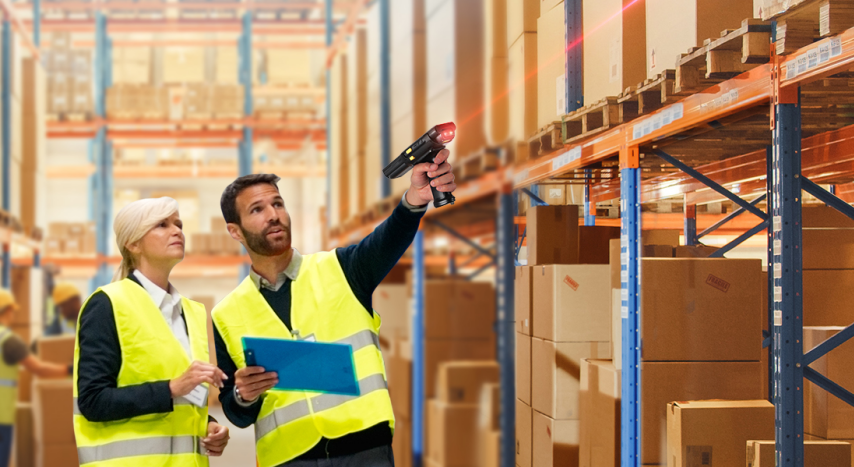

If you visited a warehouse in 2015, you’d see workers carrying dedicated barcode scanning guns—bulky devices that cost thousands of pounds and required specialized IT support. Fast forward to 2026, and that landscape has fundamentally changed.
The shift toward Android barcode scanners represents one of the most significant technology transitions in enterprise logistics and inventory management. Suddenly, the powerful computer in every worker’s pocket became a viable replacement for expensive proprietary hardware.
This shift raises an important question for enterprises: why would you continue maintaining separate scanning hardware when a unified Android solution can handle everything your legacy system could—plus significantly more?
Why Enterprises Choose Android Barcode Scanners
Cost Efficiency and Total Cost of Ownership
Let’s start with the obvious: capital expenditure. An enterprise-grade Android barcode scanner tablet costs significantly less than comparable dedicated hardware while offering superior processing power and connectivity options. But the cost advantage extends far beyond the initial purchase.
Consider support and maintenance. Traditional barcode scanners require specialized technicians for troubleshooting. Android devices run on standard enterprise support infrastructure. Software updates are automatic. Repairs follow standard mobile device protocols. The total cost of ownership over five years heavily favors Android solutions—typically 40-60% lower when calculated comprehensively.
Additionally, enterprises no longer need to maintain separate inventory of different device types. A unified Android ecosystem simplifies logistics, training, and deployment.
Real-Time Data Synchronization
One of the most underrated advantages of Android barcode scanners is their native cloud connectivity. Traditional scanners typically required end-of-shift synchronization through cradles or docking stations. This created data lag—sometimes hours between when information was captured and when it appeared in backend systems.
Modern Android barcode scanners offer real-time data transmission. A warehouse worker scans a package, and that information is instantly visible in the inventory management system, the ERP platform, and the customer tracking system. Real-time visibility transforms operational efficiency. Managers can detect discrepancies immediately. Supply chain visibility becomes granular and current.
Integration Flexibility
Here’s a scenario many enterprises face: your barcode scanning needs extend across multiple departments—warehouse operations use one system, retail uses another, field service uses yet another. Traditional dedicated scanners often couldn’t bridge these worlds. They were locked into specific applications.
Android barcode scanners eliminate this limitation. The same device can run multiple applications simultaneously. Workers can switch between inventory management, customer service, and reporting without changing devices. Organizations can implement best-of-breed software for each function without worrying about hardware compatibility.
Scalability and Rapid Deployment
When business demands shift—holiday season, sudden market expansion, new facility opening—traditional scanning infrastructure can’t scale quickly. You’re constrained by manufacturing timelines and inventory.
Android barcode scanner solutions scale on-demand. Provisioning new devices is straightforward. Software updates deploy instantly across hundreds of devices. New functionality can be added through software updates rather than hardware replacement.
Technical Specifications That Matter
When evaluating an Android barcode scanner, several technical factors directly impact real-world performance:
Scan Engine Quality: The core scanning capability matters enormously. Leading devices feature industrial-grade scan engines like Zebra SE4710 or Honeywell N6703. These aren’t smartphone camera tricks—they’re professional-grade optics that can read damaged barcodes, work in poor lighting, and scan from multiple distances.
Battery Longevity: Devices should support 10+ hours of continuous scanning on a single charge. Anything less creates operational friction and reduces productivity.
Environmental Rating: Rugged Android tablets designed for enterprise use typically carry IP66 or better ratings. This means genuine waterproof and dustproof protection, not just water resistance. For warehouse or outdoor environments, this matters critically.
Display Technology: Sunlight-readable displays (700+ nits brightness) are essential for outdoor work. Standard consumer tablets become unusable in direct sunlight. Enterprise-grade devices maintain readability regardless of lighting conditions.
Processing Power: Modern workloads demand adequate RAM and processors. 4GB+ RAM and MediaTek or Qualcomm processors ensure smooth multitasking without lag between scanning operations.
Connectivity Options: Beyond WiFi, devices should support 4G LTE, ensuring connectivity even in areas with spotty WiFi infrastructure.
Real-World Applications
Warehouse Management: The most obvious application. Workers use Android barcode scanners to pick orders, verify inventory, and track stock movements. Real-time synchronization means supervisors have instant visibility into warehouse operations. Exception handling becomes immediate.
Last-Mile Delivery: Delivery drivers use Android barcode scanner devices to scan packages, capture signatures, photograph conditions, and provide real-time tracking updates. All on a single device. Customers get precise delivery timestamps; companies get protection against delivery disputes.
Retail Point of Sale: Retailers use Android barcode scanners for price verification, loss prevention, and inventory management at checkout. The same device handles customer transactions and price checks, reducing point-of-sale friction.
Field Service: Technicians scan asset tags, parts inventory, and work completion status in real-time. All field data flows instantly to backend systems, enabling accurate billing and real-time resource allocation.
Healthcare and Pharmaceutical: Patient identification, medication verification, and supply chain integrity all depend on accurate barcode scanning. Android barcode scanners provide the accuracy and connectivity healthcare environments demand.
MUNBYN Android Barcode Scanners: Engineered for Enterprise
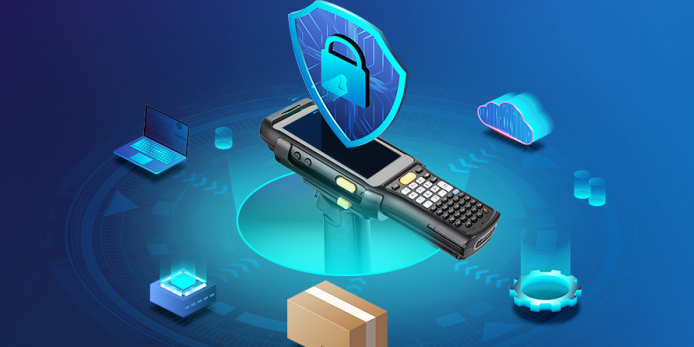
When evaluating Android barcode scanner options, organizations like MUNBYN have built solutions specifically for enterprise environments rather than adapting consumer hardware.
The MUNBYN collection of Android barcode scanners includes rugged tablets and mobile devices designed for demanding operational environments. Their tablets feature industrial-grade scan engines, extended battery life (10+ hours), IP66/IP67 protection ratings, and sunlight-readable displays at 700+ nits brightness. They run current Android versions (12, 13, or 14) with full Google services integration.
What distinguishes the MUNBYN approach: they’ve integrated genuine enterprise scanning hardware (Zebra SE4710 and Honeywell N6703 scan heads) into tablets that function as complete mobile computers. Workers don’t carry separate devices for communication, data entry, and scanning—one device handles everything. The MUNBYN Android barcode scanner collection offers models ranging from lightweight 5.5-inch handheld devices to 8-inch tablets, allowing organizations to choose the form factor that matches their specific workflows.
Their approach to durability particularly matters in harsh environments. MIL-STD-810G certification means devices survive drops, temperature extremes, and environmental stresses. IP67 protection allows full water immersion. This durability translates to realistic multi-year device lifecycles and predictable cost structures.
Implementation Considerations
Transitioning to Android barcode scanners isn’t merely purchasing new devices—it requires thoughtful implementation planning:
Software Selection: Choose scanning software aligned with your existing systems. Most enterprise platforms now support Android natively. Open-source options like ZXing exist, but commercial SDKs typically offer superior performance and support.
IT Infrastructure: Ensure your WiFi and network infrastructure can support the bandwidth demands of real-time synchronization. Legacy networks may need upgrades.
User Training: While Android is intuitive for consumers, enterprise implementations require training on specific workflows and applications.
Data Security: Android devices require robust security protocols. Ensure encryption, VPN support, and remote management capabilities are configured.
Pilot Program: Before full-scale deployment, implement a pilot in one department. This reveals integration issues and allows refinement before enterprise-wide rollout.
The Future of Enterprise Scanning
The transition to Android barcode scanners represents a broader shift in enterprise technology: moving from purpose-built hardware to flexible software-enabled platforms. This trend will continue accelerating.
Emerging technologies like AI-powered barcode recognition, automated anomaly detection, and predictive inventory management are reaching market maturity. These capabilities are arriving first through Android platforms, as software-based implementations outpace hardware-based alternatives.
Forward-looking organizations are recognizing this inflection point. The companies that move to Android barcode scanner solutions now are positioning themselves to adopt next-generation capabilities as they mature.
Conclusion
The Android barcode scanner revolution isn’t hype. It represents a genuine technological advancement where flexible software-based solutions outperform specialized hardware across cost, capability, and scalability dimensions. For enterprises still operating traditional dedicated scanners, the economic and operational case for migration is clear.
The question isn’t whether Android barcode scanners represent the future. It’s whether your organization can afford to wait any longer to make the transition.
If you’re evaluating Android barcode scanner solutions, explore the MUNBYN scanner. Their focus on genuine enterprise-grade hardware combined with flexible Android platform architecture provides a solid foundation for organizations ready to modernize their scanning infrastructure.