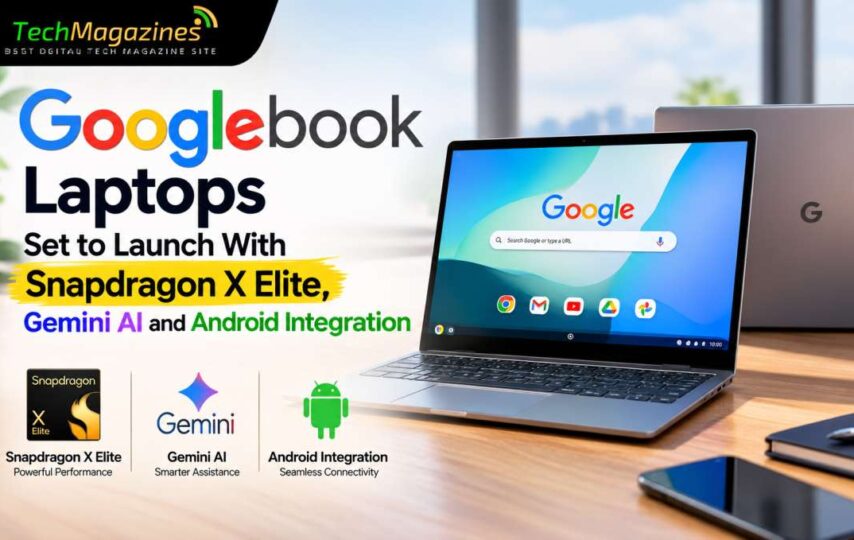

Google’s new Googlebook laptops are getting closer to their debut, with Qualcomm revealing that its Snapdragon X Elite platform will be used in the first machines. HP and Dell are among the companies preparing to release the initial models, and customers can already place pre-orders from September 21.
Googlebook is built with Gemini Intelligence as a central part of the experience, while Android features are being brought more closely into the laptop environment. Several AI-powered tools will also be part of the system from the start.
Snapdragon X Elite Brings AI-Focused Performance to Googlebook
The first Googlebook models will rely on Qualcomm’s Snapdragon X Elite chipset. The platform is designed to deliver a balance of computing power and energy efficiency, while its integrated NPU is intended to handle AI processing directly on the device. Qualcomm has also confirmed support for native Android applications and games, giving users access to software beyond the traditional laptop ecosystem.
Gemini and Android Integration Define the Googlebook Experience
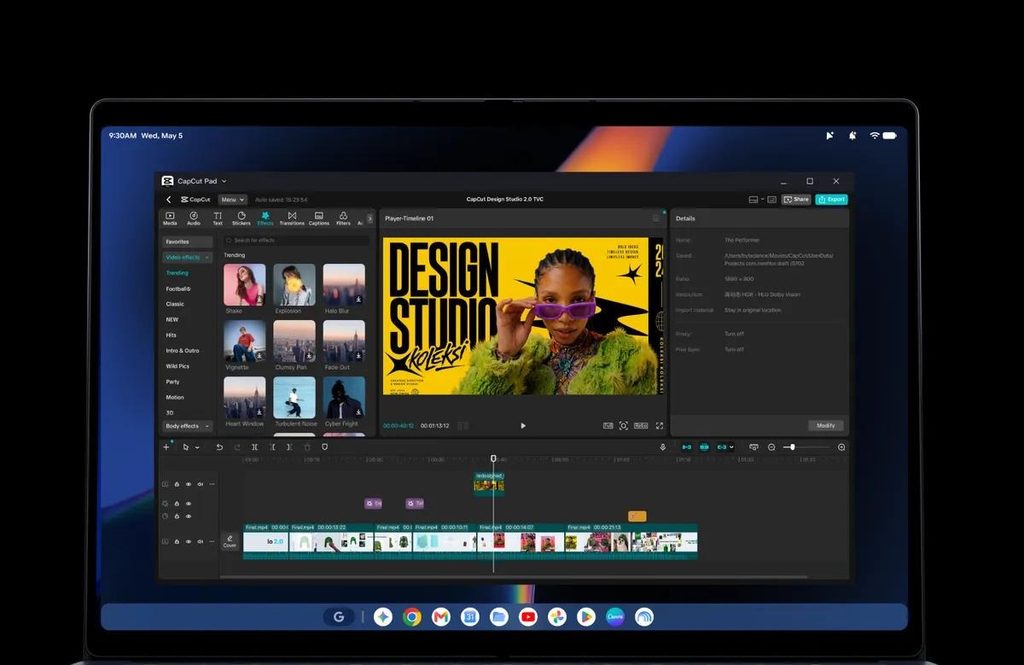
Google is treating Googlebook as more than an upgraded Chromebook. Gemini is woven into the operating system and will support several functions across the laptop. Among them are Magic Pointer, Create My Widget and Cast My Apps. These tools are designed to assist with everyday activities while also allowing Googlebook to interact more closely with Android devices and services.
Android integration is one of the main ideas behind Googlebook. Cast My Apps can bring an Android phone app onto the laptop screen without requiring a second installation. Quick Access serves a simpler purpose. It gives users a way to reach files that remain on a linked phone. Magic Pointer adds Gemini to the process. Users can highlight an item on the display and ask Gemini to inspect it, make a comparison, or turn it into something else.
HP and Dell Lead Googlebook’s First Hardware Lineup
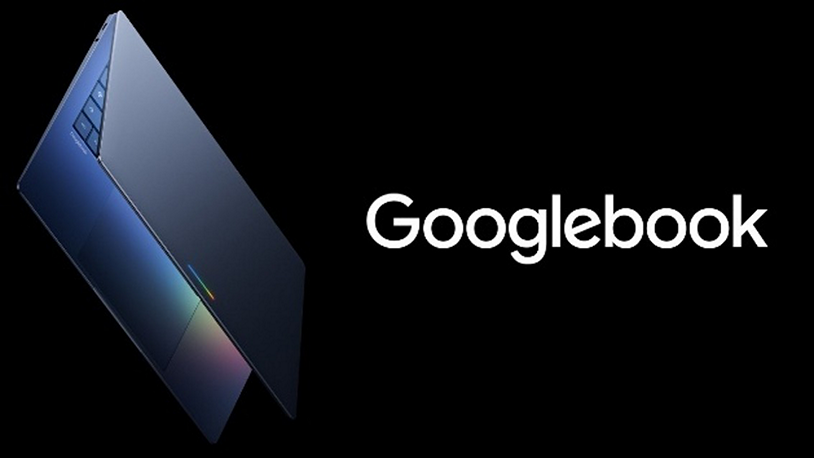
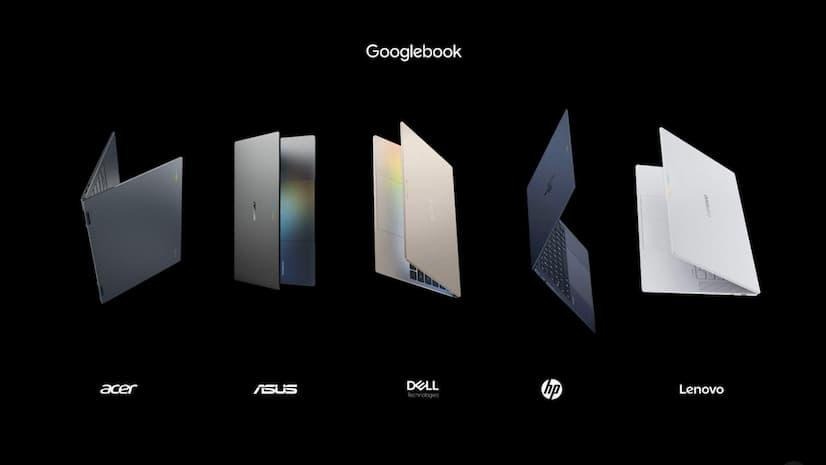
The first machines will come from HP and Dell. Other companies will follow. Acer, ASUS, and Lenovo have also joined the launch programme, giving Googlebook a broader hardware base from the beginning.
HP has provided the clearest look at the hardware so far. The company’s Googlebook 14c pairs Qualcomm’s Snapdragon X Elite with 16GB of memory and a 512GB SSD. It has a 14-inch OLED panel with a 3K resolution and a touchscreen. The specifications place it firmly in the premium segment. HP will sell it from USD 1,299. Dell has not yet disclosed much about its own model.
This model of distribution sets Googlebook apart from a platform built around one standard laptop. Several manufacturers will make their own versions. Their machines can differ in appearance and hardware, and the prices may differ as well. Google can therefore build a wider range of devices without making every buyer choose the same design.
Googlebook at $1,300: Is the New Laptop Worth Waiting For?
At around $1,300, the HP Googlebook 14c is not trying to compete as a cheap laptop. Its specifications make that clear. HP has given it a high-resolution OLED panel, substantial memory and storage, and the slim design associated with more expensive Snapdragon machines.
Qualcomm’s laptop chips also put a strong emphasis on efficiency. That could give Googlebook an advantage in one important area: battery endurance. A computer that can run for much of the day fits neatly with Google’s plan for an always-ready laptop. But specifications alone will not decide whether Googlebook works. The harder task begins when users turn the machine on.
Windows and macOS already have years of familiarity behind them. Googlebook has none of that. It asks customers to adopt a new platform while paying a premium price for it. Google has to make its software useful enough that it’s worth the switch. Gemini will be a pivotal element, as will be the link between the laptop and Android devices.
Googlebook Must Prove Its Value Against Windows and MacBooks
Google has an opportunity to make Googlebook stand out. That, however, will rely on the nature of the new system. A new name or some new features will not suffice. If google manages to do that, Googlebook could become a better option than the standard ChromeOS laptops and appeal to those who want something more advanced.
This is made difficult by the price. Googlebook is priced at approximately $1,300, which puts it in a market where the buyer knows what he’s buying. Windows has a vast array of tried and tested laptops and a mature software base. Same is true for Apple laptops.
Google has little margin for error. The integration of Gemini and Android should be more than a mere novelty; it needs to be beneficial to both. Otherwise, customers might not have any reason to leave platforms which are already working for them.
Final Words
Googlebook is going to a laptop market where there are already plenty of popular brands, and having Gemini and a Snapdragon X Elite chipset alone may not suffice. Its one of the major benefits may be the integration of AI, Android applications and connected devices. HP’s Googlebook 14c also has a nice look to it, featuring 16GB of RAM and 512GB of storage and an OLED display.
At $1,299, it’s certainly not something that most people will purchase without considering. The larger question is if Googlebook can get people to abandon the laptop platform they’re already on. The features on the Gemini and the integration with Android must be useful and not just cool new features for a couple of days.
If Google does it right, Googlebook may be a viable choice between the standard Chromebook and the high end laptop. If it doesn’t, however, people may well just keep their current laptops and save their cash.